



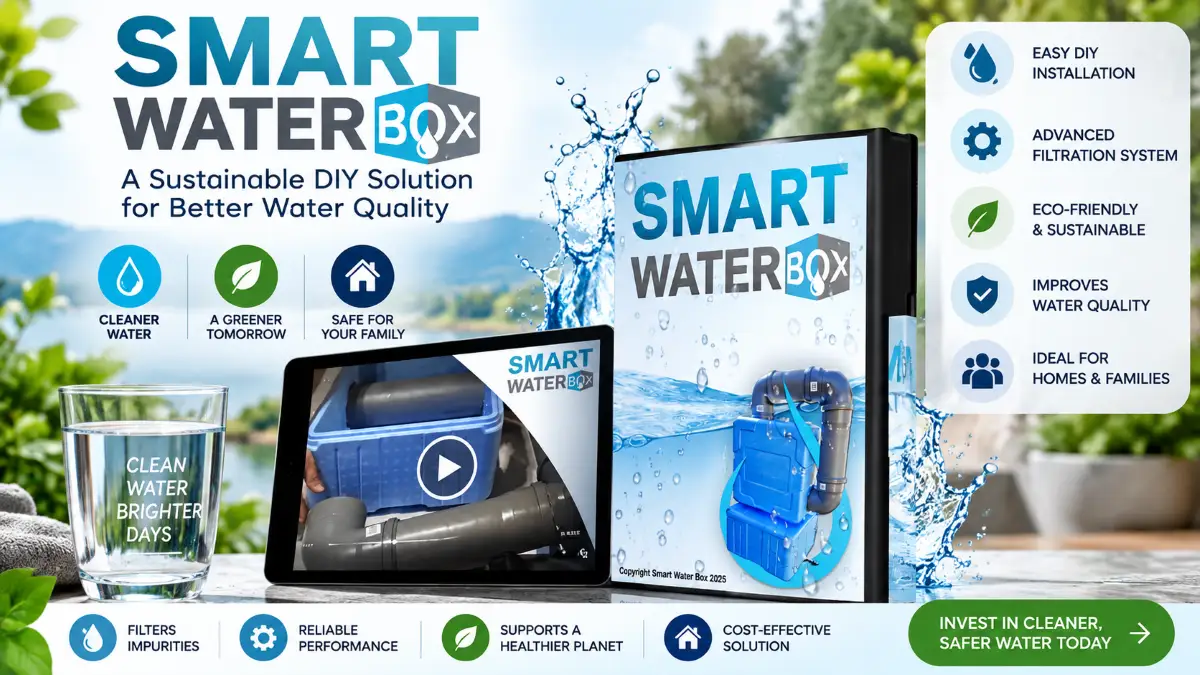
Clean water is one of the most important parts of a healthy lifestyle, yet water quality can vary significantly depending on location, source, plumbing, storage, and treatment methods. While bottled water may seem like a convenient solution, relying on single-use plastic can create unnecessary waste and ongoing expenses. This has encouraged many people to explore practical, reusable, and more sustainable approaches to household water treatment.
One concept gaining attention among DIY-minded homeowners is the Smart Water Box. Designed around the idea of creating a compact water-treatment setup, this type of system can appeal to people who want greater control over their household water while reducing dependence on disposable bottles.
But what exactly is it, how might a DIY water-filtering system work, and what should consumers consider before choosing one? This guide explores the concept, potential advantages, limitations, and important considerations for anyone interested in improving their household water setup.
What Is a Smart Water Box?
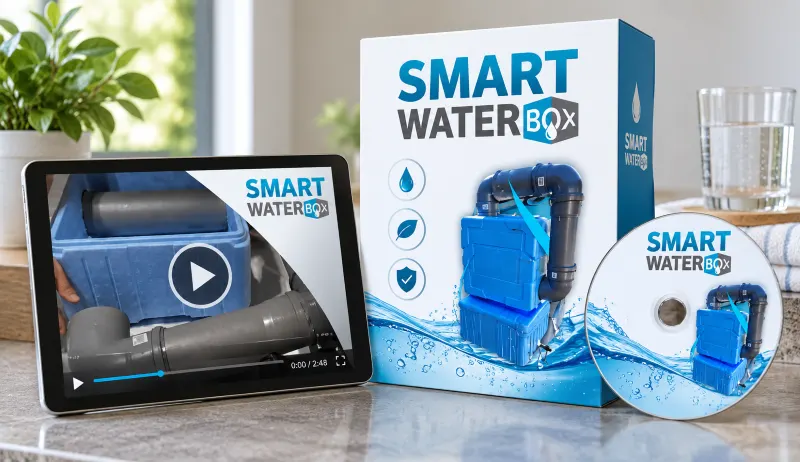
At its simplest, a smart water box can be described as a compact water-treatment or filtration concept intended to help improve the quality of water used for everyday purposes.
Rather than viewing water treatment as a complicated industrial process, the idea focuses on making filtration more accessible and practical for households. Depending on the specific design, a system may combine a container, filtration components, tubing, connectors, and other parts to create a functional water-treatment arrangement.
The exact performance of any system depends on its components and construction. Different filters are designed to address different contaminants, so consumers should not assume that every household filtration device removes every possible impurity.
This distinction is particularly important when the goal is drinking-water treatment. A filtration system should be evaluated according to the contaminants it is specifically designed and tested to reduce.

Why Household Water Quality Matters
Water can contain naturally occurring minerals, sediment, chlorine, microorganisms, or other substances depending on its source and treatment history. Municipal water supplies are generally treated according to local standards, but the quality reaching an individual tap can also be influenced by household plumbing and storage conditions.
Private wells can present additional considerations because their water quality may vary based on geology, agricultural activity, nearby contamination sources, and maintenance.
For these reasons, water filtration is not simply about making water taste better. It can also involve understanding what is actually present in the water.
Before purchasing or building a treatment system, homeowners should consider testing their water when appropriate. A water test can provide useful information about whether the primary concern is sediment, hardness, chlorine taste, microbial contamination, metals, or another issue.
Understanding Smart Water Box DIY Systems
The appeal of Smart Water Box DIY solutions comes partly from their hands-on nature. Instead of purchasing a large, permanently installed filtration system, users may be able to assemble a smaller setup using readily available components.
A DIY Smart Water Box approach can offer several potential advantages:
- Greater control over individual components
- Easier customization
- Potentially lower initial costs
- A compact design for certain applications
- An opportunity to understand how filtration works
- Reduced dependence on disposable bottled water
However, Smart Water Box does not automatically mean better or safer.
Water-treatment systems must be assembled correctly. Connections need to be secure, filtration media must be appropriate for the intended purpose, and components that come into contact with drinking water should be suitable for that application.
Poorly assembled systems can introduce leaks, contamination, or inconsistent filtration. Therefore, following the manufacturer’s instructions and replacing filtration components according to their intended service life are essential.
How Does a Smart Water Box Work?
The basic principle behind a Smart Water Box is staged filtration.
Instead of expecting a single filter to handle every possible impurity, a multi-stage design can assign different tasks to different filtration materials.
1. Sediment Filtration
The first stage may involve a sediment filter. Its purpose is generally to capture larger particles such as dirt, sand, rust particles, and other suspended material.
This stage can also help protect downstream filters from becoming clogged too quickly.
2. Activated Carbon Filtration
Activated carbon is commonly used in household water treatment because it can adsorb certain compounds. It is particularly associated with reducing unpleasant tastes and odors and can help reduce certain chlorine-related compounds.
The effectiveness depends on the type and quality of carbon, contact time, water chemistry, and the specific contaminants involved.
3. Specialized Treatment
Some water sources require additional treatment. Depending on the problem, this could involve technologies such as reverse osmosis, ultraviolet treatment, ion exchange, or specialized filtration media.
A Smart Water Box should therefore be designed around the actual water-treatment requirement rather than simply adding random filter materials.
4. Final Filtration
A final filtration stage can sometimes be included to provide another level of particle reduction before the treated water reaches the point of use.
The exact arrangement will vary according to the system design and intended application.
Potential Benefits of a Sustainable Water-Treatment Setup
One of the strongest arguments for household filtration is convenience. Having a reusable water-treatment system available at home can make it easier to maintain a consistent approach to water use.
1. Less Dependence on Bottled Water
People who frequently purchase bottled water can accumulate a considerable amount of plastic packaging over time. A reusable filtration setup may help reduce the number of disposable bottles used for everyday drinking.
This does not mean that every filtration system eliminates the need for bottled water in every situation. Emergencies, travel, and locations with unsafe source water may require different solutions.
Nevertheless, for suitable household water supplies, reusable treatment can be part of a broader effort to reduce unnecessary packaging.
2. Potential Cost Savings
Buying bottled water repeatedly can become expensive. A reusable system involves an initial purchase or assembly cost, followed by maintenance and replacement expenses.
Whether filtration is actually cheaper depends on the purchase price, filter lifespan, water consumption, and replacement schedule.
Consumers should therefore look at the total cost of ownership rather than focusing only on the initial price.
3. Compact Design
A compact water-treatment setup can be attractive to people living in apartments, smaller homes, dormitories, or other spaces where installing a large filtration system may not be practical.
A smaller design can also be useful for people who want a dedicated filtration point instead of modifying the entire household plumbing system.
4. Greater Awareness of Water Treatment
DIY systems can encourage users to learn more about filtration, water testing, maintenance, and household water quality.
That awareness can be valuable because effective water treatment starts with understanding the actual problem.
Smart Water Box for Clean Drinking Water: What the Filtration Actually Involves
Collected atmospheric moisture isn’t automatically safe to drink straight off the coil — it can pick up dust, microbial contamination, or residue from the components used to build the system. This is where the purification stage matters. According to descriptions of the guide, the build incorporates a multi-stage filtration approach, generally including:
- A sediment pre-filter to catch larger particles like dust, rust flakes, or debris introduced during collection
- A finer filtration stage (commonly activated carbon or a similar medium) to improve taste and reduce dissolved contaminants
- Basic disinfection guidance, since any water collection system that isn’t sealed and sterile carries some risk of microbial growth if not properly maintained
This layered approach reflects a reasonable understanding of general water purification technology principles, but it’s worth being clear-eyed that a DIY build’s filtration quality depends heavily on how carefully the instructions are followed and which specific filter components you choose to source — it isn’t automatically equivalent to a certified, lab-tested commercial filtration system.
Water Quality Improvement: What Should You Expect?
The phrase Water Quality Improvement can mean different things to different consumers.
For one household, improvement might mean better taste and odor. For another, it could mean reducing sediment or addressing a specific contaminant identified through laboratory testing.
Therefore, expectations should always be based on measurable filtration capabilities rather than general marketing language.
Before choosing a system, ask:
- What is the source of my water?
- What contaminants am I concerned about?
- Has my water been tested?
- What filtration technology does the system use?
- Which contaminants has the filter been tested or certified to reduce?
- How frequently do components need replacement?
- Is the system intended for drinking water?
- What maintenance does the system require?
These questions can help prevent consumers from purchasing a system that does not address their actual needs.
The Role of Modern Water Purification Technology
Modern Water Purification Technology encompasses a broad range of methods, from simple mechanical filtration to sophisticated multi-stage treatment systems.
Mechanical filtration physically captures particles. Activated carbon can adsorb certain chemicals and improve taste and odor. Reverse osmosis uses a semipermeable membrane to reduce many dissolved substances, while ultraviolet systems can be used for microbial treatment under appropriate conditions.
No single method is ideal for every situation.
For this reason, a well-designed household treatment system may use multiple stages, with each stage serving a particular function. The correct combination depends on the source water and the contaminants that need to be addressed.
Consumers should also understand the difference between “filtration” and “purification.” These terms are sometimes used broadly in marketing, but technically they can refer to different treatment capabilities. The actual specifications and testing behind a product matter more than the terminology used to describe it.
Is It Suitable for Drinking Water?
A system marketed as being Smart Water Box for clean drinking water should be evaluated carefully before being used as the primary treatment method for drinking water.
The most important consideration is whether the system has been appropriately tested for the contaminants relevant to your water supply.
If a household has concerns about bacteria, viruses, heavy metals, pesticides, nitrates, or other contaminants, a generic filter may not be sufficient. Specialized treatment may be necessary.
Smart Water Box is also important to maintain the system properly. Filters can become less effective when they reach their capacity, and poorly maintained equipment can create hygiene problems.
For households with questionable or contaminated water sources, professional water testing and advice from a qualified water-treatment professional may be more appropriate than relying solely on a DIY setup.
Pros and Cons Smart Water Box
Potential Pros of Smart Water Box
- Based on genuine, well-established atmospheric water generation physics, not pseudoscience
- Teaches a transferable, reusable skill rather than selling a single-use product
- Materials cost is relatively modest compared to commercial AWG units, which can run into the hundreds or thousands of dollars
- Appeals to sustainability-minded and off-grid-curious households wanting to reduce reliance on municipal or bottled water
- Filtration approach follows sound general principles (sediment plus finer filtration stages)
Potential Cons of Smart Water Box
- Smart Water Box is a digital guide, not a finished product — meaningful time, tools, and additional spending are required
- Output volume is highly dependent on local humidity, which isn’t something the guide can control
- Marketing across various sales pages has been criticized for leaning on urgency and fear-based framing
- Total project cost is higher than the advertised guide price once materials are factored in
- Not a substitute for tested, certified water filtration if your household’s water safety concerns are urgent or ongoing
Maintenance Is a Key Part of Filtration
Buying a filtration device is only the beginning. Regular maintenance is essential for maintaining performance and hygiene.
Depending on the system Smart Water Box, maintenance may include:
- Replacing filter cartridges
- Cleaning containers
- Inspecting hoses and connectors
- Checking for leaks
- Cleaning reusable components
- Following recommended replacement intervals
- Preventing stagnant water from remaining in the system
A filter should never be treated as a “set it and forget it” appliance.
If a cartridge is overdue for replacement, water flow becomes unusually slow, the system develops an unusual odor, or visible contamination appears, the equipment should be inspected and serviced according to its instructions.
What About the Smart Water Box Cost?
The Smart Water Box Price can vary depending on the specific version, components, filtration stages, accessories, and purchasing source.
Instead of judging value exclusively by the upfront price, consumers should calculate the expected long-term cost.
Consider the following:
Initial cost + replacement filters + maintenance + accessories = estimated ownership cost
A cheaper system may become more expensive if its cartridges require frequent replacement. Conversely, a higher initial investment may offer better long-term value if components last longer and the system is appropriately matched to household needs.
Always check shipping costs, replacement-part availability, warranty terms, and return policies before purchasing.
Where Should You Buy Smart Water Box?
When researching a water-filtration product online, consumers should be cautious about unofficial sellers and misleading claims.
The Smart Water Box Official Website may provide information about product specifications, instructions, available configurations, pricing, and purchasing options. However, buyers should still evaluate the information critically and look for details about testing, certifications, filter replacement requirements, and intended use.
If a website makes unusually broad claims such as removing every contaminant or guaranteeing health outcomes without providing supporting evidence, that should be treated as a reason for additional research.
Smart Water Box vs. Traditional Bottled Water
Both approaches have advantages and disadvantages.
Bottled water is convenient and portable, but repeated purchasing creates packaging waste and ongoing expenses. Household filtration can provide a reusable alternative for appropriate water sources, but Smart Water Box requires maintenance and responsible filter replacement.
A filtration system also does not automatically make unsafe source water safe. The technology must be capable of addressing the specific contaminants present.
Therefore, the better choice depends on the user’s circumstances rather than a simple one-size-fits-all comparison.
Important Safety Considerations
Water filtration should always be approached with realistic expectations.
A few important principles include:
- Test questionable water sources when necessary.
- Match the filtration method to the identified contaminants.
- Use components intended for drinking-water applications when treating potable water.
- Follow installation and maintenance instructions.
- Replace filters on schedule.
- Do not assume improved taste means all harmful contaminants have been removed.
- Look for credible certification or independent performance testing where applicable.
- Seek professional advice for contaminated or microbiologically unsafe water.
These steps can help users make more informed decisions and avoid relying on a filtration device beyond its intended capabilities.
Is a DIY Water System Worth Considering?
For people who enjoy practical household solutions, a DIY filtration concept can be an interesting option. Smart Water Box may offer flexibility, reduce reliance on disposable bottles, and encourage greater awareness of household water quality.
However, the value of any system depends on its actual filtration technology, construction quality, maintenance requirements, and suitability for the user’s water source.
The most important lesson is simple: choose treatment based on the water problem, not just the product name.
A filter that is excellent for sediment may not be appropriate for microbial contamination. A system that improves taste may not address heavy metals. Understanding these differences is essential.

Frequently Asked Questions – Smart Water Box
1. What is a Smart Water Box?
Smart Water Box is a compact water-treatment concept designed to help households filter or improve their water using a combination of filtration components. Its effectiveness depends on the specific components and the contaminants being targeted.
2. How does a DIY water filtration system work?
A DIY filtration setup generally passes water through one or more filtration stages. Depending on the design, these may help reduce sediment, particles, chlorine, unpleasant odors, or specific contaminants.
3. Is a home filtration system better than bottled water?
It depends on the household’s needs. A reusable filtration system can reduce dependence on single-use bottles and may be more convenient for everyday household use, while bottled water can be useful for portability and certain emergency situations.
4. Is a DIY water filter a sustainable option?
A reusable filtration system can potentially reduce the amount of single-use plastic associated with bottled water. However, sustainability also depends on the materials used, filter-replacement frequency, product lifespan, and how used cartridges are disposed of.
5. How often should water filters be replaced?
Replacement intervals depend on the filter type, water quality, household usage, and manufacturer’s recommendations. Filters should generally be replaced according to the specified schedule rather than being used indefinitely.
Final Thoughts
The Smart Water Box concept represents an interesting approach to making household water filtration more understandable, customizable, and potentially sustainable. Its biggest advantage is the idea of organizing water-treatment components into a compact and practical setup.
The key is to approach the idea realistically. Understand your water source, identify the contaminants that matter, choose suitable filtration technology, and maintain the equipment properly.
A DIY water-treatment system can be useful when its capabilities match the intended application. But no filtration product should be considered a universal solution without evidence supporting its specific claims.
For consumers considering a compact water-filtering setup, careful research, water testing when appropriate, transparent product information, and regular maintenance are the foundations of a safer and more sustainable approach to household water.
Disclaimer: This article is for informational purposes only. If you build a DIY water collection or filtration system, test the resulting water before relying on it for drinking, and consult local water safety resources or a professional if you have concerns about your household’s water quality.
For more helpful health guides, wellness tips, and natural health insights, read more articles on: Your Health Rights
Author

Your Health Rights is a U.S.-based health and wellness platform dedicated to empowering readers with clear, research-backed content across Men’s Health, Women’s Health, Weight Loss, Health Supplements, and Immunity & General Wellness.


