



Quick Answer: Tinnoril is a dietary supplement marketed for ear health, healthy hearing, and support for people who experience occasional ringing or other concerns related to auditory wellness. The formula contains magnesium, alpha-lipoic acid, butcher’s broom, L-carnitine, turmeric extract, and CoQ10. According to the manufacturer, the product is made in the United States and comes with a 60-day money-back guarantee.
But there is an important distinction between an ingredient having scientific research behind it and the finished product being clinically proven. At the time of researching this article, I could not find a published clinical trial demonstrating that the finished Tinnoril formula treats tinnitus or hearing loss.
So, Is Tinnoril legit? The product appears to be a commercially available dietary supplement with a disclosed ingredient list and an established sales website, but that does not mean its marketing claims have been clinically proven. Anyone considering it should look at the ingredients, dosage transparency, price, refund policy, and the available evidence before buying.
What Is Tinnoril?
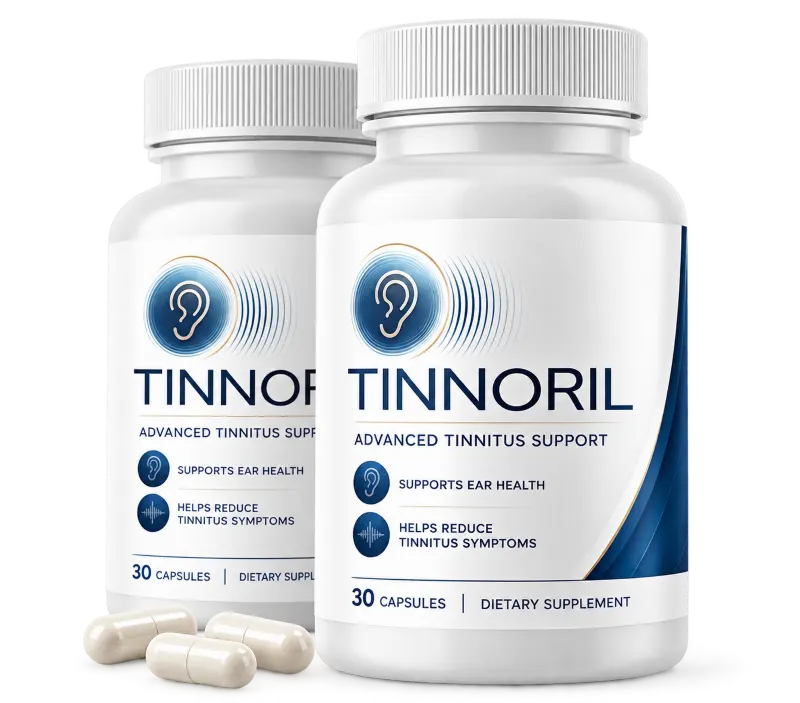
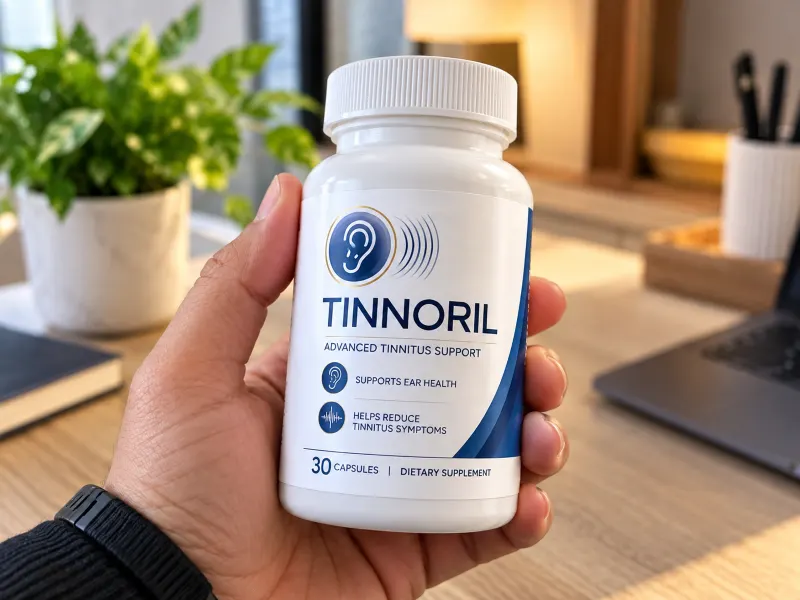
Tinnoril is a capsule-based dietary supplement marketed toward people interested in ear health and general auditory wellness. The currently available product information describes one capsule as a daily serving, with 30 capsules in a bottle.
Quick snapshot of the basics:
- Format: Capsule, 30-count bottle
- Suggested use: Once daily, taken consistently
- Positioning: General ear and auditory wellness support, not a disease treatment
- Manufacturing claims: Standard GMP-style manufacturing claims made by the brand
- Guarantee: 60-day money-back guarantee
The formula is built around magnesium and a six-ingredient proprietary blend. According to the available label information, that blend contains magnesium glycinate, alpha lipoic acid, butcher’s broom root extract, L-carnitine, turmeric rhizome extract standardized to 95% curcuminoids, and CoQ10.
That ingredient combination is interesting because several of these compounds are commonly discussed in nutritional, antioxidant, nerve-health, or cellular-energy research. However, there is an important distinction between evidence for an individual ingredient and evidence for the complete finished product.
A study involving one ingredient does not automatically prove that the exact combination inside Tinnoril will produce the same result. Dosage, formulation, absorption, duration of use, participant characteristics, and the cause of an individual’s symptoms can all influence outcomes.

Tinnoril Review: What I Found During My Research
When researching Tinnoril, I found a product that is relatively straightforward in terms of its format and ingredient list, but the amount of independent clinical information available about the finished formula is limited.
The product information identifies 80 mg of magnesium per capsule and a 575 mg proprietary blend. The six ingredients inside that blend are disclosed, but their individual amounts are not separately listed.
That matters.
For example, if a formula contains several ingredients that have been studied individually, consumers still need to know whether the amounts supplied are comparable to the doses used in research. Without individual quantities, it is difficult to make that comparison.
This does not automatically make Tinnoril unsafe or ineffective. Proprietary blends are legally used in the supplement industry. However, from a consumer-information perspective, a fully disclosed formula makes it easier to evaluate a product.
Another point worth understanding is that the available public information does not show a large, independently published clinical trial on the finished Tinnoril formula. Therefore, any expectation of a specific tinnitus or hearing outcome should be treated cautiously.
The product should be evaluated according to what is actually documented rather than according to dramatic before-and-after stories or advertisements.
Tinnoril Ingredients Explained
The ingredient list is probably the most useful place to start when evaluating Tinnoril.
Magnesium Glycinate
Magnesium is an essential mineral involved in many normal body processes, including nerve signaling and muscle function. Tinnoril’s label lists 80 mg of magnesium per serving in the form of magnesium glycinate.
Magnesium glycinate is a form of magnesium bound to glycine. It is commonly used in supplements because it is generally considered a well-tolerated form.
However, the presence of magnesium does not mean the product has been clinically proven to treat tinnitus. The role of magnesium in auditory health is an area of scientific interest, but that should not be confused with proof that supplementation will stop ringing in the ears.
Alpha Lipoic Acid
Alpha lipoic acid is a naturally occurring compound involved in cellular energy metabolism and antioxidant processes.
It has been studied in several health contexts, including conditions involving oxidative stress and nerve function. However, the quantity included in Tinnoril is not separately disclosed.
That makes it difficult to compare the product’s actual dose with doses used in particular research studies.
Butcher’s Broom
Butcher’s broom, or Ruscus aculeatus, is a botanical traditionally associated with circulation and vascular wellness.
Its presence in a hearing-oriented formula may appear unusual to some consumers. It is important not to interpret inclusion in a supplement as proof that the ingredient improves hearing or tinnitus.
As with the other blend ingredients, the specific quantity is not separately disclosed.
L-Carnitine
L-carnitine is an amino-acid derivative involved in transporting fatty acids into mitochondria, where they can be used in energy production.
Because cellular energy and mitochondrial function are subjects of nutritional research, L-carnitine appears in many wellness formulas.
Still, there is a difference between supporting normal cellular metabolism and demonstrating a clinical benefit for tinnitus. The available information does not establish that Tinnoril’s L-carnitine content treats a hearing disorder.
Turmeric Extract
Turmeric contains curcuminoids, plant compounds that have been widely studied for antioxidant and inflammatory pathways.
The available product information identifies turmeric rhizome extract standardized to 95% curcuminoids.
Turmeric is one of the more familiar ingredients in modern supplements, but consumers should again remember that ingredient research does not equal finished-product evidence.
Coenzyme Q10
Coenzyme Q10, commonly called CoQ10, is involved in mitochondrial energy production and antioxidant activity.
It is frequently included in nutritional formulas aimed at general cellular and energy support.
The available label information places CoQ10 inside the proprietary blend without identifying its individual amount. Therefore, it is not possible to determine from the label alone whether the dose corresponds to amounts used in particular clinical studies.
Does Tinnoril Really Work?
This is where I think consumers need to be especially careful.
Tinnoril may provide nutrients and plant compounds that have biological roles in the body, but there is not enough independent evidence to conclude that the finished product treats tinnitus or restores hearing.
The National Institute on Deafness and Other Communication Disorders states that no dietary supplement has been proven effective for treating tinnitus.
The American Academy of Otolaryngology–Head and Neck Surgery Foundation’s tinnitus guidance also advises against using dietary supplements as a routine treatment for persistent, bothersome tinnitus. Its recommendations instead emphasize appropriate evaluation and management strategies such as hearing-aid evaluation when hearing loss is documented and cognitive behavioral therapy for persistent bothersome tinnitus.
That doesn’t mean every person taking Tinnoril will experience nothing.
Individual experiences with nutritional supplements can vary considerably. Someone with a nutritional deficiency, for example, may experience a benefit from correcting that deficiency. Another person may notice no change at all.
But there is currently a major difference between saying a supplement supports general wellness and saying it has been clinically demonstrated to treat tinnitus.
So consumers should not interpret the absence of FDA approval as evidence that a particular supplement is fraudulent. At the same time, they should not interpret being sold legally as proof that the supplement is clinically effective.
That distinction is one of the most important points in evaluating Tinnoril.
Tinnoril Capsules: How Are They Used?
The available label information indicates a serving size of one capsule per day.
A bottle contains 30 capsules, which corresponds to approximately 30 days when used according to the labeled serving.
Consumers should follow the instructions on the bottle rather than increasing the amount because they want faster results. More capsules do not automatically mean better results.
Anyone taking prescription medicines or managing a medical condition should discuss the ingredient list with a physician or pharmacist before adding the product to their routine. The National Center for Complementary and Integrative Health also warns that dietary supplements can interact with medicines and may present risks for people with certain medical conditions.
Tinnoril Side Effects and Safety Considerations
No supplement should be treated as automatically risk-free simply because its ingredients are described as natural.
The available formula contains magnesium, turmeric, alpha lipoic acid, CoQ10, L-carnitine, and butcher’s broom. Individual tolerability can vary.
Some people may experience digestive discomfort or other unwanted effects from particular ingredients or supplements. Interactions can also matter.
This is especially relevant for people who take multiple supplements because ingredients can overlap. For example, a person might already be taking magnesium, turmeric, CoQ10, or an antioxidant formula and unknowingly duplicate ingredients.
People taking medication should review the complete ingredient list with a healthcare professional before use.
Pregnant or breastfeeding individuals, children, and people preparing for surgery should be especially cautious about starting supplements without professional guidance. NCCIH notes that many dietary supplements have not been adequately tested in pregnancy, breastfeeding, or children.
Most importantly, a supplement should not delay medical evaluation when hearing symptoms are new, severe, persistent, one-sided, or associated with dizziness, ear pain, drainage, or sudden hearing changes.
Tinnoril Pricing: What Does It Cost?
Pricing can change, so the following should be viewed as a 2026 snapshot rather than a permanent price guarantee.
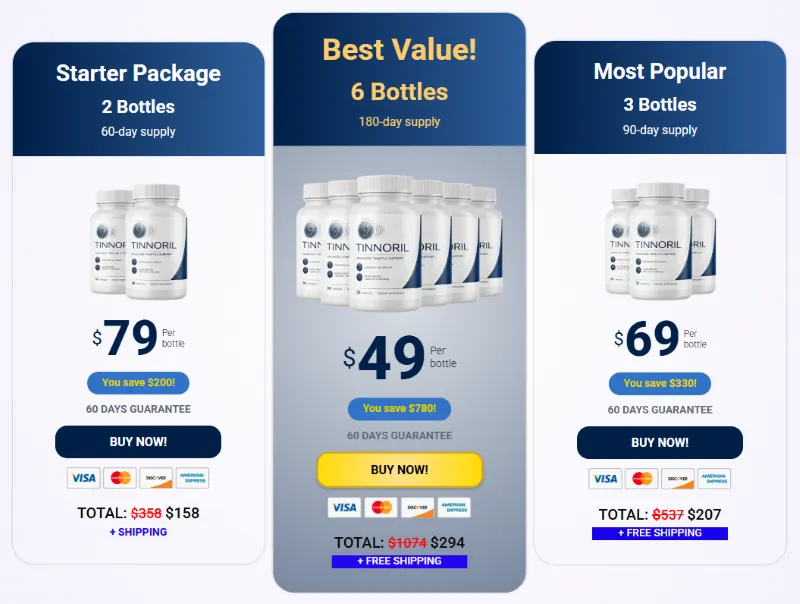
The product information reviewed in 2026 listed several package options:
| Package | Approx. Price Per Bottle | Total | Approx. Supply |
| 2 bottles | $79 | $158 | 60 days |
| 3 bottles | $69 | $207 | 90 days |
| 6 bottles | $49 | $294 | 180 days |
The available information also states that some packages include free shipping and that purchases are covered by a 60-day money-back guarantee. Pricing and terms should always be confirmed at checkout because online supplement offers can change.
Tinnoril Official Website: What Should Buyers Check?
Before ordering from the Tinnoril official website, look at the actual Supplement Facts panel rather than relying solely on advertising language.
Check the serving size, ingredient quantities, company/distributor information, refund policy, shipping terms, and total checkout price.
A trustworthy buying process should allow you to understand what you are purchasing before payment.
It is also worth saving a copy of your order confirmation and refund terms. If a problem occurs later, having the original transaction details can make communication with customer support easier.

U.S. Case Study: How a Buyer Might Evaluate Tinnoril
A 57-year-old man in Texas who has noticed mild ringing in both ears after years of working around loud machinery. He sees an online advertisement for Tinnoril and is interested because the product contains magnesium, antioxidants, and botanical ingredients.
Instead of immediately ordering a six-bottle package, he takes several steps.
First, he schedules a hearing evaluation. The assessment finds mild high-frequency hearing loss. The clinician explains that long-term noise exposure may have contributed to his symptoms.
Second, he reviews his existing medications and supplements with a pharmacist. He discovers that another supplement he takes already contains magnesium.
Third, he reads the label and notices that several ingredients in Tinnoril are part of a proprietary blend, meaning their individual amounts are not disclosed.
At this point, he can make a more informed decision. If he chooses to try the supplement, he can treat it as an optional wellness product rather than as a replacement for hearing care.
Where to Buy Tinnoril
The product has been marketed primarily through its own online sales channel rather than through a broad network of major U.S. retail stores.
If you decide to purchase Tinnoril, check that you are using the current official sales channel and carefully review the final checkout page, shipping charges, refund conditions, and order quantity before submitting payment.
The available product information indicates that checkout is processed through a third-party payment provider rather than directly through the manufacturer’s own payment infrastructure.
Because online supplement pages can change, I would avoid relying on an old screenshot, social-media advertisement, or third-party marketplace listing.
Check Tinnoril Pricing & Availability on the Official Website
- Supports hearing wellness
- Supports auditory function
- Convenient daily hearing support
- Supports everyday ear health
What I Like About Tinnoril
There are several reasonable positives to consider.
The formula uses recognizable nutritional and botanical ingredients rather than presenting itself as a prescription medication. The label identifies the six ingredients in the proprietary blend, and the product is available in a convenient once-daily capsule format.
The 60-day refund policy can also reduce some of the financial risk associated with trying a new supplement, assuming the terms are followed.
Another positive is that the product information does not need to be interpreted as proof of a medical cure. Consumers who understand that distinction can evaluate it more realistically.
Tinnoril Pros and Cons
| Pros | Cons |
| Once-daily capsule format | No strong independent clinical trial of the finished formula verified |
| Contains several recognizable nutritional compounds | Several ingredient doses are hidden within a proprietary blend |
| Magnesium amount is disclosed | Individual quantities for most blend ingredients are not disclosed |
| 30 capsules per bottle | Pricing may change over time |
| 60-day guarantee reported in available product information | Not an FDA-approved treatment for tinnitus |
| Convenient for people who prefer capsules | Should not replace hearing evaluation or professional care |
| Formula includes magnesium, ALA, turmeric and CoQ10 | Individual results cannot be guaranteed |
What Science Says About Supplements for Tinnitus
This is perhaps the most important section for anyone searching for an honest review.
Tinnitus is not one single disease. It is a symptom that can occur for different reasons, and treatment depends partly on the underlying situation.
The NIDCD explains that there are no medications specifically approved to treat tinnitus and that commonly promoted vitamins, herbal extracts, and supplements have not been proven effective for treating the condition.
A survey published in Otolaryngology–Head and Neck Surgery included 1,788 people with tinnitus from 53 countries. Among those who reported taking supplements, most did not report an effect on tinnitus, while some reported improvement and others reported worsening. The researchers concluded that supplements generally should not be recommended as tinnitus treatment.
This is useful context when evaluating Tinnoril.
The scientific question is not simply whether magnesium, turmeric, or CoQ10 can have biological effects. The more important question is whether the specific finished product, at its actual doses, has been tested in well-designed clinical trials involving people with tinnitus.
Based on the information I could verify for this review, that level of evidence is not currently established for Tinnoril.
Is Tinnoril a Scam or Legit?
After reviewing the available product information, ingredient details, pricing information, and independent health guidance, I would not describe Tinnoril as proven to be a scam.
At the same time, I would not describe it as a clinically proven treatment for tinnitus or hearing loss.
A more accurate conclusion is that it is a dietary supplement with a documented ingredient formula and a direct-to-consumer sales model, but with limited independent evidence supporting the finished product’s specific hearing-related claims.
That distinction matters.
If your definition of “legit” means “a real dietary supplement with an identifiable formula that is sold online,” the available information supports that description.
If your definition means “clinically proven to reverse tinnitus or restore hearing,” the evidence does not support that conclusion.
The best approach is to judge the product based on the actual label, evidence, cost, refund terms, and your personal health circumstances rather than on an advertisement alone.
Frequently Asked Questions
1. What is Tinnoril used for?
Tinnoril is marketed as a dietary supplement for general ear and auditory wellness. It contains magnesium and a proprietary blend of six additional nutritional and botanical ingredients.
2. What ingredients are in Tinnoril?
The available label information lists magnesium glycinate, alpha lipoic acid, butcher’s broom root extract, L-carnitine, turmeric rhizome extract standardized to 95% curcuminoids, and CoQ10.
3. How many capsules are in a bottle?
The standard bottle contains 30 capsules, corresponding to approximately 30 servings when taken according to the listed one-capsule serving.
4. Can Tinnoril improve hearing loss?
There is not enough clinical evidence to conclude that it can restore hearing loss. People experiencing hearing changes should obtain an appropriate hearing evaluation.
4. Is Tinnoril a scam or legit overall?
Based on available evidence, Tinnoril appears to be a legitimately operating supplement rather than an outright scam, but its advertising overstates what the printed label and current research actually support — a distinction worth understanding before you buy.
Final Tinnoril Review Verdict
After looking at the available information, Tinnoril is best viewed as an optional nutritional supplement rather than a proven tinnitus treatment.
The formula contains magnesium glycinate, alpha lipoic acid, butcher’s broom, L-carnitine, turmeric extract, and CoQ10. Some of these ingredients have legitimate nutritional or biological roles, but that does not establish that the complete formula will reduce tinnitus or restore hearing.
The biggest limitation is the absence of strong independent clinical evidence on the finished product. The proprietary blend also prevents consumers from seeing the exact amount of most individual ingredients.
For someone considering Tinnoril, I would focus on three questions: Does the ingredient profile make sense for you? Is the cost reasonable for your budget? And have you ruled out a medical cause of your hearing symptoms?
Those questions are more useful than simply asking whether an online product is “good” or “bad.”
If you have persistent tinnitus or noticeable hearing loss, professional evaluation should come first. A supplement can be considered separately as part of a broader wellness routine, but it should not replace evidence-based hearing care.
Scientific and Reference Sources
For readers who want to investigate the evidence independently, these are the most useful sources to consult:
- National Institute on Deafness and Other Communication Disorders (NIDCD): information on tinnitus, causes, and treatment.
- American Academy of Otolaryngology–Head and Neck Surgery Foundation: clinical guidance for tinnitus management.
- National Center for Complementary and Integrative Health (NCCIH): information about dietary supplements, evidence, safety, and interactions.
- U.S. Food and Drug Administration (FDA): consumer information explaining how dietary supplements are regulated in the United States.
- PubMed: published research on dietary supplements and tinnitus.
- American Tinnitus Association: educational information about supplements and tinnitus.
Medical disclaimer: This article is for educational and informational purposes only. It is not intended to diagnose, treat, cure, or prevent any disease. Dietary supplements are not substitutes for professional medical care. If you have persistent tinnitus, hearing loss, sudden hearing changes, dizziness, ear pain, or other concerning symptoms, speak with a qualified healthcare professional.
Author


Your Health Rights is a U.S.-based health and wellness platform dedicated to empowering readers with clear, research-backed content across Men’s Health, Women’s Health, Weight Loss, Health Supplements, and Immunity & General Wellness.


