

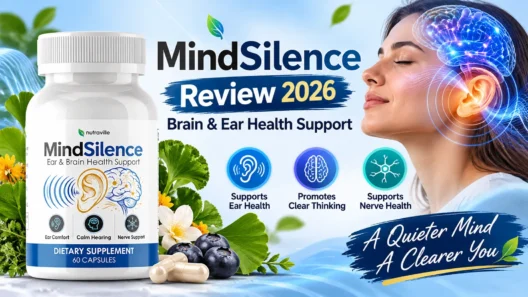



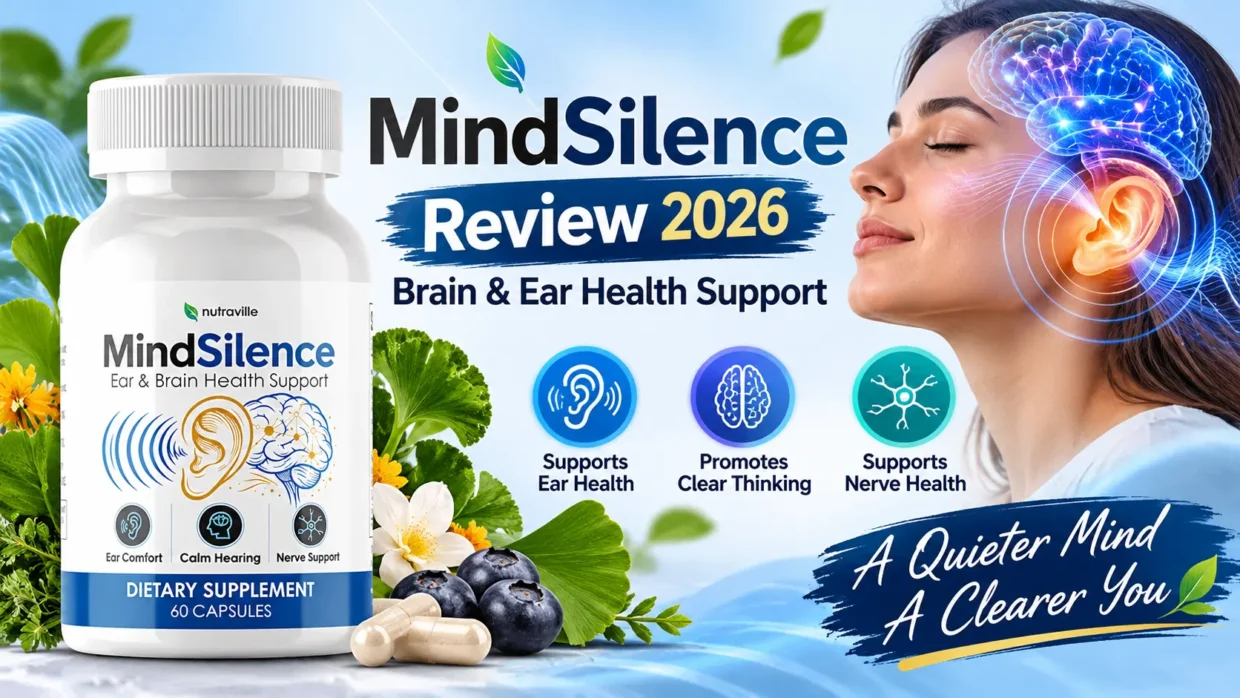
If you’re suffering from tinnitus, then you know just how frustrating it can be. It can make it very difficult to be in quiet situations. The constant ringing, buzzing, or whistling can interrupt your sleep, cause you to lose concentration, and leave you feeling drained mentally. If you’ve ever been lying awake in bed at 2am hearing noises that nobody else can, then you aren’t alone!
MindSilence is a supplement that claims to help with tinnitus relief. It aims to work by targeting the neurological signals within the brainstem. It contains seven ingredients within a two-stage formula. In this review, we’ll take a look at what it contains, how it works, and what research shows (and doesn’t show). We’ll also take a look at who shouldn’t take it and how it compares to other proven solutions so you can make an informed, level-headed decision with your doctor’s input.
What Is MindSilence?
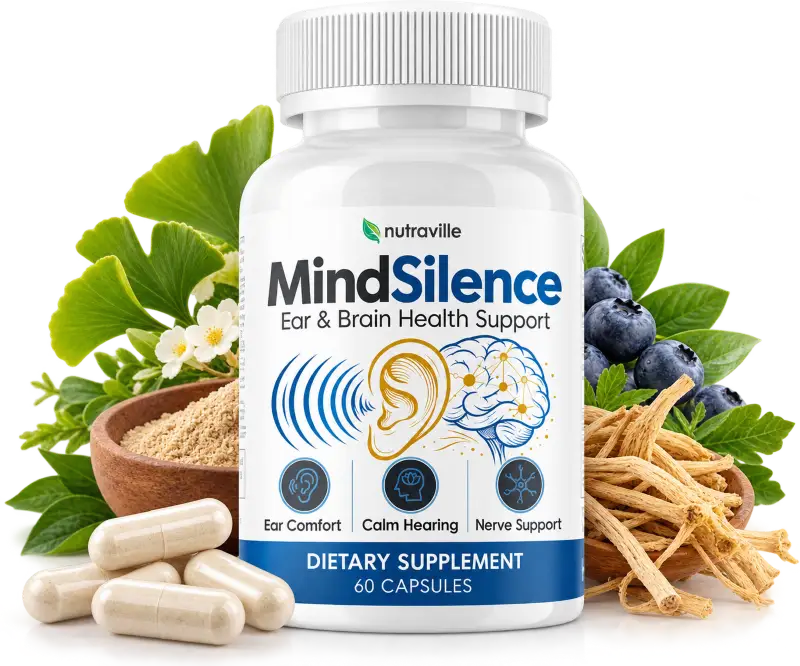
MindSilence is marketed as a seven-ingredient natural tinnitus supplement intended to support the brain and auditory system. According to its promotional material, the formula aims to calm overactive nerve signaling, support GABA-related relaxation pathways, and reduce the impact of inflammation on auditory processing.
The product is positioned differently from hearing aids or white-noise machines. Instead of covering the sound, MindSilence claims to address internal factors that may make tinnitus feel louder or more intrusive—such as stress, poor sleep, inflammation, and imbalanced brain signaling.
That idea is appealing because tinnitus is not simply an “ear problem.” The brain plays a major role in how auditory signals are interpreted and how bothersome those signals become. However, it is important to separate a plausible theory from proof that a specific supplement works.
At present, there does not appear to be a published, independent clinical trial testing the complete MindSilence formula in people with tinnitus. That means users should view its claims as promising marketing language rather than established medical evidence.
Why Tinnitus Feels Like a Brain Problem
Tinnitus is commonly described as ringing in the ears, but the experience involves both the ear and the brain. Damage or changes in the auditory system—often related to noise exposure, aging, earwax blockage, ear infections, certain medicines, or hearing loss—can change the signals sent to the brain.
The brain may then compensate for reduced or altered input by generating its own perception of sound. This is why tinnitus can persist even when the ears themselves are not actively damaged. Stress, anxiety, fatigue, and poor sleep can make the sound more noticeable, creating a frustrating cycle.
The National Institute on Deafness and Other Communication Disorders notes that there is currently no cure for tinnitus, although symptoms can often be reduced or managed through approaches such as sound therapy, hearing aids, counseling, and behavioral therapies.

Tinnitus and Anxiety: The Mental Health Link
Tinnitus rarely stays just a sound. Many people describe a loop in which the ringing raises stress, stress makes the ringing feel louder, and poor sleep makes everything worse. Studies have linked chronic tinnitus with higher rates of anxiety and low mood, which is why tinnitus and anxiety are so often discussed together. It affects mental well-being in quieter ways too: trouble concentrating, irritability and, for some, a heavy brain fog after broken nights.
Even brilliant minds, from scientists to musicians, report struggling to ignore a sound that never stops. Films like A Beautiful Mind have made many people curious about how the brain builds perception, but it is important to be clear: tinnitus is not a psychiatric disorder, and having it does not mean something is wrong with your mental health. It is a common sensory condition that happens to interact with mood.
This is where mindset and mindfulness enter the conversation. Mindfulness-based programs and cognitive behavioral therapy (CBT) have some of the strongest evidence for helping people live with tinnitus, even though they do not remove the sound. Keeping that in mind matters when you read any supplement review, MindSilence included. A capsule may or may not help, but sleep habits, stress management, and good hearing care all play a role.
How MindSilence Claims to Work
MindSilence is marketed around a “two-phase” concept:
- Support a calmer inflammatory environment through ingredients such as Ginkgo biloba, zinc, taurine, and probiotics.
- Support GABA-related relaxation through passion flower, valerian, and vitamin B6.
The idea is that a calmer nervous system may make tinnitus less intrusive, especially when stress, anxiety, and poor sleep amplify the perception of ringing.
That logic has some biological plausibility. Tinnitus and anxiety often reinforce each other: the more you focus on the sound, the more stressful it becomes; the more stressed you feel, the more noticeable the sound may seem.
But the leap from “these ingredients may support relaxation or general ear health” to “this supplement shuts down tinnitus at its source” is too strong. There is no published proof that MindSilence restores GABA levels in the brainstem, removes microplastics from the brain, or produces lasting tinnitus relief.
MindSilence and the Mind-Body Connection
One reason MindSilence may appeal to people is that tinnitus is deeply connected to mental and emotional health. A constant internal sound can affect mood, attention, sleep, and confidence in social settings.
People with tinnitus often describe:
- Difficulty concentrating because the ringing pulls attention inward
- Brain fog or mental fatigue after poor sleep
- Anxiety about whether the sound will worsen
- Irritability or low mood
- Avoidance of quiet environments
- Trouble following conversations in noisy places
Mindfulness, relaxation exercises, cognitive behavioral therapy, and sound-based strategies can help change the brain’s reaction to tinnitus. Mayo Clinic notes that relaxation techniques and cognitive behavioral therapy may help because stress can worsen tinnitus. A supplement may fit into a broader self-care routine, but it should not replace proven coping strategies—especially if tinnitus is affecting mental health, sleep, or daily functioning.
MindSilence Benefits: What May Be Realistic
Based on its ingredients, MindSilence may offer supportive benefits for some users, particularly those whose tinnitus is worsened by stress or poor sleep.
Potential supportive benefits include:
- Relaxation support from passion flower and valerian
- Sleep routine support for people who struggle to unwind at night
- General nutrient support through zinc and vitamin B6
- Antioxidant and circulatory support from Ginkgo biloba
- Gut-health support from Lactobacillus probiotics
- A structured daily habit that encourages people to pay attention to sleep, stress, and ear health
These are modest, realistic expectations. A supplement may help someone feel calmer or more supported, but it should not be expected to erase tinnitus.
What MindSilence Cannot Do
It is just as important to understand the limits.
MindSilence cannot:
- Cure tinnitus
- Reverse noise-induced hearing loss
- Replace an audiologist or ENT evaluation
- Remove impacted earwax
- Treat an ear infection
- Replace hearing aids when hearing loss is present
- Replace cognitive behavioral therapy when tinnitus is causing major distress
- Guarantee silence for every user
The NIDCD specifically states that there is no cure for tinnitus, though symptoms can be reduced through management strategies. Mayo Clinic also emphasizes that identifying or treating an underlying cause—such as earwax, infection, medication effects, or hearing loss—can be an important part of care.
MindSilence Ingredients: What Does the Research Say?
Below is a plain-language look at each ingredient and how strong the independent evidence is for tinnitus specifically.
| Ingredient | Claimed role in the formula | What research suggests |
| Ginkgo Biloba | Anti-inflammatory support | A Cochrane review found no convincing evidence that ginkgo helps tinnitus overall |
| Zinc | Auditory nerve and ear support | Small studies show mixed results; benefit appears more likely with low zinc levels |
| Taurine | Nerve protection | Early, small studies; evidence for tinnitus remains limited |
| Lactobacillus probiotics | Gut-based microplastic binding | Interesting lab work; no solid human tinnitus data |
| Passion Flower | GABA receptor support | Studied mainly for anxiety and sleep, not tinnitus |
| Valerian extract | Keeps GABA active | Used for sleep and relaxation; tinnitus evidence is thin |
| Vitamin B6 | GABA production | Essential nutrient; no proven tinnitus effect on its own |
The honest summary is that the MindSilence ingredients are mostly well-known, generally low-risk compounds, but the evidence that they reduce tinnitus is weak or indirect. The research the brand cites, such as the 2023 JAMA Network Open study, tested a neuromodulation approach rather than a supplement. It supports the idea that tinnitus involves the brain, not that MindSilence works. The microplastics paper in Nature Medicine is similarly real, but it documents that microplastics were found in brain tissue; it does not show they cause tinnitus.
Pros and Cons of MindSilence
| Pros | Cons |
| Seven familiar plant-based and nutrient ingredients | No clinical trial on the finished MindSilence formula |
| Made in the USA in a GMP-certified facility, per the brand | Ingredient doses are not clearly explained on the page |
| Third-party tested for purity, per the brand | Core claims about microplastics and the brainstem are still unproven |
| 365-day money-back guarantee | Valerian and Ginkgo can interact with some medications |
| Non-GMO and stimulant-free | Results vary, and some reviewers report a slow start |
| Bonus digital guide on larger orders | Sold online only, so you cannot compare it in a store |
MindSilence Customer Reviews: What Users Say
The website shows an average rating of 4.8 out of 5 from more than 14,000 verified customers, along with three featured testimonials. Reviewers describe the ringing easing from a constant roar to a faint whisper over roughly two months, along with better sleep and easier conversations. One reviewer mentions a slow first two weeks before any change appeared.
Worth remembering: these are testimonials published by the seller. They are useful for understanding user expectations, but they are not independent. Independent MindSilence reviews on forums and retail platforms can give a more balanced picture, and any claim of total silence deserves caution.
Case Study: A U.S. Scenario in Columbus, Ohio
Mark, 62, is a retired warehouse supervisor in Columbus, Ohio. After decades around forklifts and machinery with minimal ear protection, he developed a constant high-pitched ringing in both ears, worst at night. He also noticed foggy thinking, a short temper, and worry that the sound meant something serious.
Step 1: Medical check. Before buying anything, Mark saw his primary care doctor, who referred him to an audiologist. The hearing test showed mild high-frequency loss, a common finding in noise-related tinnitus. His doctor also reviewed his medications, since he takes a blood thinner.
Step 2: Supplement discussion. Mark asked about trying MindSilence. Because Ginkgo Biloba can affect bleeding risk, his doctor advised against it while he was on a blood thinner and suggested focusing on proven options first.
Step 3: Proven tools. He started CBT-based tinnitus counseling, a low-level sound machine at bedtime, and a 10-minute daily mindfulness routine. Within a few weeks, the ringing did not vanish, but it bothered him less, and his sleep improved.
What if Mark had no interaction risk? With his doctor’s approval, a fair trial of MindSilence would mean taking it daily for at least 60 days, keeping a simple log of ringing loudness and sleep, and using the 365-day guarantee if nothing changed.
Lesson: The case shows how a sensible path often looks in the U.S.: evaluate, check interactions, use evidence-based tools, and only then consider a supplement such as MindSilence, with a doctor’s approval.
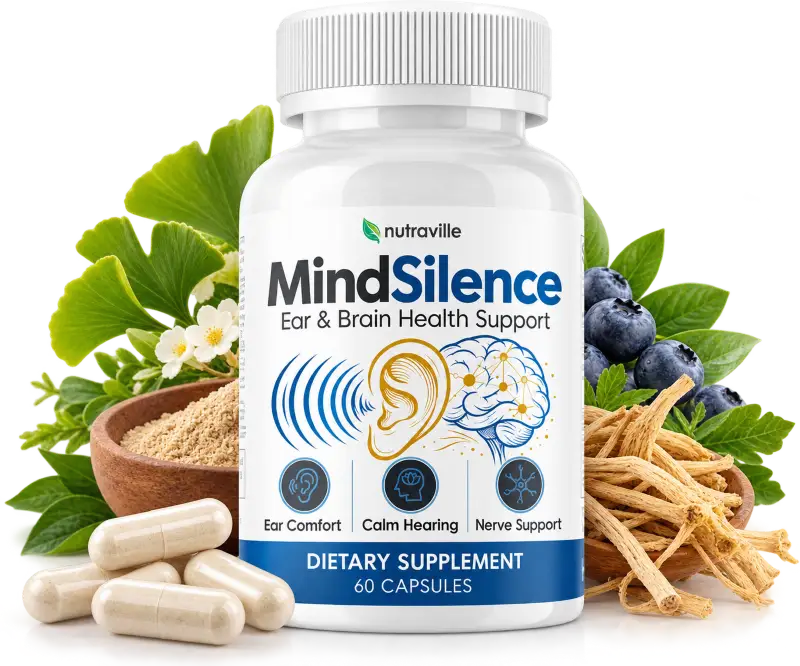
TitClaim MindSilence Ear & Brain Support
How to Take MindSilence and What to Expect
The brand recommends daily use as directed on the label, with most changes described around weeks three to eight. Practical tips:
- Follow the label directions exactly and do not exceed the suggested dose.
- Track your ringing on a 0 to 10 scale, plus sleep and mood, once a week.
- Give it at least 60 days before judging, as the company suggests.
- Keep other habits steady so you know what is causing any change.
- Stop and call a doctor if you notice side effects.
Who Should Avoid MindSilence
The brand lists pregnant or nursing women, anyone under 18, people with ingredient allergies, and people with medical conditions or upcoming surgery as groups who should not use it without medical advice. Anyone taking sedatives, antidepressants, blood thinners, or seizure medication should talk to a doctor first, because Valerian and Ginkgo Biloba can interact with some drugs. Sudden hearing loss, ringing in only one ear, pulsing tinnitus or dizziness need prompt medical attention, not a supplement.
What to Consider Before Buying MindSilence
Start with a doctor or audiologist. Ringing can come from earwax, an infection, noise damage, or certain medicines, and some of these are treatable. If it began suddenly, is only in one ear, pulses like a heartbeat, or comes with dizziness, get checked before trying any supplement.
Also check your medications and allergies. Ginkgo Biloba and Valerian can interact with blood thinners, sedatives, antidepressants, and seizure medication, so ask your doctor or pharmacist first if you take any of these.
Keep your expectations realistic. No published trial has tested the finished formula, and the brand itself talks about weeks to months. A smaller package is a safer first order than six bottles, even though six is cheaper per bottle.
Finally, buy only from the official website, save your order confirmation and read the refund steps before you pay. MindSilence works best as an add-on to proven habits like hearing protection, good sleep, and CBT, not a replacement for them.
MindSilence Price: How Much Does It Cost in 2026?
MindSilence is sold in three packages through the official website. The more bottles you order, the lower the price per bottle gets, and the 6-bottle package also includes free shipping and a free bonus report.
| Package | Supply | Price per bottle | Total price | Regular price |
| 1 bottle | 30 days | $69 | $69 | $99 |
| 3 bottles | 90 days | $59 | $177 | $297 |
| 6 bottles (most popular) | 180 days | $49 | $294 | $594 |
Which package makes sense?
- 1 bottle works as a short trial of about a month. It costs the most per bottle, and shipping is extra.
- 3 bottles cover about three months, which fits the roughly 60 days the brand suggests before judging results.
- 6 bottles have the lowest price per bottle and include free shipping and the bonus report. They are also the biggest upfront spend, so they only make sense if you are comfortable committing for six months.
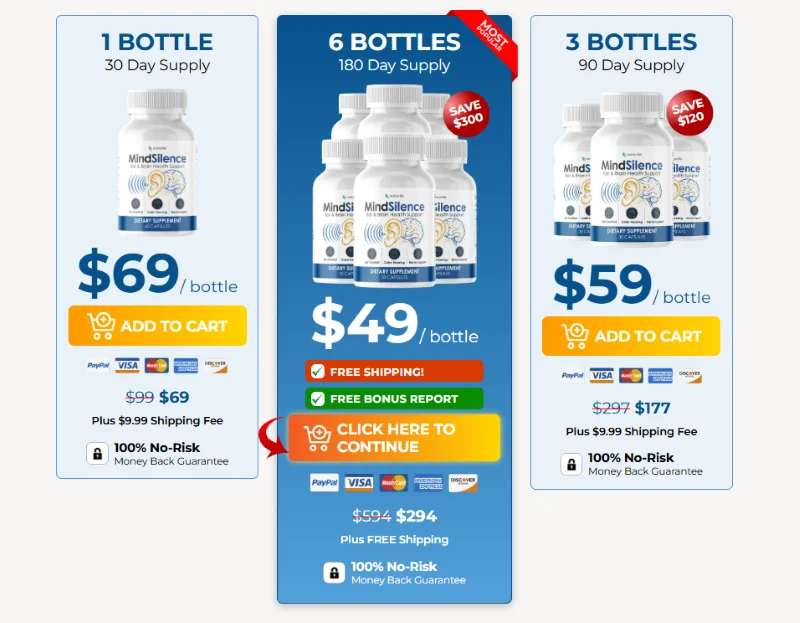
Payment and guarantee: The checkout accepts PayPal, Visa, Mastercard, American Express, and Discover. Every package is covered by the brand’s money-back guarantee, which the official page describes as lasting 365 days. Before you order, confirm the refund steps and keep your order number.
Prices can change, so check the official website for the current offer before you buy.
How Does MindSilence Compare With Other Tinnitus Options?
| Option | How it works | Evidence level | Typical cost |
| MindSilence | Multi-ingredient supplement aimed at inflammation and GABA | Ingredient-level, limited for tinnitus | About $49 to $99 per bottle |
| Other tinnitus supplements | Usually ginkgo, B vitamins, or magnesium blends | Mixed to weak | Varies |
| Hearing aids | Amplify outside sound and mask tinnitus | Good for people with hearing loss | Hundreds to thousands of dollars |
| Sound therapy and maskers | Background sound reduces contrast with the ringing | Moderate | Low to moderate |
| CBT and mindfulness | Changes your reaction to the sound and reduces distress | Strongest for quality of life | Varies; often partly covered by insurance |
| Medical evaluation | Finds treatable causes like wax or medication effects | Essential first step | Visit costs |
Compared with these, MindSilence sits in the worth-discussing-but-not-proven category. It may suit someone who has already had a medical workup and wants to add a low-risk nutritional approach alongside proven strategies, not instead of them.
Everyday Habits That Support Ear and Brain Health
Whether or not you try a supplement, these habits support ear health and general brain function:
- Protect your hearing: wear earplugs around loud tools, concerts, and machinery, and keep headphone volume moderate.
- Protect your sleep: keep a regular bedtime and use soft background sound if silence makes the ringing louder.
- Watch triggers: some people notice caffeine, alcohol, nicotine, or high salt intake worsens their ringing.
- Move your body: regular exercise supports circulation, mood, and mental clarity.
- Practice mindfulness: even 10 minutes a day can change how much attention the ringing gets.
- Get mental health support: if tinnitus is driving anxiety or low mood, a therapist can help.
Final Verdict: Is MindSilence Worth It?
MindSilence is a fairly transparent supplement. The ingredients are familiar, the company explains its theory clearly, and the money-back guarantee is long enough to try it without much financial risk. Those are real points in its favor.
The limits matter just as much. No published study has tested the MindSilence formula itself, and the ingredient research for tinnitus is mixed at best. The strongest claims, about microplastics and the brainstem, go further than the evidence currently supports. So MindSilence should not be expected to cure tinnitus, and results will differ from person to person.
It may be worth a careful try if you:
- have already seen a doctor or audiologist and ruled out treatable causes
- have your doctor’s approval, especially if you take regular medication
- are comfortable testing it for about two months and using the refund if nothing changes
It’s probably not for you if you:
- are pregnant, nursing or under 18
- take blood thinners, sedatives, antidepressants or seizure medication without medical advice
- have sudden hearing loss, ringing in one ear only, pulsing tinnitus or dizziness (see a doctor first)
The most realistic way to use MindSilence is as one small part of a bigger plan. A medical check-up, hearing protection, better sleep, stress management, and tools like CBT, sound therapy, and mindfulness have the strongest backing for making tinnitus easier to live with. A supplement can sit alongside those habits, but it shouldn’t replace them. That combination, together with a steady mindset, is the best path to real tinnitus relief.
MindSilence FAQ
1. What is MindSilence?
MindSilence is a seven-ingredient dietary supplement marketed for tinnitus relief and ear health support. It combines Ginkgo Biloba, zinc, taurine, probiotics, Passion Flower, Valerian, and vitamin B6.
2. Does MindSilence really work for tinnitus?
There is no published trial of the full formula, so no one can promise it works. Some users report improvement, while research on the individual ingredients is mixed to limited.
3. How long does MindSilence take to work?
The brand describes changes from about week three, with fuller effects around two months. Individual results vary, and some people notice nothing.
4. Is MindSilence safe?
The ingredients are common and generally well tolerated, and the brand says it is made in a GMP-certified U.S. facility. Valerian and Ginkgo Biloba can interact with certain medications, so check with your doctor first.
5. Can MindSilence help with tinnitus and anxiety?
MindSilence is not an anxiety treatment. Passion Flower and Valerian are traditionally used for relaxation, which may help some people feel calmer, but CBT and mindfulness have stronger evidence for tinnitus-related anxiety.
6. Is MindSilence legit?
It’s a real product with a real website, a listed support email and phone number, and a refund policy. “Legit” and “proven” aren’t the same thing, though. The ingredients are ordinary and widely sold, but no published study has tested the MindSilence formula itself, so results are not guaranteed.
7. Does MindSilence have a money-back guarantee?
Yes. The official page describes a 365-day guarantee. Contact the support team (the email is on the website) if you want a refund, and don’t wait until the last week.
8. Is MindSilence FDA approved?
No. Supplements aren’t approved by the FDA, and the brand’s own disclaimer says its statements haven’t been evaluated by the FDA. The page says it’s made in an FDA-registered, GMP-certified facility, which is a different thing from approval.
Sources and Scientific References
Trusted health sources
- American Tinnitus Association
- NIDCD, Tinnitus
- Mayo Clinic, Tinnitus overview
- Cleveland Clinic, Tinnitus
- CDC and National Center for Health
- Cochrane Library (systematic reviews, including CBT for tinnitus distress)
Studies cited on the MindSilence website (PubMed)
- Jones GR, et al. Reversing Synchronized Brain Circuits Using Targeted Auditory-Somatosensory Stimulation to Treat Phantom Percepts. JAMA Network Open, 2023.
- Nihart AJ, et al. Bioaccumulation of Microplastics in Decedent Human Brains. Nature Medicine, 2025.
- Hilton MP, Zimmermann EF, Hunt WT. Ginkgo Biloba for Tinnitus. Cochrane Database of Systematic Reviews, 2013.
- Yeh CW, et al. Effects of Oral Zinc Supplementation on Patients with Noise-Induced Hearing Loss Associated Tinnitus. J Chin Med Assoc, 2019.
- Brozoski TJ, et al. The Effect of Supplemental Dietary Taurine on Tinnitus and Auditory Discrimination. Hearing Research, 2010.
Disclaimer: This MindSilence review is for information only and is not medical advice. Statements about the product have not been evaluated by the FDA, and the product is not intended to diagnose, treat, cure or prevent any disease. Consult a qualified healthcare professional before starting any supplement, especially if you are pregnant, nursing or taking medication.
Author


Your Health Rights is a U.S.-based health and wellness platform dedicated to empowering readers with clear, research-backed content across Men’s Health, Women’s Health, Weight Loss, Health Supplements, and Immunity & General Wellness.


