





Quick Answer: Lungora is a once-daily dietary supplement marketed for respiratory and lung wellness. Its currently published formula includes magnesium glycinate, alpha-lipoic acid, butcher’s broom root extract, L-carnitine, turmeric extract, and Coenzyme Q10. However, there is an important distinction between supporting general wellness and treating a respiratory condition. The available product information does not establish that Lungora can treat, cure, or reverse a lung disease, and the finished product itself does not appear to have published clinical trials demonstrating a specific respiratory benefit.
If you are considering Lungora, the smartest approach is to look beyond the phrase “lung cleanse” and examine five things: the formula, the evidence behind its ingredients, transparency about doses, safety, and whether the product fits your actual health goals.
This Lungora review takes that approach.
What Is Lungora?
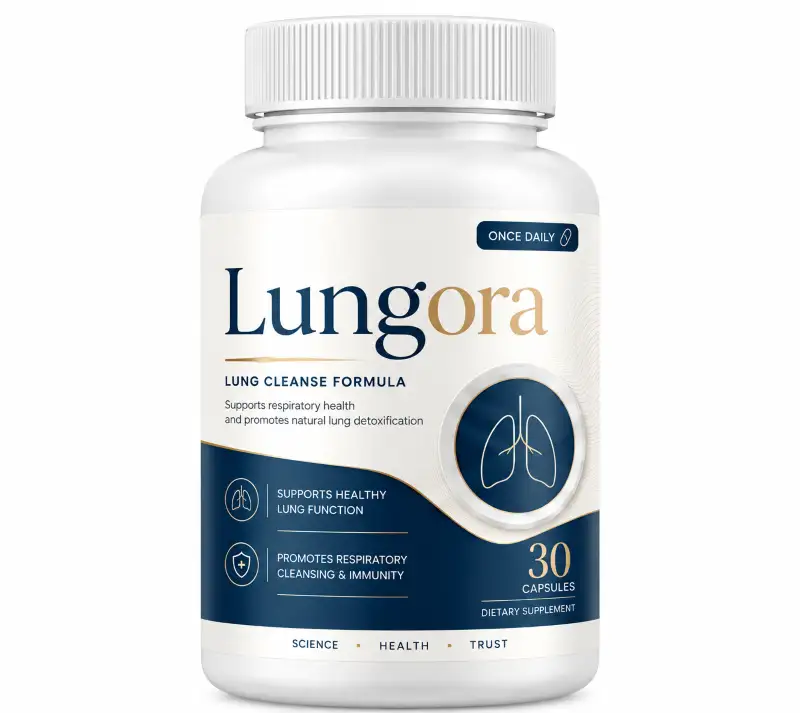
Lungora is an online dietary supplement positioned toward adults who want daily respiratory and general wellness support. The manufacturer’s current information describes it as a once-daily capsule containing a combination of antioxidant, circulation, cellular-energy, and nutritional ingredients.
According to the currently available product information, one bottle contains 30 capsules and the suggested use is one capsule per day. The published formula includes magnesium glycinate plus a proprietary blend containing alpha-lipoic acid, butcher’s broom root extract, L-carnitine, turmeric extract, and Coenzyme Q10.
That ingredient list is important because the product’s marketing can make it sound more respiratory-specific than the actual formula appears to be.
There is nothing inherently wrong with a general wellness formula. In fact, several ingredients used in Lungora have legitimate nutritional or biochemical roles. The question is whether those ingredients, in the amounts provided, can reasonably be expected to produce the respiratory benefits a buyer might assume from the product’s name and marketing.
That is where this Lungora review becomes more interesting.

Lungora Review: The 5 Things You Should Know
1. Look at the Actual Ingredients, Not Just the “Lung Cleanse” Label
The first thing to understand about Lungora is that its ingredient list matters much more than its branding.
The currently published formula contains six featured ingredients:
- Magnesium glycinate
- Alpha-lipoic acid
- Butcher’s broom root extract
- L-carnitine
- Turmeric extract
- Coenzyme Q10
The official product information says the five non-magnesium ingredients are combined into a 575 mg proprietary blend, while magnesium is separately listed on the supplement facts panel.
This creates an important limitation for consumers.
A proprietary blend tells you which ingredients are included, but it does not necessarily tell you exactly how much of every individual ingredient you are receiving. That makes it harder to compare the product directly with individual supplements or clinical studies, because research normally evaluates a specific ingredient at a specific dose.
For example, magnesium itself is a well-established nutrient. The National Institutes of Health’s Office of Dietary Supplements explains that magnesium participates in hundreds of biochemical processes involving muscle and nerve function, energy production, blood glucose regulation, and other physiological functions.
But that does not automatically mean magnesium supplementation improves lung function in an otherwise healthy person.
The same principle applies to the other ingredients.
Magnesium Glycinate
Magnesium is essential for normal muscle and nerve function and energy metabolism. The NIH notes that adult magnesium requirements generally range from about 310–420 mg per day depending on age and sex, while the upper limit for magnesium specifically from supplements and medications is 350 mg per day for adults.
So magnesium can certainly have a legitimate nutritional role.
But consumers should distinguish between “supports normal body function” and “improves breathing.”
Those are not equivalent claims.
Alpha-Lipoic Acid
Alpha-lipoic acid is an antioxidant compound involved in cellular energy metabolism. It has been investigated for several areas of health, but the existence of antioxidant activity does not prove that an ALA-containing supplement will improve respiratory symptoms.
Butcher’s Broom
Butcher’s broom is traditionally associated with circulation and vascular support. That may explain why it is included in a multi-pathway wellness formula.
However, circulation support is not the same thing as treating a lung condition.
L-Carnitine
L-carnitine plays a role in transporting fatty acids for energy production. It is therefore commonly found in products positioned around energy, metabolism, exercise, and vitality.
Again, its biochemical role should not be confused with clinical evidence for respiratory disease.
Turmeric
Turmeric and its component curcumin have received considerable scientific attention because of their antioxidant and anti-inflammatory properties.
But the National Center for Complementary and Integrative Health says there is still not enough evidence to definitively conclude that oral turmeric or curcumin is beneficial for many health purposes.
Coenzyme Q10
CoQ10 naturally occurs in the human body and participates in cellular energy processes. It is widely sold as a dietary supplement.
However, the NCCIH states that research results for many proposed uses of CoQ10 remain inconclusive or limited.
So the first major takeaway from this Lungora review is simple:
The ingredients have legitimate biological roles, but that does not automatically prove that the finished product improves lung health.
2. Lungora Benefits Need to Be Separated From Marketing Claims
When researching Lungora benefits, it is easy to encounter phrases such as “lung cleanse,” “detox,” “better breathing,” or “respiratory support.”
These phrases can sound convincing.
But there is a major difference between a dietary supplement supporting general wellness and a clinically proven treatment for a respiratory condition.
Healthy lungs already have natural defense and clearance mechanisms. The respiratory system uses mucus, cilia, immune cells, coughing, and other physiological processes to protect and clear the airways.
That means consumers should be cautious about the idea that a capsule can literally “clean” or “detox” the lungs in the same way that a household cleaner removes dirt.
The American Lung Association emphasizes established approaches to maintaining lung health, including avoiding tobacco smoke, reducing exposure to pollutants, staying physically active, maintaining vaccinations when appropriate, and discussing respiratory concerns with a healthcare professional.
A supplement should therefore be viewed as potentially complementary to a healthy lifestyle, rather than a replacement for evidence-based respiratory care.
This distinction is especially important for someone experiencing:
- Persistent cough
- Wheezing
- Shortness of breath
- Chest pain
- Coughing blood
- Recurrent respiratory infections
- Unexplained fatigue during normal activity
Those symptoms deserve medical evaluation rather than self-treatment with a supplement.
In other words, Lungora may fit into someone’s general wellness routine, but it should not be treated as a substitute for diagnosis or medical treatment.
3. The Ingredient Evidence Is More Complicated Than the Product Marketing
One of the most important parts of this Lungora review is looking at the difference between ingredient research and product-specific research.
A supplement company can point to studies showing that an ingredient has antioxidant activity. That does not mean researchers have proven that the company’s particular combination works for a specific health outcome.
This distinction is often missed in online supplement reviews.
What Does the Research Say?
Magnesium
Magnesium is unquestionably important to human health.
The NIH reports that magnesium is involved in more than 300 enzyme systems and contributes to normal muscle and nerve function, energy production, blood pressure regulation, and other processes.
But that evidence establishes the importance of magnesium as a nutrient. It does not establish Lungora as a treatment for chronic respiratory disease.
Turmeric and Curcumin
Turmeric is another example.
There is substantial laboratory and human research around curcumin. Some studies suggest possible benefits in areas such as joint health and certain inflammatory markers.
Yet NCCIH notes that the evidence remains insufficient to definitively conclude that turmeric or curcumin is beneficial for many health conditions. It also warns that highly bioavailable curcumin products have been associated with liver injury in some people.
Therefore, it would be inaccurate to say that turmeric automatically provides a proven lung benefit.
CoQ10
CoQ10 is another scientifically interesting ingredient.
It plays a role in cellular energy production, but NCCIH describes evidence for several proposed uses as limited or inconclusive. It can also interact with certain medicines, including warfarin and insulin.
The Finished Formula
This is the biggest issue.
Finding research on magnesium, turmeric, CoQ10, or another ingredient is not the same as finding a randomized controlled trial of the exact Lungora formula.
Based on the publicly available product information reviewed for this article, there is no clearly presented large, peer-reviewed clinical trial demonstrating that the finished Lungora product treats a respiratory disease.
That doesn’t necessarily make the supplement worthless.
It simply means buyers should keep their expectations realistic.
4. Transparency and Dosage Matter More Than a Long Ingredient List
A common mistake when comparing supplements is assuming that more ingredients automatically mean a stronger formula.
That’s not necessarily true.
The important questions are:
How much of each ingredient is included?
Is that amount supported by research?
Is the ingredient standardized?
Is the finished formula clinically tested?
The currently published Lungora information identifies a 575 mg proprietary blend containing five ingredients.
That means consumers cannot use the public product information alone to determine the exact amount of each ingredient in that blend.
This matters because dosage is a fundamental part of scientific evidence.
Suppose a clinical study examines a specific dose of CoQ10. You cannot assume that a product containing an unspecified amount of CoQ10 will produce the same result.
The same applies to turmeric, alpha-lipoic acid, and L-carnitine.
Why This Matters for Buyers
Before buying any supplement, look for:
- A complete Supplement Facts panel.
- Amounts per serving.
- Clear serving instructions.
- Manufacturer information.
- Lot or quality information where available.
- Appropriate warnings.
- A realistic description of what the product can and cannot do.
The current manufacturer information states that Lungora should be taken as one capsule daily and that each bottle contains 30 capsules.
That makes the routine simple.
But simplicity should not be confused with proof of effectiveness.
5. Safety Should Come Before Ordering
This is probably the most important section for anyone considering Lungora.
“Natural” does not automatically mean “risk-free.”
The ingredients in a supplement can interact with medications or be inappropriate for certain people.
Magnesium
The NIH notes that high supplemental magnesium intake can cause diarrhea, nausea, and abdominal cramping, while very high amounts can lead to serious toxicity. Magnesium can also interfere with the absorption of certain medications, including some antibiotics and bisphosphonates.
Turmeric
NCCIH reports that conventional oral turmeric is generally considered safe in recommended amounts for limited periods, but it can cause digestive symptoms. Highly bioavailable curcumin products have also been associated with liver injury in some individuals.
CoQ10
CoQ10 is generally considered well tolerated, but it can interact with medications such as warfarin and insulin.
The product’s own safety information recommends that people taking medication or managing a medical condition consult a physician before use. It also states that the product is not intended for people under 18 or for pregnant or nursing women.
That is sensible advice.
If you take prescription medication, have kidney or liver problems, have a diagnosed respiratory disease, are pregnant or breastfeeding, or are preparing for surgery, discuss the complete ingredient list with your healthcare professional before taking the product.
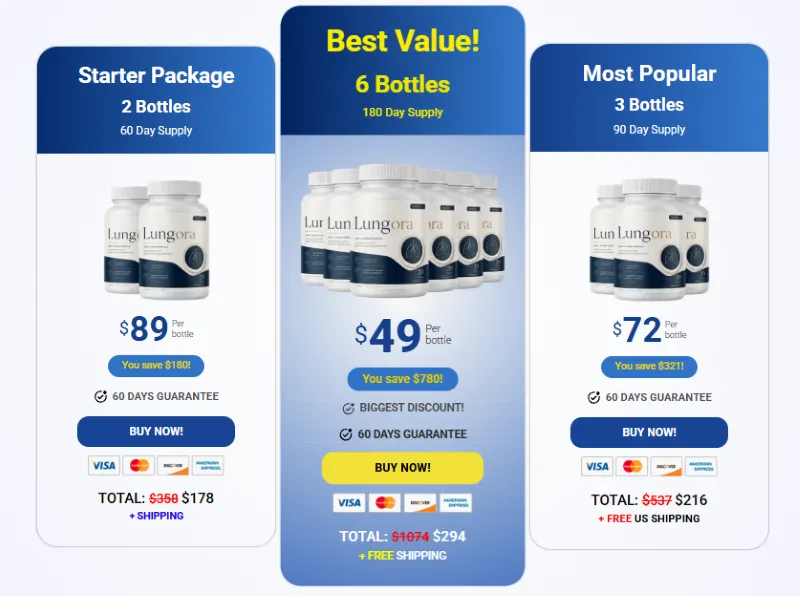
Lungora Pricing Details
Lungora Pros and Cons
Here is a straightforward summary.
| Pros | Cons |
| Once-daily capsule format | Exact amounts of several blend ingredients are not clearly disclosed |
| Contains six featured ingredients | Finished-product clinical evidence is limited |
| Includes magnesium, CoQ10 and turmeric | Not a replacement for medical respiratory treatment |
| Simple 30-capsule monthly format | “Lung cleanse” wording can create unrealistic expectations |
| Official information provides safety warnings | Individual ingredient research does not prove the whole formula works |
| Convenient for people who prefer capsules | People taking medication should check for interactions |
| Vegetarian capsule is listed by the manufacturer | Results can vary substantially between individuals |
Lungora Ingredients: What They Actually Bring to the Formula
For readers specifically researching Lungora ingredients, the easiest way to understand the formula is by grouping the components according to their general nutritional role.
Antioxidant Support
Turmeric, alpha-lipoic acid, and CoQ10 are commonly associated with antioxidant activity.
Antioxidants are involved in protecting cells from oxidative processes, but this does not mean an antioxidant supplement automatically prevents lung disease.
Cellular Energy
CoQ10 and L-carnitine are connected to normal cellular energy processes.
This may make the combination appealing to people interested in overall vitality in addition to respiratory wellness.
Mineral Support
Magnesium provides an essential mineral involved in muscle and nerve function.
Circulation
Butcher’s broom has traditionally been used in formulas focused on circulation.
The overall concept therefore looks less like a conventional respiratory medication and more like a multi-purpose wellness formula containing antioxidant, circulation, energy, and nutritional components.
That distinction is worth remembering.
What Customers Say About Lungora
Robert M. — Ohio, USA | Age 54 ⭐⭐⭐⭐⭐
“I’ve been taking Lungora with my morning coffee, and I like how simple the routine is. It’s just one capsule a day, so it has been easy for me to stay consistent.”
Linda K. — Arizona, USA | Age 61 ⭐⭐⭐⭐⭐
“Before trying Lungora, I wanted to understand what was actually in the formula. I liked being able to look through the ingredient information before making my decision.”
David S. — Texas, USA | Age 48 ⭐⭐⭐⭐⭐
“My experience with Lungora has mainly been about convenience. Ordering was straightforward, and the daily capsule fits easily into my routine.
Lungora Results: What Should You Realistically Expect?
Anyone searching for Lungora results should be careful with online testimonials.
Individual experiences can be genuine, but they do not establish that the product will work the same way for everyone.
A person may report feeling more energetic after starting a supplement. Another person may notice no difference. A third person may change several lifestyle habits at the same time, making it impossible to know which change produced an effect.
There is also a psychological factor: people who spend money on a product and expect improvement may naturally pay more attention to changes afterward.
That doesn’t mean testimonials are fake.
It means testimonials should be considered anecdotal evidence, not clinical proof.
A reasonable approach is to define your goal before starting any supplement.
“I want to improve my overall wellness routine and support healthy lifestyle habits.”
That is a realistic goal.
This is very different from:
“I expect this capsule to reverse chronic lung disease.”
The second expectation is medically inappropriate.
Lungora vs. a Conventional Respiratory Supplement Approach
A direct comparison can help clarify what buyers are actually purchasing.
| Feature | Lungora | Conventional respiratory-care approach |
| Primary format | Dietary capsule | Depends on condition |
| General purpose | Wellness/respiratory support | Diagnosis and treatment where medically necessary |
| Ingredients | Antioxidant, mineral, circulation and energy ingredients | Depends on diagnosed condition |
| Clinical diagnosis required | No | Often yes |
| Intended to replace medical care | No | Medical care is the foundation |
| Lifestyle component | Important | Very important |
| Evidence for specific disease treatment | Not established | Depends on treatment and condition |
| Appropriate for unexplained breathing problems | No — medical evaluation is more appropriate | Yes, when guided by a clinician |
This comparison is not intended to suggest that every respiratory product is clinically proven.
Rather, it shows why supplements and medical treatment should not be treated as interchangeable categories.
How to Buy Lungora Safely
If you decide that this type of supplement fits your wellness routine, verify the seller before purchasing.
The manufacturer currently directs consumers to its online ordering system, and the product information states that the official product comes with a 60-day money-back guarantee.
Because supplement websites and reseller pages can change over time, check the current product page before placing an order.
For anyone searching for Lungora where to buy, the safest approach is to verify that the page is the manufacturer’s current official sales channel rather than relying on an unknown third-party seller.
Check the Latest Lungora Details, Pricing & Availability
- Supports respiratory wellness
- Supports lung health
- Helps maintain respiratory comfort
- Promotes healthy breathing
Is Lungora Worth It?
Whether Lungora is worth buying depends heavily on what you expect from it.
If you’re looking for a convenient once-daily wellness supplement containing magnesium, antioxidants, and other nutritional ingredients, the formula may be worth researching further.
If you’re looking for a clinically proven treatment for asthma, COPD, emphysema, chronic bronchitis, infection, or another respiratory condition, this product should not be considered a substitute for medical care.
There is also a transparency issue worth considering.
The formula lists a proprietary blend for several ingredients, meaning buyers have less information about the exact amount of each component. That makes it harder to compare the formula with clinical research.
For me, this is one of the most important points in this Lungora review.
A supplement does not need to be “bad” for a consumer to decide that the evidence is not strong enough for their personal needs.
7 Things to Check Before You Order
Before you order Lungora, ask yourself:
- Do I actually need a supplement?
- Am I expecting it to treat a medical condition?
- Have I checked the full ingredient list?
- Do I know whether any ingredients interact with my medications?
- Am I comfortable with a proprietary blend?
- Am I buying from a legitimate sales channel?
- Am I also following proven lifestyle measures for lung health?
If you can answer those questions confidently, you are in a much better position to make an informed decision.
How to Support Lung Wellness Without Depending on Supplements
A supplement should never become the centerpiece of a lung-health strategy.
Some of the most meaningful habits are much less exciting:
Avoid Smoking
If you smoke, quitting is one of the most important things you can do for long-term respiratory health.
Reduce Exposure to Pollutants
Pay attention to smoke, dust, chemical fumes, and outdoor air pollution when exposure is high.
Stay Active
Regular physical activity can support cardiovascular fitness and overall functional capacity.
Eat a Balanced Diet
A varied diet containing vegetables, fruits, whole grains, legumes, nuts, seeds, and adequate protein provides many nutrients involved in normal body function.
Stay Current With Preventive Care
Vaccination, routine checkups, and appropriate screening can be more important to respiratory health than any supplement.
Don’t Ignore Symptoms
Persistent coughing, wheezing, chest pain, coughing blood, or unexplained shortness of breath should not simply be attributed to aging or poor fitness.
Scientific Resources Used for This Review
The purpose of these sources is to separate established nutritional information from product marketing claims.
National Institutes of Health – Office of Dietary Supplements
The NIH Office of Dietary Supplements provides detailed information about magnesium, including its physiological roles, recommended intake, upper limits, and medication interactions.
NIH Office of Dietary Supplements – Magnesium
PubMed
PubMed is a useful database for finding peer-reviewed biomedical research and systematic reviews.
American Lung Association
The American Lung Association provides educational information about lung health, respiratory conditions, smoking cessation, air quality, and preventive measures.
Final Verdict: Should You Buy Lungora?
After looking at the formula, ingredient evidence, transparency, safety information, and the difference between general wellness and medical treatment, my conclusion is mixed but reasonable.
Lungora has a straightforward once-daily format and includes several ingredients with recognized nutritional or biochemical functions. Magnesium, turmeric, alpha-lipoic acid, L-carnitine, CoQ10, and butcher’s broom are not random substances; each has a reason for being included in a wellness formula.
However, that does not mean the finished product has been clinically proven to cleanse the lungs or treat respiratory disease.
The biggest consideration is the gap between ingredient-level evidence and product-level evidence. Research on an individual ingredient cannot automatically be transferred to an entire proprietary blend.
The second consideration is transparency. When several ingredients are contained within a proprietary blend, consumers have less information about the exact amount of each ingredient.
The third consideration is expectations.
If you view Lungora as one possible addition to an overall wellness routine, your expectations are more realistic.
If you are hoping that it will replace an inhaler, physician consultation, prescribed medication, smoking cessation, or treatment for a diagnosed lung condition, it is not an appropriate substitute.
Ultimately, the best decision is an informed one.
Read the label. Check the ingredients. Consider your medications. Verify the seller and current pricing. And most importantly, don’t use a supplement as a reason to ignore persistent respiratory symptoms.
Medical disclaimer: This article is for educational purposes only and does not provide medical advice, diagnosis, or treatment. Dietary supplements are not intended to diagnose, treat, cure, or prevent disease. Speak with a qualified healthcare professional before starting a new supplement, particularly if you have a medical condition, are pregnant or breastfeeding, or take prescription or over-the-counter medication.
Author


Your Health Rights is a U.S.-based health and wellness platform dedicated to empowering readers with clear, research-backed content across Men’s Health, Women’s Health, Weight Loss, Health Supplements, and Immunity & General Wellness.


