


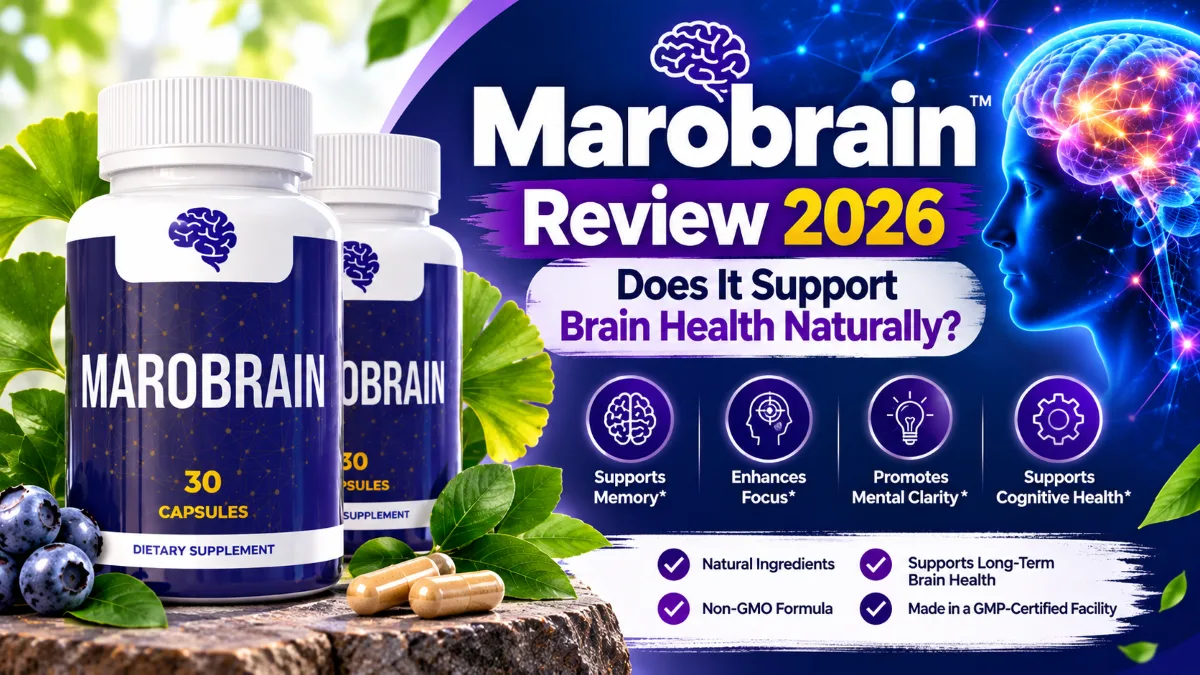
If you have been noticing occasional brain fog, difficulty staying focused, or simply want to take better care of your cognitive health, you have probably come across a growing number of supplements marketed for memory and mental performance. But the important question is not whether a product sounds impressive—it is whether its formula, evidence, transparency, and intended use make sense.
This Marobrain Review 2026 takes a closer look at the product from that perspective. I reviewed the manufacturer’s available information, the ingredients it publicly highlights, current scientific literature, pricing information, and what a U.S. consumer should consider before purchasing a cognitive supplement.
One important point comes first: Marobrain itself has not been established in high-quality clinical trials as a complete finished product. Some individual ingredients used in cognitive supplements have been studied, but that does not automatically mean the finished formula produces the same results.
So, does Marobrain support brain health naturally? It may provide nutritional and herbal ingredients intended to support memory, focus, and mental clarity, but the evidence should be interpreted ingredient-by-ingredient rather than as proof that the finished supplement treats cognitive problems.
Medical disclaimer: This article is for educational purposes only. Marobrain is a dietary supplement, not a medication. It should not be used to diagnose, treat, cure, or prevent Alzheimer’s disease, dementia, depression, ADHD, or another medical condition. Anyone experiencing new, persistent, or worsening memory problems should speak with a qualified healthcare professional.
Quick Marobrain Review 2026
| Category | My assessment |
| Product type | Cognitive/brain wellness supplement |
| Intended purpose | Memory, focus and mental clarity support |
| Formula positioning | Natural/herbal + nutritional ingredients |
| Key ingredients publicly highlighted | Bacopa monnieri, Huperzine-A, vitamin B12 and other nutrients |
| Stimulant positioning | Marketed as a non-stimulant formula |
| Manufacturing claim | U.S.-based/GMP-related claims are made by seller websites |
| Money-back guarantee | 60-day or 180-day claims appear on different sales pages; verify the current terms before ordering |
| Current advertised pricing | Promotional offers vary by sales page |
| Clinical evidence for finished product | Not established from independent human trials |
| Overall view | Potentially interesting formula, but consumers should verify the current label and avoid treating marketing claims as clinical proof |
The biggest issue I noticed during research is that different Marobrain-branded websites and sales pages currently show different pricing, guarantees, and even product descriptions. For that reason, consumers should check the exact supplement facts panel, seller identity, refund terms, and final checkout price before purchasing.
What Is Marobrain?
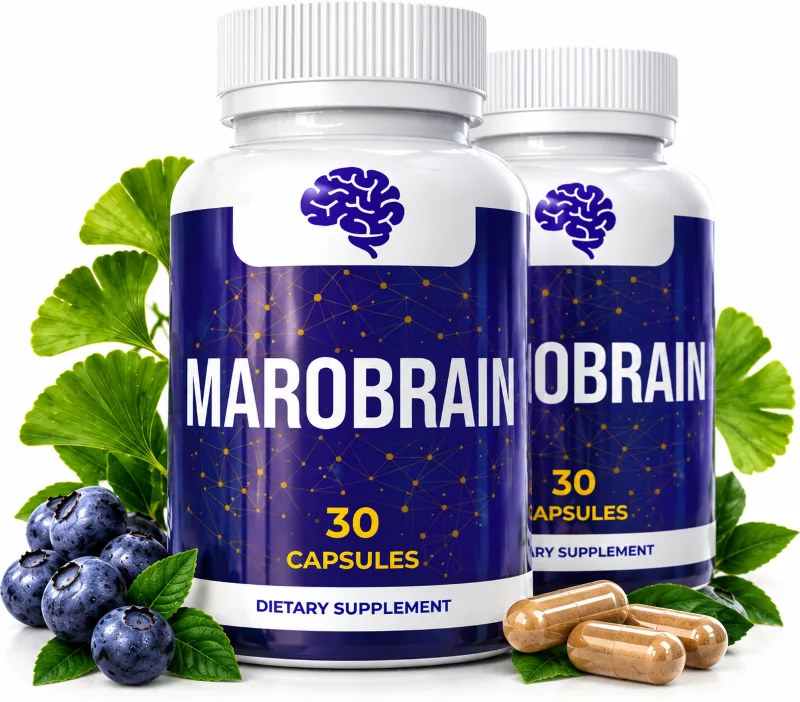
Marobrain is marketed as a dietary supplement intended to provide nutritional and herbal support for cognitive wellness.
The product is positioned around several common goals:
- Supporting memory
- Maintaining mental clarity
- Supporting concentration
- Helping with occasional brain fog
- Supporting healthy nervous-system function
- Providing nutritional support for everyday brain health
The manufacturer’s website describes a formula containing ingredients such as Bacopa monnieri, Huperzine-A and vitamin B12. Another product page also lists vitamins B1 and B6. Because online product pages can change, the current Supplement Facts label on the bottle should always take priority over a marketing page.
The National Center for Complementary and Integrative Health (NCCIH) notes that although some natural products have produced modest findings in individual studies, there is currently no conclusive evidence that dietary supplements prevent Alzheimer’s disease or other forms of dementia.
Therefore, I would look at Marobrain as a wellness supplement, rather than as a treatment for a neurological condition.

How Does Marobrain Work?
The basic concept behind Marobrain is fairly straightforward.
Rather than relying on a traditional stimulant-style energy boost, the formula is promoted around ingredients that may contribute to different aspects of cognitive wellness.
These may include:
Memory support: Certain botanical ingredients, particularly Bacopa monnieri, have been investigated for memory-related outcomes.
Nervous-system nutrition: B vitamins have important biological roles in normal nervous-system function and energy metabolism.
Attention and mental performance: Certain botanical compounds have been studied for attention and cognitive performance, although results are not uniform.
Antioxidant support: Some plant compounds are studied for their antioxidant properties, which is one reason they frequently appear in brain-health formulas.
The important caveat is that these mechanisms don’t mean a person will necessarily experience a noticeable improvement.
Human cognition is influenced by many factors, including sleep, stress, physical activity, diet, medications, alcohol use, mood, cardiovascular health, aging and existing medical conditions.
That is why I would not judge a cognitive supplement only by its ingredient list.
Marobrain Ingredients: What Does the Formula Contain?
The publicly available product information highlights several ingredients. However, because online pages currently differ, I recommend checking the latest bottle label before making a purchasing decision.
1. Bacopa Monnieri
Bacopa monnieri, sometimes called Brahmi, is probably the most interesting ingredient from a cognitive-research perspective.
It has been investigated for memory and cognitive performance in human trials.
A systematic review of randomized controlled trials found some evidence that Bacopa could improve aspects of memory, particularly free recall. However, the researchers also noted that evidence for other cognitive domains was much less convincing.
A 2014 meta-analysis of randomized controlled trials involving standardized Bacopa extracts also reported potential improvements in certain measures of cognition and attention, but researchers emphasized the need for larger and better-designed studies.
More recent research has produced a more nuanced picture. A 2026 network meta-analysis comparing Bacopa and Ginkgo in healthy adults found promising results for certain memory outcomes, particularly with higher-dose Bacopa, while not finding significant differences for all attention and processing-speed measures.
So, Bacopa is interesting—but not magic.
Another important limitation is that the evidence concerns specific Bacopa extracts, doses and study populations. You cannot automatically assume that any product containing Bacopa will reproduce those findings.
2. Huperzine-A
Huperzine-A is another ingredient associated with cognitive supplements.
It comes from Huperzia serrata and has been researched in relation to acetylcholinesterase inhibition and cognitive function.
However, the evidence surrounding Huperzine-A is not strong enough to treat it as a guaranteed memory enhancer.
This is an important lesson when reading supplement advertising:
A biological mechanism is not the same thing as proven clinical effectiveness.
A compound can affect a pathway in laboratory research and still produce uncertain or inconsistent results in real-world human use.
People taking prescription medications should also discuss Huperzine-A-containing supplements with a healthcare professional before use because supplement-drug interactions can matter.
3. Vitamin B12
Vitamin B12 has an established physiological role in normal neurological function and red blood cell formation.
B12 deficiency can cause neurological problems, so maintaining adequate B12 status is important.
However, that does not mean taking extra B12 automatically improves memory in someone who already has adequate B12 levels.
This distinction is often missed in supplement marketing.
Correcting a nutritional deficiency is different from pushing nutrient levels above normal in hopes of enhancing cognition.
4. Vitamin B1
Some Marobrain product information lists thiamine, or vitamin B1.
Thiamine plays an important role in energy metabolism and normal nervous-system function. Adequate intake is therefore relevant to general neurological health.
Again, though, a nutritional role does not automatically establish that supplementation improves memory in healthy people.
5. Vitamin B6
Vitamin B6 is another nutrient listed on some product pages.
It is involved in numerous biochemical reactions, including neurotransmitter metabolism.
The presence of B6 therefore makes sense from a nutritional perspective, but consumers should not confuse “supports normal physiology” with “clinically proven to improve memory.”
A 2023 review of commonly marketed over-the-counter memory supplements found that evidence for several frequently used ingredients—including vitamin B6 and B12—was not compelling for improving memory in the general population.
What Does Science Actually Say About Cognitive Supplements?
This is where a good review should become more cautious.
The cognitive-supplement market often makes very large claims. You may see phrases suggesting sharper memory, protection against age-related decline, improved concentration and even protection against dementia.
Scientific evidence is much more complicated.
NCCIH states that there is currently no conclusive evidence that dietary supplements can prevent Alzheimer’s disease or other forms of dementia.
A systematic review published through PubMed similarly concluded that evidence was insufficient to recommend over-the-counter supplements for protecting cognition in adults with normal cognition or mild cognitive impairment.
A more recent review also found that the evidence for nutritional supplements and cognition varies considerably according to the ingredient, population, dose and outcome being measured.
That doesn’t mean every cognitive supplement is useless.
It means we should ask a better question:
Does the evidence support the specific ingredient, dose, population and outcome—not just the general idea of “brain support”?
That’s the standard I would apply here.
Marobrain Benefits: What Could You Reasonably Expect?
Based on its ingredients and positioning, the potential benefits can be divided into reasonable expectations and marketing expectations.
Reasonable expectations
A person may use the product as part of a broader routine intended to support:
- Everyday cognitive wellness
- Nutritional support for the nervous system
- Memory-related function
- Focus and concentration
- Mental clarity
- General healthy aging
Expectations that need more caution
I would be skeptical of claims suggesting that a supplement can:
- Reverse dementia
- Prevent Alzheimer’s disease
- Cure brain fog caused by an underlying illness
- Replace prescribed treatment
- Produce dramatic memory changes within a few days
- Guarantee cognitive improvement
There is no good reason to expect a dietary supplement to produce identical results for every user.
Marobrain and Brain Health: What Matters Beyond Supplements?
One of the biggest mistakes consumers make is treating a supplement as the foundation of brain health.
It isn’t.
A much stronger approach is to build the foundation first.
That means paying attention to:
Sleep
Poor sleep can affect concentration, mood and memory. If someone is chronically sleep-deprived, taking a supplement while ignoring sleep is unlikely to solve the underlying problem.
Physical activity
Regular physical activity is associated with broad health benefits and is an important component of healthy aging.
Diet
A balanced diet rich in vegetables, fruits, legumes, whole grains, nuts, fish and other nutrient-dense foods can provide nutritional support for overall health.
Cardiovascular health
Blood pressure, cholesterol, diabetes and vascular health are closely connected with brain health.
Mental stimulation
Reading, learning new skills, social interaction and mentally challenging activities can all be part of an active lifestyle.
Stress management
Long periods of unmanaged stress can affect sleep, attention and day-to-day mental performance.
A supplement should ideally complement these habits—not replace them.
USA User Case Study
A 52-year-old U.S. office worker named “David.”
David works remotely and spends approximately eight hours a day in front of a computer. Over several months, he notices that he occasionally loses his train of thought during meetings and has trouble concentrating after lunch.
He searches online for a brain supplement and finds Marobrain.
Instead of immediately assuming the product will solve everything, he first evaluates his routine.
He realizes that:
- He sleeps around six hours on weekdays.
- He rarely exercises.
- His meals are inconsistent.
- He drinks several caffeinated beverages throughout the day.
- His workload has been unusually stressful.
David decides that if he tries a cognitive supplement, he will use it only as one part of a broader wellness routine.
Over the next several weeks, he works on getting more consistent sleep, walking regularly, eating more balanced meals and taking breaks from prolonged screen time.
If he eventually notices improved concentration, he should not automatically conclude that the supplement alone caused the improvement.
That is the key lesson.
Real-world cognitive performance is influenced by multiple variables at the same time.
For a U.S. consumer, this is a much more sensible way to evaluate a supplement than expecting a dramatic transformation from capsules alone.
Marobrain vs. Other Cognitive Supplements
A comparison can help put the product into perspective.
| Feature | Marobrain | Single-ingredient Bacopa | Basic B-complex |
| Main concept | Multi-ingredient cognitive support | Herbal cognitive support | Nutritional support |
| Memory focus | Yes | Yes | Indirectly relevant |
| Botanical ingredients | Yes | Yes | Usually no |
| B vitamins | Depending on current formula | Usually no | Yes |
| Evidence for individual ingredients | Mixed/moderate depending on ingredient | More specifically studied | Strong nutritional role, limited evidence for enhancement |
| Evidence for finished product | Limited independent evidence | Ingredient-specific evidence | Depends on deficiency/status |
| Best viewed as | Wellness supplement | Specific botanical | Nutritional supplement |
This comparison highlights an important point.
More ingredients do not automatically mean better results.
A single ingredient with a well-studied standardized extract may have stronger evidence for a specific outcome than a large proprietary blend.
On the other hand, a multi-ingredient formula can be convenient for consumers who prefer an all-in-one product.
Marobrain Pricing and Availability
Pricing is one area where I would recommend being especially careful.
During my research, I found different official-looking sales pages advertising different package structures.
One sales page currently lists:
| Package | Listed Price |
| 2 bottles | $89 each + shipping |
| 3 bottles | $72 each + free shipping |
| 6 bottles | $49 each + free shipping |
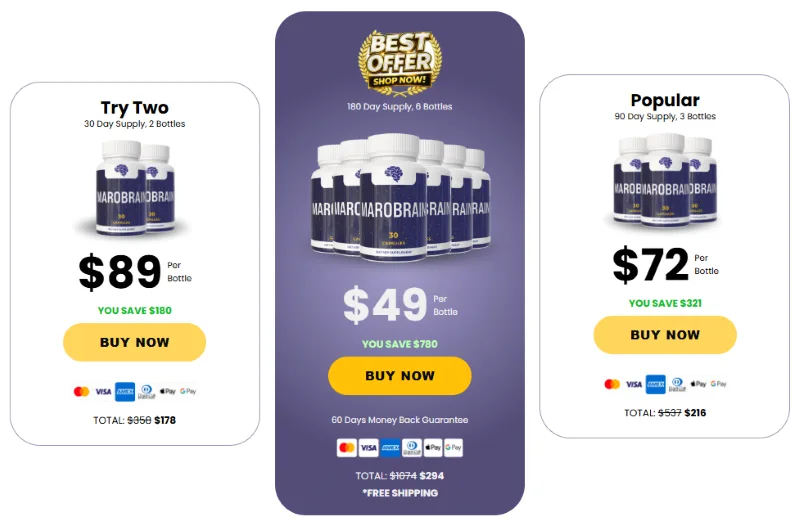
The site also advertises a 60-day money-back guarantee.
Because supplement prices and promotions can change, consumers should verify the current price on the seller’s checkout page before purchasing.
Marobrain Pros and Cons
| Pros | Cons |
| Focuses on cognitive wellness rather than a stimulant-style energy product | Independent clinical trials on the finished formula are lacking |
| Contains ingredients that have been studied individually | Evidence for individual ingredients does not prove the complete formula works |
| Bacopa has some human research behind it | Research findings are mixed and depend on extract and dose |
| Includes nutrients relevant to normal nervous-system function | Extra vitamins may not provide noticeable benefits if you are already sufficient |
| Convenient capsule-based approach | Product information and pricing vary between online pages |
| Designed for everyday wellness | Should not be considered a treatment for dementia or cognitive disease |
| Money-back guarantees are advertised | Buyers should verify current guarantee conditions before ordering |
Should You Order Marobrain?
I would not make the decision based purely on the phrase “natural brain support.”
Instead, ask yourself what you actually want.
If you’re a generally healthy adult who wants to experiment with a supplement containing ingredients researched for cognitive wellness, the formula may be worth investigating.
But if you are experiencing:
- Rapid memory loss
- Confusion
- Significant personality changes
- Problems managing everyday tasks
- New neurological symptoms
- Persistent concentration problems
- Memory changes that are worsening
then purchasing a supplement should not be your first step.
If you decide to Order Marobrain, check the package price, shipping terms, refund conditions, and subscription or recurring-order language—if any—before completing payment.
Is Marobrain Safe?
“Natural” does not automatically mean risk-free.
Plant extracts and concentrated nutrients can have pharmacological effects, and supplements may interact with prescription medications.
Before using Marobrain, talk with a healthcare professional if you:
- Take prescription medications
- Have a neurological condition
- Have liver or kidney disease
- Are pregnant or breastfeeding
- Have a history of medication sensitivity
- Are already taking several supplements
Also, don’t stack multiple cognitive products without checking their labels.
For example, taking several products containing B6 or other overlapping ingredients could unintentionally increase your intake.
Frequently Asked Questions
1. What is Marobrain used for?
It is marketed as a dietary supplement for cognitive wellness, including memory, focus and mental clarity. It is not intended to diagnose or treat a medical condition.
2. Does Marobrain really work?
There is not enough independent clinical evidence to conclude that the finished product definitely improves cognition. Some individual ingredients, particularly Bacopa monnieri, have been studied, but ingredient-level research does not prove the effectiveness of the complete formula.
3. Is Marobrain FDA approved?
Consumers should be careful with this wording. Dietary supplements are not approved by the FDA in the same way prescription drugs are. Some seller pages describe manufacturing in FDA-registered facilities, but that should not be interpreted as FDA approval of the product’s effectiveness.
4. Does Marobrain improve memory?
The formula is marketed for memory support, and Bacopa—the ingredient highlighted in the product information—has some research suggesting potential benefits for certain memory outcomes. However, results are not guaranteed, and the complete product has not been established as an effective memory treatment through independent clinical trials.
5. How long does it take to notice results?
There is no scientifically established timeline for the finished product. Studies of Bacopa have generally evaluated supplementation over weeks rather than expecting an immediate effect.
Final Verdict: Is Marobrain Worth Considering?
After looking at the available product information and the scientific evidence, my view is cautiously positive—but not strongly conclusive.
The formula is interesting because it includes ingredients such as Bacopa monnieri and B vitamins that have legitimate biological roles and, in some cases, human research behind them.
However, there’s a major difference between saying:
“This ingredient has been studied for cognition.”
and saying:
“This particular supplement has been clinically proven to improve your memory.”
The first statement may be supported by research in some circumstances. The second requires clinical evidence on the finished product.
That evidence is currently not strong enough for me to describe Marobrain as a proven cognitive treatment.
I would therefore categorize it as a potential brain-wellness supplement, rather than a medical solution.
If you’re considering it, check the latest label, compare the doses with the research, verify the current price and refund policy, and speak with your healthcare professional if you take medications or have health concerns.
Most importantly, don’t overlook the fundamentals. Consistent sleep, regular physical activity, a nutritious diet, cardiovascular health, stress management and staying mentally/socially active remain much more important foundations for long-term brain health than any single supplement.
So, does Marobrain support brain health naturally? It is formulated with ingredients intended to do so, and some of those ingredients have promising research behind them. But the finished product should be approached realistically: potential support, not a guaranteed cognitive transformation or treatment for disease.
Scientific Resources & References
For readers who want to investigate the evidence themselves, these are useful starting points:
- National Center for Complementary and Integrative Health (NCCIH) — information on dietary supplements, cognition, dementia and Alzheimer’s disease.
- PubMed — Bacopa meta-analysis — analysis of randomized controlled trials involving Bacopa and cognitive outcomes.
- PubMed — dietary supplements and cognitive performance — systematic review examining evidence for commonly marketed cognitive ingredients.
- PubMed — OTC supplements and cognitive decline — systematic review concluding that evidence remains insufficient to recommend OTC supplements for cognitive protection.
- Marobrain product information — current manufacturer/product claims, ingredients and purchasing information should be checked directly because promotional pages can change.
Author


Your Health Rights is a U.S.-based health and wellness platform dedicated to empowering readers with clear, research-backed content across Men’s Health, Women’s Health, Weight Loss, Health Supplements, and Immunity & General Wellness.


