




If you have started researching bladder comfort, urinary wellness, or supplements designed specifically for women, you have probably come across FemiCore. It is marketed as a daily dietary supplement built around botanical ingredients and probiotic strains intended to support urinary and feminine wellness.
But does FemiCore actually make sense as part of a daily routine? What is inside the capsules? Are the ingredients backed by research? And what should a woman realistically expect after taking it for several weeks?
In this detailed FemiCore review, I’ll look at the formula, potential benefits, ingredient research, safety considerations, pricing information, expected results, and some of the claims made around the product. I’ll also explain where the science is stronger and where it is still limited.
One important point before going further: FemiCore is a dietary supplement, not a prescription treatment. Research on individual ingredients does not automatically prove that the finished product will produce the same results. Anyone experiencing burning urination, blood in the urine, fever, back or side pain, or other signs of a possible urinary infection should speak with a healthcare professional rather than relying on a supplement.
What Is FemiCore?
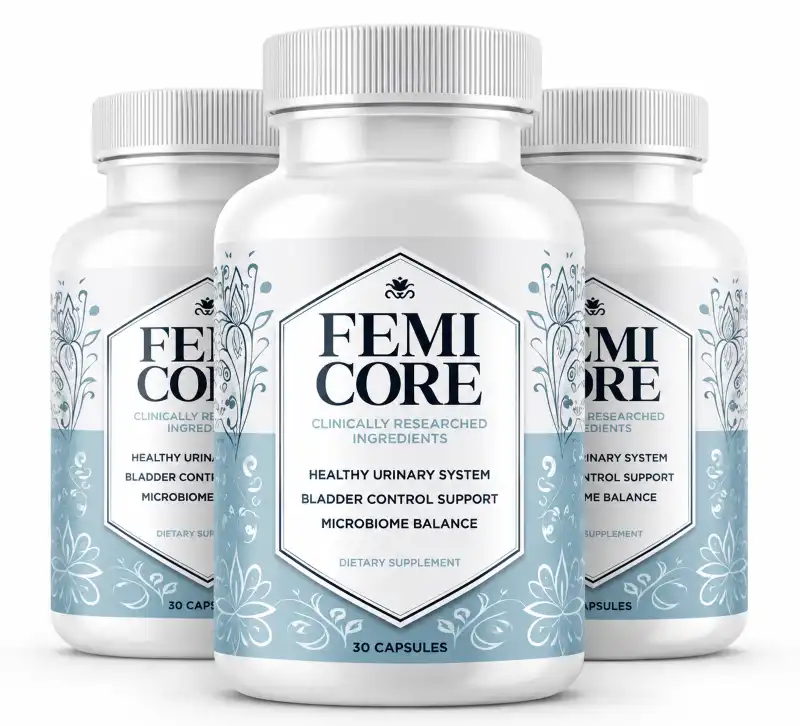
FemiCore is marketed as a women’s daily wellness formula focused primarily on bladder and urinary health. The product is sold in capsule form and is positioned around a combination of botanical extracts and probiotic ingredients.
The product’s online descriptions emphasize urinary comfort, bladder support, and microbiome balance. Several websites selling the product describe a nine-ingredient formulation involving cranberry, bearberry, mimosa pudica, berberine, and several Lactobacillus strains.
The exact formulation and serving information should always be checked against the label supplied with the bottle because online product pages can change. Different FemiCore-related domains currently present slightly different descriptions of serving size and packaging, so the bottle label and checkout information should be treated as the final reference.
This distinction matters because a supplement’s marketing language can be broader than the evidence available for its individual ingredients.
For women researching FemiCore supplement options, the most useful starting point is therefore not the sales page. It is the ingredient panel.

Why Are Women Looking for Bladder Support?
Urinary symptoms are surprisingly common among women. According to the National Institute of Diabetes and Digestive and Kidney Diseases, bladder control problems affect women frequently, particularly around life stages such as pregnancy, childbirth, menopause, and aging.
NIDDK also explains that urinary symptoms can include urgency, frequency, leakage, difficulty emptying the bladder, and nighttime urination.
A large U.S. study published through the NIDDK Central Repository found that lower urinary tract symptoms were common among women participating in the RISE FOR HEALTH study, with storage symptoms such as urgency and incontinence being particularly relevant.
That helps explain the growing interest in products such as FemiCore.
However, urinary symptoms can have many different causes. A supplement designed for general wellness should not be confused with medical diagnosis or treatment.
How Does FemiCore Work?
The basic idea behind FemiCore is relatively straightforward.
Rather than relying on one ingredient, the formula is presented as a combination of botanical compounds and probiotics. The botanical side is intended to complement urinary wellness, while the probiotic side is aimed at supporting a healthy microbial environment.
This is an interesting approach because the urinary and vaginal microbiomes have been studied in relation to recurrent urinary problems.
Research involving Lactobacillus crispatus is particularly interesting. In a randomized, placebo-controlled phase 2 study, women who received an intravaginal L. crispatus preparation after treatment for cystitis experienced fewer recurrent UTIs than the placebo group, although the study was relatively small and investigated a specific vaginal product rather than an oral supplement like FemiCore.
That last point is important.
It would be inaccurate to take research on a particular Lactobacillus strain administered vaginally and say that the same result has been proven for an oral FemiCore capsule. The research provides biological context, not proof of product-specific effectiveness.
FemiCore Ingredients: What’s Inside?
One of the most important parts of this review is the ingredient profile.
Current product information identifies nine ingredients divided broadly into botanical and probiotic components. The exact quantities and strain designations should be confirmed on the package you receive.
1. Cranberry Extract
Cranberry is probably the most familiar urinary-health ingredient in the formula.
Cranberries contain compounds called proanthocyanidins, commonly abbreviated as PACs. Researchers have proposed that certain cranberry compounds may make it more difficult for some bacteria to adhere to urinary tract surfaces.
The National Center for Complementary and Integrative Health notes that cranberry products may reduce the overall risk of symptomatic recurrent UTIs in some women, but the evidence remains inconsistent. Importantly, cranberry should not be considered a treatment for an existing UTI.
So the realistic interpretation is that cranberry may have a preventive or supportive role for some women, rather than acting like an antibiotic.
2. Bearberry Leaf
Bearberry, also known as uva ursi, has a long history of traditional use for urinary-related concerns.
Its most notable compound is arbutin, which is metabolized into compounds including hydroquinone.
Human pharmacokinetic research has demonstrated urinary excretion of arbutin metabolites after oral bearberry extract administration. However, pharmacokinetic evidence is different from proving that a particular commercial supplement prevents infections or improves bladder control.
Bearberry also deserves extra caution during pregnancy and breastfeeding because safety information is limited in these populations. LactMed notes that uva ursi is generally avoided during breastfeeding because of insufficient data and potential toxicity concerns.
3. Mimosa Pudica
Mimosa pudica is a botanical ingredient found in several wellness formulations.
The plant has been studied for various biological properties, but the clinical evidence supporting its use specifically for everyday bladder control is much less established than the evidence surrounding some better-studied urinary ingredients.
This is one reason I would avoid describing this ingredient as a proven solution for urinary urgency or leakage.
4. Berberine
Berberine is a naturally occurring compound found in plants such as barberry and goldenseal.
It has attracted significant scientific interest, particularly for metabolic health. Research has examined its effects on glucose metabolism, insulin resistance, lipids, and other areas.
However, that does not mean berberine has been proven to treat bladder problems.
NCCIH also notes that berberine can cause gastrointestinal side effects and may interact with medications. It should not be used during pregnancy or breastfeeding because of potential risks to the fetus or infant.
This makes the ingredient particularly relevant when discussing who should avoid starting a supplement without medical guidance.
5–9. Lactobacillus Probiotic Strains
The probiotic portion of the formula is designed around Lactobacillus strains.
Probiotics are live microorganisms that may provide a health benefit when administered in adequate amounts. The NIH Office of Dietary Supplements emphasizes that probiotic benefits are highly dependent on the specific strain, dose, and intended use. Not every product labeled as a probiotic has proven clinical benefits.
This is a crucial point when evaluating FemiCore.
Simply seeing “Lactobacillus” on a label does not establish that a product will prevent urinary infections or improve bladder control. Researchers often identify probiotics by genus, species, and specific strain designation.
Some research is encouraging. A 2011 randomized controlled trial involving L. crispatus found a lower recurrence rate in the probiotic group compared with placebo, although the confidence interval was wide and the researchers called for larger studies.
More recent research continues to investigate probiotics for recurrent urinary problems, including combinations of Lactobacillus strains.
The takeaway is that the probiotic concept is scientifically interesting, but the evidence should not be exaggerated into a guarantee.
Check the Official FemiCore Website for More Details
Potential FemiCore Benefits
The potential benefits of FemiCore are best understood as areas the formula is designed to support rather than guaranteed outcomes.
Everyday Urinary Comfort
The combination of cranberry, botanicals, and probiotics is intended to support a healthy urinary environment.
For someone who simply wants nutritional support as part of a broader wellness routine, that positioning may be appealing.
Support for a Healthy Microbiome
The probiotic component is intended to support beneficial bacteria.
The microbiome is increasingly recognized as an important part of women’s health. However, microbiome science is complicated, and changing bacterial populations does not automatically translate into a particular clinical outcome.
Bladder Wellness
The product is marketed toward women concerned about bladder comfort and urinary habits.
Bladder control issues can be associated with many factors, including pregnancy, childbirth, menopause, aging, obesity, diabetes, and other health conditions. NIDDK recommends discussing persistent bladder problems with a healthcare professional rather than simply self-managing them indefinitely.
Convenient Daily Routine
Another practical benefit is the capsule format.
Women who prefer capsules to powders or drinks may find a capsule-based routine easier to maintain. Of course, convenience does not determine effectiveness, but adherence is still an important part of any daily wellness routine.
What About FemiCore Before and After Results?
This is where consumers should be especially careful.
Searches for FemiCore before and after may produce testimonials, advertisements, or user-generated claims. Those experiences can be interesting, but they should not be treated as clinical evidence.
A before-and-after story does not control for:
- Diet changes
- Fluid intake
- Caffeine consumption
- Menopause status
- Exercise
- Stress
- Existing medications
- Treatment of an underlying infection
- Natural changes in symptoms
- Placebo effects
For that reason, I would not promise a specific number of days before someone notices an improvement.
A person might notice no meaningful difference. Another person might report improved confidence or comfort. Someone with an underlying medical condition may require completely different treatment.
The scientifically responsible approach is to treat individual experiences as anecdotal rather than proof.
A Real U.S. User Case Study
“Maria,” a fictional 52-year-old woman from Texas, has occasional urinary urgency and frequently drinks coffee during her workday. She has no diagnosed urinary infection and decides to try a bladder-health supplement after discussing her symptoms with her healthcare professional.
During the first two weeks, she makes no major changes except reducing afternoon caffeine and increasing her awareness of fluid intake.
By weeks three and four, she reports that she feels more comfortable planning longer outings because she has changed some of her habits and is paying closer attention to bladder triggers.
Would it be correct to say the supplement alone caused the improvement?
No.
Several factors changed simultaneously. Caffeine reduction may matter because certain beverages can irritate the bladder in some people. NIDDK notes that caffeine, carbonated beverages, alcohol, citrus beverages, spicy foods, and other foods may contribute to bladder irritation for some individuals.
FemiCore Pros and Cons
| Potential Pros | Potential Cons |
| Capsule format is convenient | Product-specific clinical trials are not clearly established |
| Combines botanical and probiotic ingredients | Individual ingredient research does not prove finished-product effectiveness |
| Cranberry has some evidence for recurrent UTI prevention | Cranberry does not treat an existing UTI |
| Lactobacillus research is an active scientific area | Probiotic effects depend heavily on strain and dose |
| Designed specifically around women’s urinary wellness | Online product information can vary between sales pages |
| Could fit into a broader wellness routine | Some ingredients may not be appropriate during pregnancy or breastfeeding |
| 60-day guarantees are advertised on some sales pages | Pricing and bundle offers can change |
FemiCore Pricing: What Should You Expect?
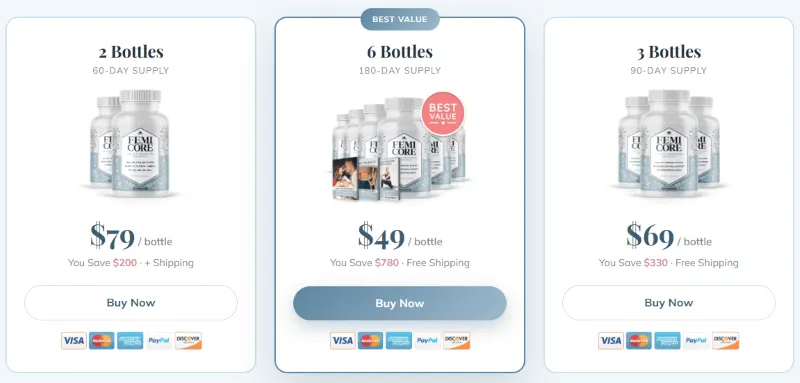
Online pricing information is not completely consistent across the websites currently associated with the product.
One sales page currently lists multi-bottle packages at approximately 49–79 per bottle depending on the quantity purchased, while other product pages show different package structures.
Because supplement pricing, discounts, shipping charges, and promotional offers can change quickly, consumers should verify the final price at checkout.
This is especially important when an advertisement shows a very large percentage discount. The meaningful number is the actual amount charged, including shipping and any recurring-payment terms if applicable.
Check the Official FemiCore Website for Current Product & Ordering Information
How Long Does It Take to Work?
There is no scientifically established universal timeline for this particular product.
Some supplement marketers suggest that several weeks are needed to see noticeable changes, particularly when probiotics are involved. But the timeframe depends on the ingredient, dose, individual physiology, underlying cause of symptoms, and outcome being measured.
It would therefore be more realistic to think about the process in stages.
During the first few weeks, you may simply be assessing tolerance and consistency.
Over the following weeks, you can observe whether your urinary comfort, bathroom habits, or general wellness routine has changed.
If symptoms become worse or new symptoms appear, the answer should not be to keep increasing the supplement. It is better to investigate the underlying cause.
Is FemiCore Safe?
Safety depends on the individual ingredients, quantities, medical history, and medications a person uses.
The most important thing is not to assume that “natural” automatically means risk-free.
For example, berberine can interact with medications and is not considered appropriate during pregnancy or breastfeeding.
Bearberry also deserves caution because of its active constituents and limited safety information for certain populations.
Anyone with an active UTI should also avoid using a supplement as a substitute for medical treatment. NIDDK states that bladder infections can involve symptoms such as burning during urination, frequent urges, lower abdominal discomfort, cloudy or bloody urine, and strong-smelling urine. Untreated infections can progress to kidney infections.
When You Should See a Doctor
This is probably the most important section of the entire review.
If you have:
- Burning when urinating
- Blood in your urine
- Fever or chills
- Back or side pain
- Significant lower abdominal pain
- New severe urinary urgency
- Vomiting
- Symptoms that keep returning
do not assume that a women’s wellness supplement is the answer.
A healthcare professional can determine whether you have an infection or another urinary condition and decide whether testing or treatment is required.
NIDDK specifically recommends professional evaluation for bladder-control problems because there can be different underlying causes.
Where Can You Buy It?
Consumers searching for the FemiCore official website should verify the exact domain before entering payment information.
There are multiple FemiCore-related websites appearing in search results, and they do not all present identical pricing or product information. For that reason, I would not rely solely on a search advertisement or an unfamiliar reseller.
Before purchasing, check:
- The product name and label.
- The number of capsules per bottle.
- Serving instructions.
- The complete ingredient panel.
- Shipping charges.
- Refund terms.
- Whether the purchase is one-time or recurring.
- Contact information for customer support.
If you decide to Order FemiCore, read the checkout page carefully before completing payment.
👉 Order FemiCore Today – Visit the Official Website
- Urinary wellness support
- Bladder health support
- Bladder function support
- Urinary tract wellness
What I Like About the Formula
The most interesting part of the formulation is its attempt to combine different approaches.
Cranberry has a recognizable evidence base for recurrent UTI prevention, although the findings are not perfectly consistent.
Lactobacillus research also provides an interesting scientific rationale for studying the female urinary and vaginal microbiome.
The capsule format is simple, and the product is clearly targeted toward a specific area of women’s wellness rather than trying to be an all-purpose multivitamin.
What Makes Me Cautious
The biggest issue is the difference between ingredient research and product-specific evidence.
A company can formulate a capsule using several ingredients that have individually been studied in humans. That does not mean researchers have demonstrated that the exact finished formula produces the same results.
I would therefore be cautious about advertisements that imply guaranteed bladder control, guaranteed UTI prevention, dramatic transformations, or identical results for every woman.
The second concern is inconsistent online information. Multiple websites currently use the FemiCore name and present somewhat different prices, serving descriptions, or marketing claims. Checking the actual label and purchase terms is important.
Frequently Asked Questions
1. What is FemiCore used for?
FemiCore is marketed as a dietary supplement for women’s urinary and bladder wellness. Its formula combines botanical ingredients with Lactobacillus probiotic strains.
2. Does FemiCore treat a UTI?
There is no basis for treating it as a UTI treatment. Cranberry may help reduce the risk of recurrent symptomatic UTIs in some women, but NCCIH states that cranberry should not be used as a treatment for an existing UTI.
3. What are the main ingredients?
Current online product descriptions identify cranberry extract, bearberry leaf, mimosa pudica, berberine, and several Lactobacillus probiotic strains. Because formulations can change, verify the label before use.
4. How long does FemiCore take to work?
There is no established product-specific timeframe. Individual experiences can vary considerably depending on diet, lifestyle, health status, and the reason the supplement is being used.
5. What should I know about FemiCore pricing?
Prices vary by package and promotional offer. Some current sales pages advertise approximately $49–$79 per bottle when buying multi-bottle packages. Verify the final checkout amount before purchasing.
Final Verdict: What Should You Know Before Trying It?
After looking at the formulation, ingredient research, and available product information, FemiCore is best viewed as a women’s urinary wellness supplement rather than a treatment for urinary disease.
The formulation is interesting because it combines cranberry, botanical ingredients, and Lactobacillus probiotics. Cranberry has some evidence for helping reduce recurrent UTI risk in certain women, while research into Lactobacillus and the female urinary/vaginal microbiome continues to develop.
At the same time, the evidence should not be overstated. Research on an individual ingredient or probiotic strain does not automatically establish that the finished FemiCore product will deliver the same outcome.
For someone interested in women’s health Supplement , the sensible approach is to look at the actual label, verify the current price, understand the ingredients, and consider personal health circumstances before starting it.
Most importantly, persistent urinary symptoms deserve proper medical attention.
A supplement can be part of a wellness routine, but it should never become a reason to ignore symptoms that could indicate infection or another underlying condition.
Scientific Resources
For readers who want to investigate the science independently, the following resources are useful:
- NIH Office of Dietary Supplements — information on dietary supplements and probiotics.
- National Center for Complementary and Integrative Health (NCCIH) — evidence and safety information on cranberry and berberine.
- National Institute of Diabetes and Digestive and Kidney Diseases (NIDDK) — bladder health, urinary incontinence, and UTI information.
- PubMed / National Library of Medicine — peer-reviewed research concerning Lactobacillus, cranberry combinations, and urinary health.
- LactMed / NCBI Bookshelf — safety information concerning uva ursi during breastfeeding.
Bottom line: FemiCore may be worth researching for women interested in a multi-ingredient urinary wellness routine, but realistic expectations matter. Look at the label, understand the evidence, verify the current purchasing terms, and speak with a healthcare professional when symptoms suggest an underlying medical problem.
Disclaimer: This article is for educational purposes only and does not provide medical advice. Dietary supplements are not intended to diagnose, treat, cure, or prevent disease. Individual results vary.
Author


Your Health Rights is a U.S.-based health and wellness platform dedicated to empowering readers with clear, research-backed content across Men’s Health, Women’s Health, Weight Loss, Health Supplements, and Immunity & General Wellness.