





If you have recently seen advertisements for Gelatide and are wondering whether it is actually worth trying, you are not alone. Liquid weight-management products have become increasingly popular because they appear easier to take than traditional capsules or tablets. But popularity does not automatically mean that a supplement is effective.
So, is Gelatide Scam or Legit? The answer requires a closer look at its formula, available evidence, pricing, claims, safety information, and what is—and is not—known about the finished product.
In this Gelatide review, I looked at the information available from the product’s seller, independent review sources, and scientific resources concerning common weight-management ingredients. One important issue became clear during the research: information about the formula is not completely consistent across websites.
That does not automatically make a product a scam. However, it does mean buyers should be careful about relying on aggressive advertising or assuming that individual ingredient research proves that the finished supplement will produce weight loss.
Quick answer: Gelatide is a liquid dietary supplement marketed for weight management, appetite control, digestion, and fat metabolism. The available evidence does not establish that the finished product itself has been clinically proven to cause weight loss. The seller currently lists a 60-day satisfaction guarantee, while the official product information also states that individual results can vary.
What Is Gelatide?
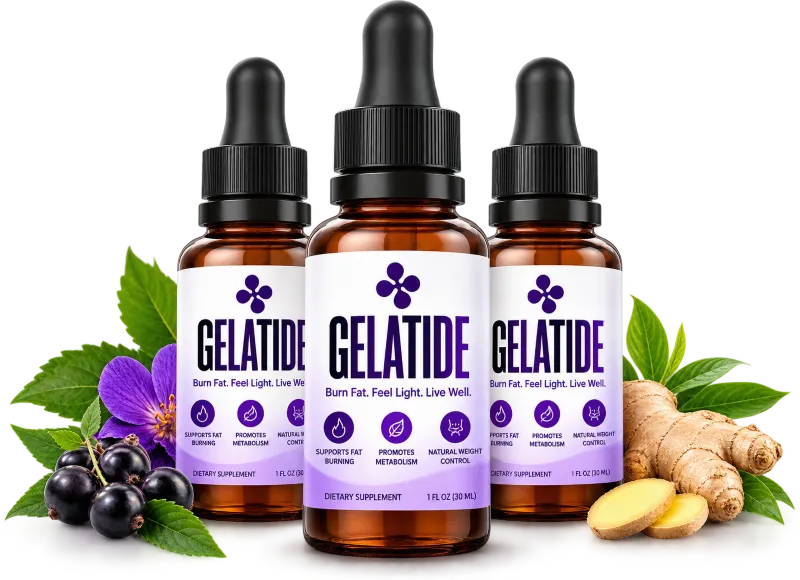
Gelatide is marketed as a liquid dietary supplement designed to support everyday weight management. Instead of capsules, the product comes in a small amber dropper bottle containing approximately 60 mL of liquid.
According to the seller’s current information, one bottle is considered a 30-day supply. The recommended serving is described as one or two full droppers per day, although consumers should follow the current product label rather than relying on information from third-party websites.
The product is promoted around several general wellness concepts:
- Healthy digestion
- Fat metabolism support
- Natural appetite control
- Weight-management support
- A convenient liquid format
The important distinction is that supporting a healthy lifestyle is not the same as clinically treating obesity.
The National Institutes of Health explains that dietary supplements marketed for weight management generally have much less evidence behind them than established approaches such as calorie management, healthy eating patterns, and physical activity.
That distinction is important when evaluating Gelatide.

Gelatide Review: What Does It Claim to Do?
The marketing surrounding the product focuses mainly on three areas:
- Supporting normal digestion
- Supporting fat metabolism
- Helping with appetite control
These are reasonable areas to investigate because appetite, food intake, energy expenditure, and metabolic health can all influence body weight.
However, consumers should distinguish between supporting a normal physiological process and causing significant weight loss.
For example, an ingredient may influence energy expenditure in a laboratory or small human study without producing substantial long-term weight loss. Likewise, an ingredient that modestly affects appetite does not necessarily mean a person will lose a predictable number of pounds.
The NIH Office of Dietary Supplements explains that evidence for many dietary supplements marketed for weight management is limited or inconsistent. It also notes that manufacturers frequently use combinations of ingredients, making it difficult to determine which ingredient is responsible for an observed effect.
That is why I would not treat the product’s marketing claims as guaranteed results.
Gelatide Ingredients: What Is Actually Inside?
Ingredient transparency is one of the most important parts of this review.
Current product information identifies botanical extracts and nutritional compounds associated with metabolism, appetite, and general wellness. Third-party reporting has described ingredients including green tea extract, guarana, African mango, maca, capsicum, Coleus forskohlii, raspberry ketones and several amino acids. Another reported label version identifies chromium separately from a proprietary blend.
The problem is dosage transparency.
One currently available review reports a 200 mg proprietary blend containing multiple ingredients, while individual quantities within that blend are not disclosed. Another seller page provides a different presentation of the label information, which makes it particularly important for buyers to inspect the actual bottle and current product information before ordering.
Why Does the Dosage Matter?
Imagine a clinical study examining an ingredient at a specific daily dose. If a finished supplement contains the same ingredient but does not disclose its amount, you cannot confidently assume that the product provides the amount used in the research.
This is one of the biggest weaknesses I found when evaluating the available information.
A proprietary blend isn’t automatically proof that a product is unsafe or fraudulent. But it makes it harder for consumers to compare the product with scientific studies and understand exactly how much of each compound they are taking.
Some Ingredients Described in Gelatide
Green Tea Extract
Green tea is frequently used in weight-management products because compounds in green tea, particularly catechins and caffeine, have been investigated for their effects on energy expenditure and metabolism.
However, the evidence is not strong enough to assume that green tea extract alone will produce major weight loss.
The NIH notes that green tea and green tea extract have been studied for weight-related outcomes, but results vary and safety can also depend on the formulation and amount consumed.
Guarana
Guarana naturally contains caffeine, which means it can contribute to alertness and stimulation.
This is relevant because caffeine may temporarily increase energy expenditure, but higher intake can also cause unwanted effects such as nervousness, jitteriness, increased heart rate, or sleep problems.
If someone already consumes coffee, energy drinks, pre-workout products, or other caffeine-containing supplements, total caffeine exposure should be considered.
African Mango
African mango has appeared in various weight-management formulas. Some small studies have investigated its potential influence on body weight and waist circumference.
However, the NIH describes the available evidence as limited, with small clinical studies rather than strong evidence demonstrating reliable long-term weight reduction.
Capsicum
Capsicum contains compounds associated with the spicy component of peppers. Research has examined capsaicinoids in relation to energy expenditure, appetite, and food intake.
The available evidence suggests that effects, when present, are likely to be modest rather than comparable with prescription weight-management treatments.
Raspberry Ketones
Raspberry ketones are another ingredient commonly associated with products marketed for body-weight management.
The evidence is not strong enough to conclude that raspberry ketones alone cause meaningful long-term fat loss. The NIH notes that research on this ingredient is insufficient for firm conclusions.
Gelatide Benefits: What May Make It Attractive?
Although strong evidence for the finished product is lacking, there are several reasons consumers may find Gelatide appealing.
Liquid format
Some people dislike swallowing capsules. A dropper-based formula may feel easier to incorporate into a daily routine.
Convenience
The product is marketed as a simple daily supplement rather than a complicated weight-management program.
Appetite-focused approach
People who struggle with frequent snacking may be interested in products positioned around appetite control.
Lifestyle compatibility
The product can potentially be incorporated alongside a balanced eating plan and exercise routine.
However, these are practical advantages rather than proof of weight-loss effectiveness.
How Does Gelatide Compare With Other Weight-Management Products?
Rather than asking whether one supplement is a miracle solution, it is more useful to compare the type of product, transparency, evidence, and practical expectations.
| Feature | Gelatide | Typical Capsule Supplement | Prescription Weight-Loss Treatment | Lifestyle Approach |
| Format | Liquid drops | Capsule/tablet | Tablet or injection depending on treatment | Food + activity |
| Requires prescription | No | No | Often yes | No |
| Ingredient transparency | Needs careful label checking | Usually label-based | Active drug and dose specified | Fully controllable |
| Clinical evidence | Limited for finished formula | Depends on product | Generally much stronger | Strong evidence |
| Appetite support | Marketed claim | Depends on formula | Some treatments directly affect appetite | Achieved through diet strategy |
| Long-term results | Individual and uncertain | Individual and uncertain | Depends on treatment and adherence | Strong foundation |
| Main advantage | Convenient liquid format | Easy to use | Clinically evaluated options exist | Sustainable foundation |
| Main limitation | Limited product-specific clinical evidence | Variable evidence | Medical supervision may be required | Requires consistency |
This comparison is why I would view Gelatide as an optional supplement, not as a replacement for a structured approach to weight management.
Gelatide Price and Buying Information
Current seller information shows several package options. The ordering page currently lists:
- 2 bottles: $158 plus shipping
- 3 bottles: $207
- 6 bottles: $294
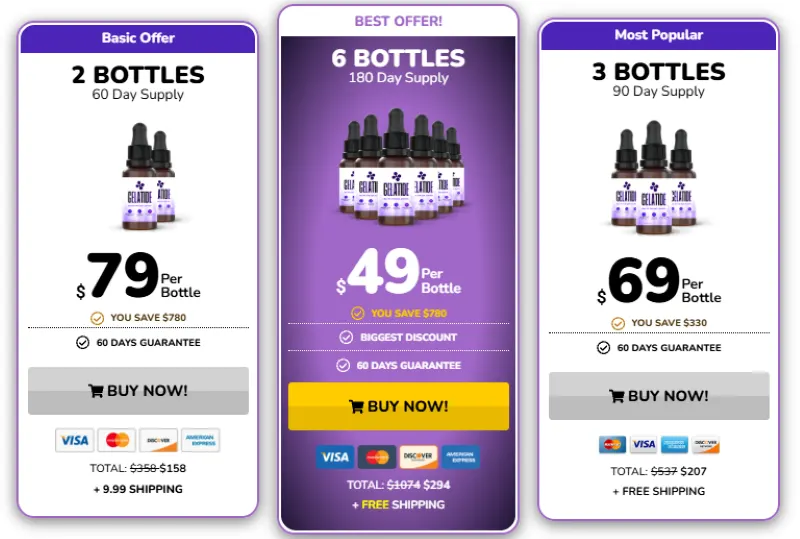
Prices and promotions can change, so buyers should verify the amount displayed at checkout before paying. The seller states that its satisfaction guarantee covers purchases for 60 days from purchase.
For people comparing Gelatide price with other products, don’t look only at the advertised price per bottle.
Calculate the actual cost per day and consider whether the product’s ingredient transparency and evidence justify the expense.
You should also read the refund conditions carefully before ordering.
Gelatide Weight Loss Results: What Should You Expect?
Searches for Gelatide Weight loss drops often focus on dramatic before-and-after claims.
Consumers should be careful here.
Weight can change because of many factors, including calorie intake, water retention, carbohydrate intake, exercise, sleep, stress, medications, hormones, and underlying health conditions.
Therefore, if someone loses several pounds while using a supplement, that does not automatically prove the supplement caused the entire change.
The Mayo Clinic similarly cautions that many products marketed for weight loss lack strong evidence demonstrating meaningful long-term results. It also points out that studies involving combinations of ingredients can make it difficult to identify which component actually produced an observed effect.
A more realistic way to evaluate results would be to monitor:
Body weight + waist measurement + food intake + physical activity + sleep + consistency
Customer Reviews & Experiences
Linda K. — USA
“Gelatide has transformed my daily routine. I feel more energized and my cravings have reduced significantly. I’ve already lost a few pounds in just three weeks.”
John M. — USA
“I was skeptical at first, but after consistent use, I noticed my metabolism improving and stubborn belly fat gradually disappearing.”
Sarah J. — USA
“I have been taking Gelatide drops for around 6 weeks. My portions are smaller now and I feel full quicker. I have lost about 5 pounds.”
Is Gelatide Legit?
So, Is Gelatide legit?
There are several reasons I would not immediately classify the product as a scam. It is presented as a dietary supplement, has an identifiable sales channel, provides ordering and refund information, and publishes product-related information. The seller currently advertises a 60-day satisfaction/refund window.
At the same time, legitimacy and effectiveness are two different questions.
A legitimate supplement can still have weak evidence for its marketing claims.
The biggest issue from a scientific perspective is the lack of a published, high-quality clinical trial demonstrating that the finished Gelatide formula produces significant and sustainable weight loss.
The seller’s own FAQ states that there is no published clinical trial of the finished product and that the research cited concerns individual ingredients instead.
That is an important distinction.
Gelatide Where to Buy
If you decide to purchase, use the seller’s current official ordering channel rather than an unknown marketplace listing. The currently identified ordering site is:
Gelatide official ordering website
👉 Buy Gelatide Online – Check Official Offers Before You Order
The seller states that orders placed through its checkout are covered by its advertised refund window.
Because online supplement pages can change, always verify the bottle, seller identity, refund terms, shipping charges, and current label before completing an order.
Pros and Cons
Pros
- Convenient liquid format
- Marketed around appetite, digestion, and metabolism
- Contains several ingredients that have at least some scientific research behind them
- Refund information is publicly presented
- Easy alternative for people who dislike capsules
Cons
- No published clinical trial proving the finished formula produces weight loss
- Individual amounts in the proprietary blend may not be clear
- Evidence for many weight-management ingredients is mixed
- Results can vary significantly
- Caffeine-containing ingredients may not suit everyone
- Testimonials cannot establish clinical effectiveness
Potential Side Effects and Safety
Any supplement that contains caffeine-containing botanical ingredients deserves some caution.
Guarana can contribute caffeine, while green tea preparations may also contain caffeine depending on the extract. The seller itself advises users to consider their total caffeine intake.
Possible issues with stimulant-containing supplements can include:
- Nervousness or jitteriness
- Difficulty sleeping
- Headache
- Digestive discomfort
- Increased heart rate in sensitive individuals
The NIH also warns that dietary supplements can interact with prescription or over-the-counter medications. People with conditions such as diabetes, high blood pressure, heart disease, or liver disease should discuss weight-management supplements with a healthcare professional.
Pregnant or breastfeeding individuals should not use weight-loss products unless specifically advised by a qualified healthcare professional.
Most importantly, never assume that “natural” automatically means risk-free.
What Does Science Say About Weight-Loss Supplements?
This is probably the most important section of the entire review.
The National Institutes of Health Office of Dietary Supplements says that the evidence supporting many dietary supplements for weight loss is limited, inconsistent, or inconclusive. It also emphasizes that healthy eating, appropriate calorie intake, and physical activity remain the foundation of successful long-term weight management.
The National Center for Complementary and Integrative Health gives a similar warning: many supplements marketed for weight loss have not been proven safe or effective, and consumers should be skeptical of exaggerated promises and testimonials.
This is particularly relevant when evaluating claims about rapid Fat Burn.
A supplement may potentially influence one biological pathway without producing substantial changes in total body fat.
That is why phrases such as “melt fat instantly” or “lose weight without diet or exercise” should be viewed very cautiously.
Scientific References Worth Reading
For readers who want to investigate the subject beyond marketing pages, these are better starting points:
1. NIH Office of Dietary Supplements – Dietary Supplements for Weight Loss
This resource reviews common ingredients, available evidence, safety concerns, and regulatory considerations.
2. NIH Office of Dietary Supplements – Health Professional Fact Sheet
This provides more detailed information about ingredients, clinical evidence, safety, and interactions.
3. NCCIH – Supplements Marketed for Weight Loss
NCCIH explains why consumers should be cautious about exaggerated claims and unproven testimonials.
4. Mayo Clinic – Dietary Supplements for Weight Loss
Mayo Clinic discusses why strong evidence for long-term weight-loss benefits from supplements is limited.
These sources are more useful for evaluating a supplement than relying exclusively on affiliate pages or social-media advertisements.
Frequently Asked Questions About Gelatide
1. What is Gelatide?
Gelatide is a liquid dietary supplement marketed for weight management, appetite control, digestion, and metabolic support. It comes in a dropper bottle rather than a traditional capsule.
2. Is Gelatide Scam or Legit?
The available information suggests that it is sold as a real dietary supplement, but there is insufficient independent clinical evidence to confirm that the finished formula causes meaningful weight loss. Therefore, it is better described as unproven for weight loss rather than automatically calling it a scam.
3. Does Gelatide help with weight loss?
There is currently no published clinical trial demonstrating that the finished product causes weight loss. Some individual ingredients discussed in connection with the formula have been studied, but that evidence cannot automatically be transferred to the finished product.
4. What are Gelatide Drops?
They are the liquid form of the supplement. The product is supplied in a small dropper bottle and is marketed as a convenient alternative to capsules.
5. What is the Gelatide price?
The current seller lists several package options, with prices changing according to the number of bottles purchased. One current page lists packages ranging from $158 for two bottles to $294 for six bottles.
Final Verdict: Scam or Legit?
After reviewing the available product information and comparing its claims with independent scientific resources, I would not label Gelatide an obvious scam based solely on the information currently available.
However, I also would not describe it as a scientifically proven weight-loss solution.
The biggest limitation is the lack of strong clinical evidence on the finished product. Some individual ingredients have been studied, but that does not establish that the complete formula will produce a predictable amount of weight loss.
For someone considering it, the sensible approach is to look beyond the marketing headline. Check the current label, understand the ingredient amounts, consider caffeine exposure, review the refund policy, and speak with a healthcare professional if you take medications or have an underlying medical condition.
Most importantly, use a supplement—if you choose to use one—as an optional addition to a healthy lifestyle, not as a replacement for nutrition, physical activity, sleep, and appropriate medical care.
Overall verdict: Gelatide appears to be a real dietary supplement, but its weight-loss effectiveness remains insufficiently proven. I would rate it as “proceed with caution” rather than calling it either a miracle product or an outright scam.
Disclaimer: This article is for informational and educational purposes only and is not medical advice. Individual results may vary. Always check the product label and consult a qualified healthcare professional before using any dietary supplement, especially if you have a medical condition, take medication, or are pregnant or breastfeeding.
Author


Your Health Rights is a U.S.-based health and wellness platform dedicated to empowering readers with clear, research-backed content across Men’s Health, Women’s Health, Weight Loss, Health Supplements, and Immunity & General Wellness.


