




Digestive health is one of those things people often ignore until it starts affecting everyday life. Bloating after meals, irregular bowel movements, occasional gas, feeling overly full, or simply having an uncomfortable stomach can make even a normal day feel frustrating.
That is one reason interest in daily gut-health products has grown so quickly in the United States. People are looking beyond temporary fixes and are increasingly interested in products that can fit into a consistent wellness routine.
Gut Save is one supplement that has attracted attention in this category. It is marketed as a daily digestive wellness formula that combines probiotics, collagen peptides, botanical ingredients, and colostrum in a convenient capsule.
But does the formula make sense? What ingredients are actually included? How does Gut Save work, and what can a person realistically expect from it?
This detailed guide takes a closer look at Gut Save, its advertised ingredients, potential benefits, pricing information, possible limitations, and the scientific background behind some of its ingredients.
Quick answer: Gut Save is a daily dietary supplement designed to support digestive wellness, gut microbiome balance, and everyday digestive comfort. Its formula combines several ingredients, including fish collagen peptides, botanical extracts, colostrum, and a multi-strain probiotic blend. However, research on individual ingredients should not be interpreted as proof that the complete product will provide the same results.
What Is Gut Save?
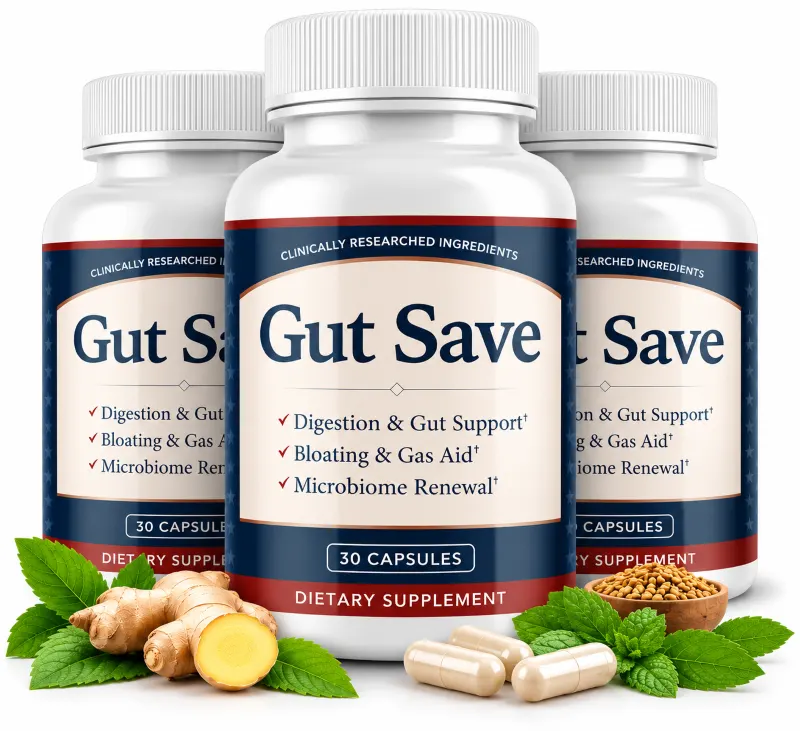
Gut Save is a dietary supplement positioned around everyday digestive and gut wellness. Rather than focusing on just one aspect of digestion, the formula takes a multi-ingredient approach.
According to the product information available from the brand, Gut Save includes fish collagen peptides, organic Lion’s Mane, papaya seed powder, black cumin seed extract, colostrum powder, and several probiotic strains. The company describes the product as a convenient daily capsule intended to complement a healthy lifestyle.
The idea behind Gut Save is relatively straightforward: provide nutritional and microbial support while encouraging users to maintain healthy eating, hydration, physical activity, sleep, and other habits that influence digestive wellness.
That distinction matters.
A supplement should not be viewed as a replacement for vegetables, fruits, whole grains, adequate fiber, water, or medical care. Gut health is influenced by many factors, and no single capsule can compensate for a consistently poor diet or an untreated digestive disorder.
For people researching Gut Save for Gut Health, the most useful question is therefore not simply whether the product is “good” or “bad.” A better question is whether its ingredients, formulation, convenience, and price fit an individual’s personal wellness goals.

Why Gut Health Matters
The digestive system does much more than process food.
The gastrointestinal tract interacts with the immune system, nervous system, hormones, nutrients, and trillions of microorganisms that make up the gut microbiome.
Research from Harvard’s Nutrition Source explains that the composition of the gut microbiome can be influenced by factors such as diet, environment, medications, and other individual characteristics. Fiber-rich foods are particularly important because gut microorganisms ferment certain fibers and produce short-chain fatty acids.
This is why a healthy digestive routine usually starts with food.
For many adults, useful foundations include:
- Eating a variety of fruits and vegetables
- Choosing whole grains and legumes
- Getting adequate dietary fiber
- Drinking enough water
- Eating fermented foods when tolerated
- Staying physically active
- Getting consistent sleep
- Managing ongoing stress
- Limiting highly processed foods
The National Institute of Diabetes and Digestive and Kidney Diseases recommends that adults generally get about 22–34 grams of fiber per day, depending on age and sex, and notes that adequate fluids help fiber work effectively.
A product such as Gut Save should therefore be viewed as a potential addition to those habits rather than a substitute for them.
Gut Save Ingredients: What’s Inside?
One of the strongest reasons consumers investigate Gut Save is the variety of ingredients included in its formulation.
The brand currently lists ingredients including fish collagen peptides, organic Lion’s Mane, papaya seed powder, black cumin seed extract, colostrum powder, and a five-strain probiotic blend.
Here is what each component is intended to contribute.
Fish Collagen Peptides
Collagen is a structural protein naturally found throughout the human body.
Gut Save uses fish-derived collagen peptides as part of its broader nutritional approach. Collagen peptides are broken-down forms of collagen protein that can be used as a source of amino acids.
It is important not to overstate the evidence here. The presence of collagen in a digestive supplement does not automatically mean that it “repairs” the intestinal lining. Those are stronger medical claims that require product-specific clinical evidence.
Instead, it is more reasonable to describe collagen peptides as a nutritional component of the formula.
Anyone with a fish allergy should carefully review the product label before considering Gut Save.
Organic Lion’s Mane
Lion’s Mane is a functional mushroom that has become increasingly popular in wellness products.
It is commonly studied for neurological and general wellness applications, although research into its different potential effects is still developing.
Within Gut Save, Lion’s Mane provides another botanical component rather than acting as a conventional probiotic.
Consumers should also remember that evidence for an individual ingredient does not necessarily prove that the ingredient produces a meaningful effect at the dose contained in a particular supplement.
Papaya Seed Powder
Papaya seeds have traditionally been used in different cultures as part of digestive and nutritional practices.
The product information lists papaya seed powder as one of the botanical ingredients in Gut Save.
Some research has investigated papaya seeds in specific contexts, but that should not be confused with clinical evidence proving that a commercial papaya-seed supplement can treat a digestive disease.
For everyday wellness, it is best considered one part of the overall formulation.
Black Cumin Seed Extract
Black cumin comes from Nigella sativa and contains several naturally occurring compounds, including thymoquinone.
Researchers have investigated black cumin and thymoquinone for a range of biological effects. However, much of the evidence is based on laboratory or animal research, meaning it should be interpreted cautiously when discussing human digestive outcomes.
In Gut Save, black cumin is included as a botanical ingredient intended to complement the other components.
Colostrum Powder
Colostrum is the nutrient-rich first milk produced by mammals after giving birth. It contains proteins, peptides, immunoglobulins, and other naturally occurring components.
The inclusion of colostrum is interesting because research has explored its potential relationship with intestinal barrier function and exercise-associated gastrointestinal changes.
However, the amount used in a commercial supplement matters. Evidence involving larger or differently formulated colostrum products cannot automatically be transferred to Gut Save.
People with milk allergies or sensitivities should review the allergen information carefully.
Probiotic Blend
The probiotic component is arguably one of the most important parts of Gut Save from a digestive-health perspective.
The brand’s product information lists several strains, including:
- Lactobacillus paracasei
- Lactobacillus buchneri
- Lactobacillus brevis
- Lactobacillus hilgardii
- Bifidobacterium animalis subsp. lactis BL-04
The exact formulation and label information should always be checked before purchasing because online product pages can change.
The NIH explains that probiotics are live microorganisms that may provide health benefits when consumed in sufficient amounts, but it also emphasizes that benefits can vary by strain and that not every probiotic product has proven health benefits.
That is an important point when evaluating Gut Save.
How Does Gut Save Work?
The basic concept behind Gut Save is a combination approach.
Instead of relying on a single probiotic strain or one botanical, the formula combines multiple categories of ingredients.
The intended framework can be summarized as:
Probiotics → microbiome support
Botanicals → nutritional and digestive support
Collagen + colostrum → broader nutritional support
Daily use → consistency
The probiotic component is intended to provide live microorganisms that interact with the gastrointestinal environment.
According to the NIH Office of Dietary Supplements, probiotic effects can include interactions with intestinal microorganisms, production of certain metabolites, and effects on the intestinal environment. Importantly, these effects can be highly strain-specific.
This explains why simply saying “probiotics are good for the gut” is an oversimplification.
Different strains can behave differently.
Research has found that some probiotic formulations may help with certain gastrointestinal symptoms, but results are not universal. A recent umbrella meta-analysis found associations between probiotic use and improvements in several gastrointestinal symptoms, while broader evidence continues to show variation between conditions and formulations.
Therefore, Gut Save may make sense as a nutritional wellness product, but it should not be promoted as a guaranteed treatment for IBS, inflammatory bowel disease, constipation, or other diagnosed conditions.
Potential Gut Save Benefits
The potential benefits of Gut Save depend on the individual, diet, existing microbiome, lifestyle, and response to the ingredients.
Based on its formulation and intended use, areas of interest include the following.
1. Digestive Comfort
The product is designed for people looking for everyday digestive comfort.
This can be particularly relevant to adults who occasionally experience a heavy or uncomfortable feeling after meals.
However, persistent abdominal pain, severe bloating, unexplained weight loss, blood in stool, repeated vomiting, or significant changes in bowel habits should be evaluated by a healthcare professional rather than managed solely with a supplement.
2. Microbiome Support
The multi-strain probiotic component is designed to support the gut microbiome.
The microbiome is highly individual, and probiotics do not necessarily permanently colonize the digestive tract. NIH guidance emphasizes that probiotic effects depend on the microorganism, strain, dose, and individual characteristics.
That means Gut Save should be viewed as a potential source of probiotic microorganisms, not as a guaranteed method of “resetting” the microbiome.
3. Support for Regular Digestion
Healthy bowel regularity depends heavily on fiber, fluid intake, physical activity, diet quality, medications, and individual physiology.
NIDDK recommends increasing fiber gradually and drinking adequate liquids when dealing with constipation.
A supplement may complement these habits, but it should not replace them.
4. Convenient Daily Routine
One practical advantage of Gut Save is convenience.
People often abandon complicated wellness routines. A single daily capsule can be easier to remember than multiple powders, drinks, or separate supplements.
Consistency can be particularly important when someone is evaluating whether a dietary change is helping.
5. Multi-Ingredient Formula
Another potential advantage is that Gut Save combines probiotics with botanical and nutritional ingredients rather than relying exclusively on one category.
That does not automatically make it better than a single-ingredient product, but it may appeal to consumers who prefer an all-in-one approach.
Gut Save Pricing Details
Pricing can change, so consumers should check the current seller page before ordering.
At the time of research, the product website listed several package options, including:
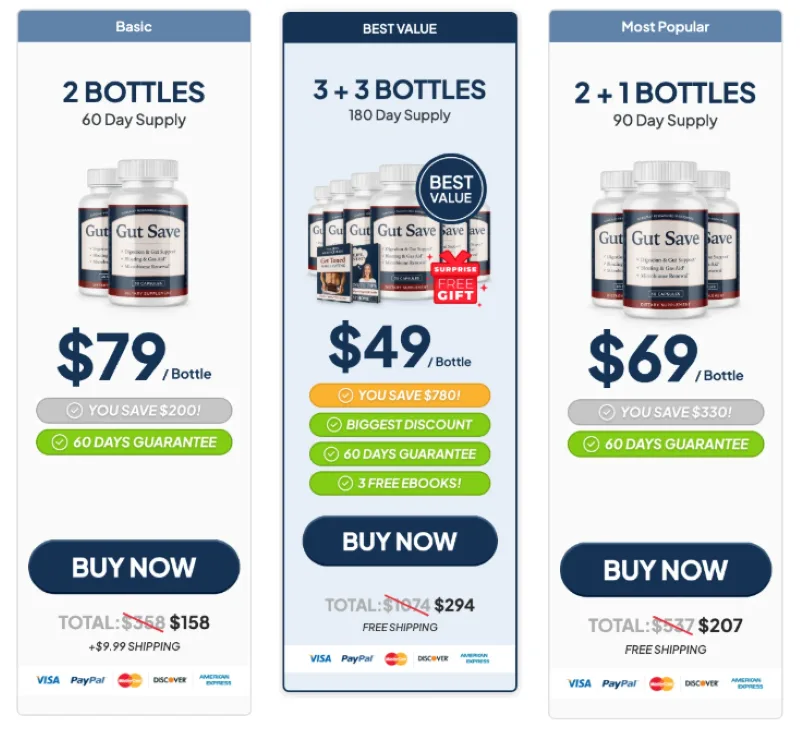
- 2 bottles: $158 plus shipping
- 3 bottles: $207 with free shipping
- 6 bottles: $294 with free shipping
The displayed pricing works out to approximately $79, $69, and $49 per bottle respectively.
Because supplement promotions can change, these figures should be treated as a snapshot rather than a permanent price list.
Consumers looking for Buy Gut Save options should also compare the final checkout price, shipping costs, refund terms, and package quantity rather than judging the offer solely by the advertised per-bottle figure.
For the latest availability, the safest approach is to review the Gut Save official website before ordering.
Gut Save for Digestion: What Can You Realistically Expect?
It is worth setting realistic expectations.
A digestive supplement is unlikely to produce identical results for everyone.
Some people may notice changes relatively quickly, while others may notice little difference. Probiotic research itself shows substantial variation based on the strain, health condition, dose, and study design.
For example, a systematic review of probiotics in IBS found potential improvements in global symptoms, abdominal pain, bloating, and flatulence, but the researchers also noted the need for additional research.
More recent reviews have also raised concerns about the quality and certainty of evidence across probiotic research.
So if someone starts Gut Save, it is better to evaluate the experience over several weeks rather than expecting an overnight transformation.
A simple approach is to monitor:
- Bloating frequency
- Bowel regularity
- Digestive comfort after meals
- Gas or abdominal discomfort
- Food-related symptoms
- Overall consistency of digestion
Keeping a short weekly record can make it easier to determine whether a product is actually making a noticeable difference.
Gut Save Pros and Cons
Before making a purchasing decision, it helps to look at both sides.
| Pros | Cons |
| Convenient daily capsule | Multi-ingredient formulas may not suit everyone |
| Includes multiple probiotic strains | Individual probiotic responses vary |
| Contains botanical ingredients | Not a treatment for digestive diseases |
| Includes collagen and colostrum | Fish and milk allergens may be relevant |
| Designed for ongoing wellness | Product-specific clinical evidence may be limited |
| 60-day money-back policy is advertised | Pricing can vary by package and promotion |
| Made in the USA according to the seller | Supplements are not substitutes for medical care |
The biggest positive is convenience and the breadth of the formula.
The biggest limitation is that evidence supporting individual ingredients should not be confused with clinical proof that the complete Gut Save formula treats or prevents a particular condition.
Gut Save Official Website: What Should Buyers Check?
When researching Gut Save, consumers should pay attention to the product label rather than relying only on advertising claims.
Check:
- The current Supplement Facts panel.
- Serving size.
- Probiotic strains and CFU information.
- Allergen declarations.
- Suggested use.
- Shipping costs.
- Refund conditions.
- Whether a subscription is required.
- The final checkout price.
- Contact information for customer support.
Buy Gut Save Now – Check Current Offers & Secure Your Order
- Supports healthy digestion
- Promotes gut balance
- Supports regular digestive function
- Supports a healthy gut microbiome
Always treat the current product label and checkout information as the final source of truth.
USA Case Study
A real U.S. consumer experience
Consider “Mark,” a 42-year-old office worker in Texas.
Mark spends most of his working day sitting at a desk. His diet includes plenty of restaurant meals, relatively few vegetables, and inconsistent fiber intake. He occasionally experiences bloating after large meals and has irregular bowel habits during stressful work periods.
He sees an advertisement for Gut Save and decides to try it.
Instead of changing nothing else, Mark takes a more complete approach.
He begins eating oatmeal and berries for breakfast, adds vegetables to lunch and dinner, drinks more water, takes regular walks, and uses the supplement according to its label.
During the first week, he does not notice a dramatic difference.
By weeks three and four, he reports that his digestion feels more predictable.
Can this improvement be attributed entirely to Gut Save?
No.
There is no way to determine that from an individual experience.
His increased fiber intake, hydration, walking, reduced restaurant meals, stress management, and the passage of time could all have contributed.
This is an important lesson for anyone considering a gut-health supplement.
The most sensible approach is to use a product as part of a broader lifestyle strategy rather than expecting the capsule to do all the work.
Order Gut Save Today – Check Pricing, Offers & Availability
What the Science Says About Gut Health
Scientific evidence strongly supports the importance of diet and lifestyle for digestive wellness.
Harvard’s Nutrition Source recommends emphasizing a long-term dietary pattern containing different sources of fiber, including fruits, vegetables, whole grains, beans, nuts, and seeds. Fermented foods such as yogurt, kefir, kimchi, and sauerkraut may also contribute beneficial microorganisms depending on the food and preparation.
This is important because a healthy microbiome is not simply about taking more bacteria.
The microbiome interacts with the food reaching the colon.
Fiber provides substrates that intestinal microorganisms can ferment, producing metabolites such as short-chain fatty acids.
That is why someone taking Gut Save while eating a highly processed, low-fiber diet may not be approaching gut health in the most comprehensive way.
The supplement may be one piece of the puzzle, but diet remains foundational.
Is Gut Save Safe?
For healthy adults, many common probiotic products are generally considered to have relatively mild side effects, although individual reactions can occur.
NIH guidance notes that common probiotic side effects may include temporary gastrointestinal symptoms such as gas. It also warns that people who are severely ill or immunocompromised may have a higher risk of serious complications.
With Gut Save, additional considerations include its fish-derived collagen and milk-derived colostrum.
People should speak with a healthcare professional before using the product if they:
- Have a fish or milk allergy
- Are pregnant or breastfeeding
- Have a significant immune-system condition
- Have inflammatory bowel disease
- Have undergone digestive surgery
- Take prescription medications
- Have persistent or unexplained digestive symptoms
A supplement should never be used to delay medical evaluation.
7 Practical Ways to Improve Gut Health Naturally
Even if you decide to try Gut Save, lifestyle remains important.
1. Increase Fiber Gradually
Beans, lentils, fruits, vegetables, oats, whole grains, nuts, and seeds are useful sources.
NIDDK recommends adults generally consume 22–34 grams of fiber daily, depending on individual factors.
2. Drink Enough Water
Hydration helps support normal bowel function and is particularly important when increasing fiber.
3. Eat a Variety of Plant Foods
Different plant foods provide different types of fibers and compounds that can interact with the microbiome.
4. Consider Fermented Foods
Yogurt, kefir, kimchi, sauerkraut, and other fermented foods may provide live microorganisms, although not every fermented food necessarily contains probiotics with proven health effects.
5. Stay Physically Active
Regular movement supports general health and may also help people dealing with constipation.
6. Get Consistent Sleep
Sleep and stress can influence overall wellness, and a healthy digestive routine is easier to maintain when daily habits are consistent.
7. Avoid Constantly Changing Supplements
If you start several products at once, it becomes difficult to determine what is actually helping.
A simpler routine makes personal observation easier.
Frequently Asked Questions About Gut Save
What is Gut Save used for?
Gut Save is marketed as a daily dietary supplement for digestive and gut wellness. Its formula combines probiotic microorganisms with botanical and nutritional ingredients.
Does Gut Save help digestion?
The product is designed to support everyday digestive comfort and normal gastrointestinal function. However, individual results vary, and research on individual ingredients does not establish that the complete formula will produce a specific result in every person.
How long does Gut Save take to work?
There is no guaranteed timeline. Probiotic research suggests that effects can vary significantly by strain, condition, dose, and individual. Some studies report changes over several weeks rather than immediately.
Can I take Gut Save every day?
The product is marketed for daily use, but consumers should follow the current label instructions. Anyone with a medical condition, food allergy, medication regimen, pregnancy, breastfeeding, or immune-related concern should speak with a healthcare professional before starting a supplement.
Where can I buy Gut Save?
Consumers should purchase through the seller’s current official ordering page and verify the final price, shipping, package quantity, and refund terms before completing an order.
Is Gut Save suitable for everyone?
No supplement is suitable for everyone. Allergies, medications, medical conditions, pregnancy, breastfeeding, immune status, and individual tolerance should all be considered.
Final Verdict: Is Gut Save Worth Considering?
Gut Save is an interesting option for people looking for a convenient, multi-ingredient approach to everyday digestive wellness.
Its main appeal is the combination of probiotic strains with nutritional and botanical ingredients. The product also offers a simple capsule-based routine, which may be easier for some people to maintain than complicated supplement schedules.
At the same time, consumers should keep expectations realistic.
There is a meaningful difference between evidence showing that a particular probiotic strain or ingredient can have an effect in a controlled study and evidence showing that the finished commercial formula produces the same result.
That distinction is especially important with Gut Save.
The strongest approach is to think of the product as a potential addition to a healthy routine rather than a replacement for one.
A diet rich in fiber, adequate hydration, regular movement, good sleep, and appropriate medical care remain the foundation of digestive wellness.
For someone with occasional digestive concerns who wants to explore a daily supplement, Gut Save may be worth researching. For someone experiencing persistent, severe, or unexplained gastrointestinal symptoms, talking with a healthcare professional should come first.
In short, Gut Save has a broad formula and a convenient format, but the right choice ultimately depends on the individual’s needs, allergies, health status, expectations, and budget.
Scientific References & Trusted Health Resources
The following resources are useful for readers who want to go beyond supplement marketing and understand the science behind gut health.
National Institutes of Health – Office of Dietary Supplements:
The NIH provides evidence-based information about probiotics, including their potential benefits, strain-specific effects, and safety considerations.
National Center for Complementary and Integrative Health (NCCIH):
NCCIH provides consumer information about probiotics, their potential uses, safety, and regulatory considerations.
Harvard T.H. Chan School of Public Health:
Harvard’s Nutrition Source discusses probiotics, dietary fiber, fermented foods, and the gut microbiome.
PubMed:
PubMed provides access to peer-reviewed biomedical research, including systematic reviews and randomized controlled trials involving probiotics and gastrointestinal health.
Selected Research
- Probiotics and gastrointestinal disorders: umbrella meta-analysis of therapeutic efficacy.
- Systematic review of probiotics for lower gastrointestinal symptoms.
- Evidence-based review of probiotics in IBS.
- Systematic review and meta-analysis of probiotics, prebiotics, and synbiotics in IBS.
- NIH Office of Dietary Supplements probiotic fact sheet.
Important: This article is for educational purposes and does not constitute medical advice. Dietary supplements are not intended to diagnose, treat, cure, or prevent disease. Individual experiences can vary. Always review the current product label and speak with a qualified healthcare professional when appropriate.
Author


Your Health Rights is a U.S.-based health and wellness platform dedicated to empowering readers with clear, research-backed content across Men’s Health, Women’s Health, Weight Loss, Health Supplements, and Immunity & General Wellness.


