
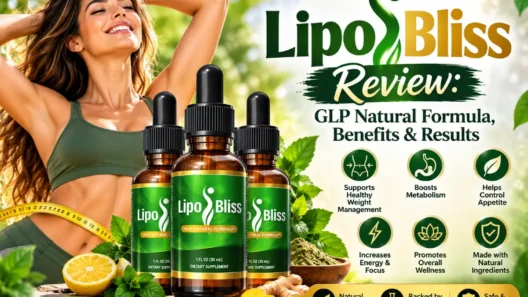


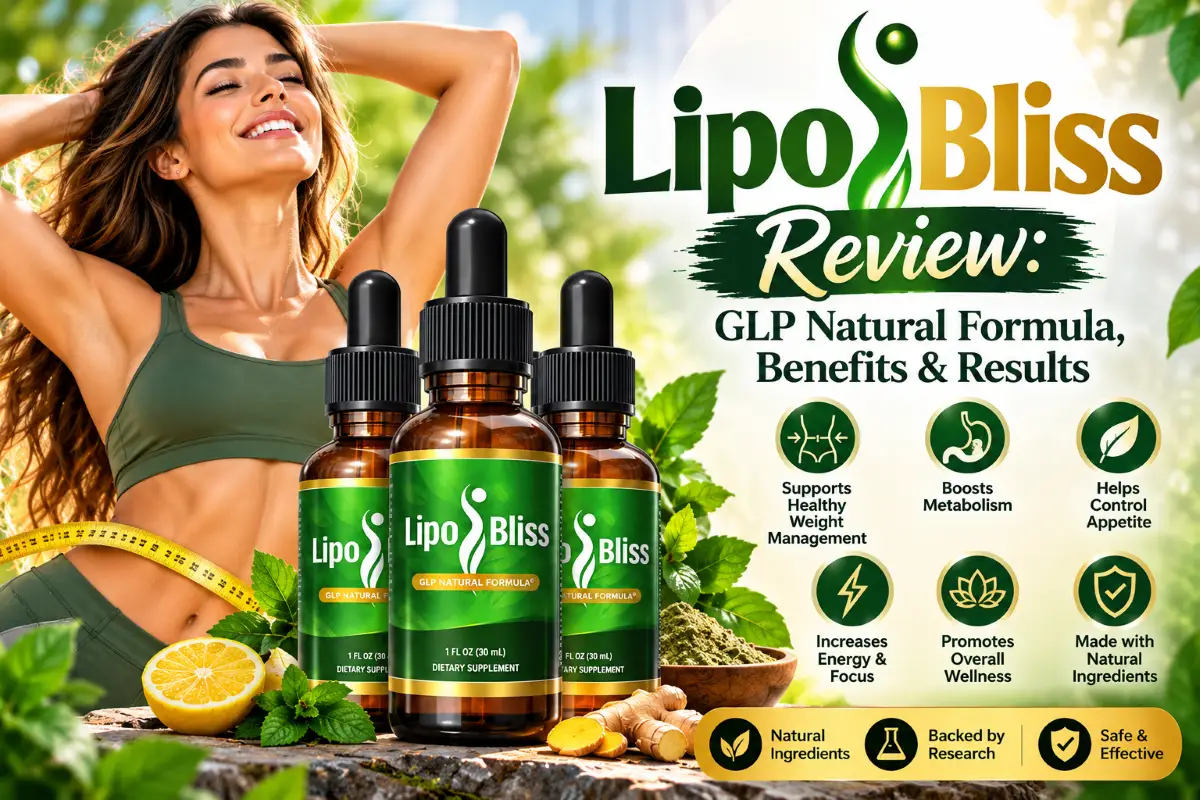
Quick Answer: Lipo Bliss is marketed as a natural dietary supplement for weight-management support. According to the product website, its formula includes ingredients such as chromium, maca root, African mango seed extract, and grape seed extract, with the product positioned around appetite, metabolism, energy, and healthy weight support.
However, there is an important distinction between a supplement marketed around “GLP” support and an FDA-approved GLP-1 medication. Lipo Bliss is not the same thing as prescription GLP-1 medicines, and the available information does not establish that the finished product itself produces prescription-drug-level weight-loss results. The NIH also notes that evidence for many weight-loss supplements remains limited.
If you are considering Lipo Bliss, the most useful questions are: What is actually in the formula? What does the science say about those ingredients? What can reasonably be expected from a supplement? And is the advertised price worth it?
What Is Lipo Bliss?
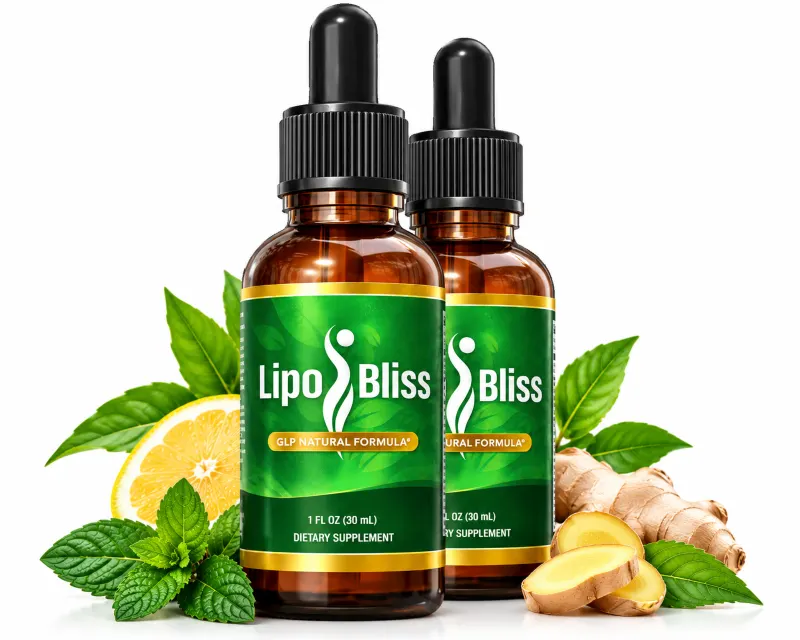
Lipo Bliss is a dietary supplement positioned toward adults who want additional support for healthy weight management. Rather than being presented as a prescription medicine, Lipo Bliss is marketed as a natural formula containing botanical extracts, nutrients, and other compounds associated with metabolism and appetite-related wellness.
The official product information describes Lipo Bliss as a formula intended to support several areas at once, including energy, appetite control, fat metabolism, and general weight management.
That multi-purpose approach is worth understanding.
Weight management is rarely controlled by one biological pathway. Hunger, food choices, physical activity, sleep, energy expenditure, metabolic health, stress, and overall calorie intake can all influence body weight. A supplement may potentially complement some of these areas, but it should not be viewed as replacing a healthy diet, movement, adequate sleep, or medical care when appropriate.
This is particularly important when a product uses terminology connected with GLP-1.
GLP-1, or glucagon-like peptide-1, is a naturally occurring hormone involved in appetite regulation, glucose metabolism, and digestion. Prescription GLP-1 receptor agonists work through specific pharmacological mechanisms and have undergone clinical testing for their approved uses.
A natural supplement that is advertised as supporting the body’s GLP-related pathways is fundamentally different from a prescription GLP-1 receptor agonist.
So, when researching Lipo Bliss, it is better to think of it as a dietary weight-management product, rather than assuming it is equivalent to a prescription GLP-1 medication.

Lipo Bliss Review: What Does the Formula Contain?
One of the first things I would look at in any supplement review is the ingredient panel.
The product website currently identifies several ingredients associated with the formula, including:
- Chromium
- Maca root extract
- African mango seed extract
- Grape seed extract
The website also discusses ingredients such as green tea extract, Gymnema sylvestre, and L-carnitine in its description of the formula. Because supplement formulations and serving amounts can change, consumers should check the current Supplement Facts label before purchasing or using the product.
That last point matters because the amount of an ingredient can be just as important as its name.
For example, seeing “green tea extract” on a label does not automatically tell you how much active material is present or whether the quantity corresponds to amounts studied in clinical research.
The NIH Office of Dietary Supplements makes a similar point about weight-management supplements generally: products frequently combine multiple ingredients, and research on individual ingredients does not necessarily demonstrate that the finished combination will produce the same result.
Chromium
Chromium is an essential mineral involved in nutrient metabolism.
It is often included in products marketed for blood-sugar or weight-management support. However, consumers should not interpret the presence of chromium as proof that a supplement will cause substantial weight loss.
The broader evidence surrounding chromium and body-weight outcomes is mixed, and the NIH emphasizes that weight-loss supplements as a category have limited evidence compared with established lifestyle approaches.
Maca Root
Maca is a plant traditionally used as a food and botanical ingredient.
It is commonly associated with energy, stamina, and general vitality. The product website includes maca root as part of its formula.
What should not be assumed, however, is that traditional use automatically translates into clinically meaningful fat loss.
That distinction is important when evaluating almost any supplement.
African Mango Seed Extract
African mango, commonly associated with Irvingia gabonensis, has been investigated for possible effects related to body weight and metabolic health.
The product website describes African mango as part of its weight-management approach.
However, research on individual weight-loss ingredients does not establish that a particular commercial product will deliver a specific amount of weight loss.
Grape Seed Extract
Grape seed extract contains polyphenolic compounds and is primarily discussed for its antioxidant properties.
Its inclusion gives the formula another botanical component, but antioxidant activity should not automatically be interpreted as a direct fat-burning effect.
Green Tea Extract and L-Carnitine
The product description also references green tea extract and L-carnitine.
Both have appeared frequently in the weight-management supplement market.
However, the scientific question is not whether an ingredient sounds relevant to metabolism. The more important question is whether the dose, formulation, duration, and population studied resemble the actual product being purchased.
That is where many supplement reviews become overly promotional.
How Does Lipo Bliss Work?
The marketing concept behind Lipo Bliss is relatively straightforward.
The formula is intended to provide nutritional and botanical support around several areas associated with healthy weight management:
Appetite → food choices → energy → activity → metabolic health → long-term weight management
That does not mean that taking the product automatically activates a powerful fat-burning process.
Instead, the realistic interpretation is that Lipo Bliss may be intended as an adjunct to a broader weight-management routine.
For example, someone may use a supplement while simultaneously:
- eating more protein and fiber,
- reducing excess calories,
- drinking more water,
- walking regularly,
- improving sleep,
- reducing highly processed foods,
- and tracking body weight or waist measurements.
If the person loses weight during that period, it would be difficult to attribute the entire result to the supplement alone.
This is exactly why controlled clinical trials are important.
Lipo Bliss GLP Claims: What Should You Know?
The “GLP” terminology deserves special attention.
GLP-1 is a real physiological hormone. It contributes to appetite regulation, insulin secretion, and gastrointestinal processes. Prescription medications that target the GLP-1 receptor have demonstrated substantial effects on body weight in appropriate clinical populations.
But that does not mean that a natural supplement containing botanical ingredients is equivalent to a GLP-1 medication.
This distinction is especially important for readers searching terms such as Lipo Bliss GLP or Lipo Bliss GLP Natural Formula.
A supplement can be marketed around natural support for pathways associated with appetite or metabolic health without being a GLP-1 receptor agonist.
Current scientific literature also treats nutritional supplementation during GLP-1 therapy as a separate subject from using supplements as substitutes for GLP-1 medications.
So, if you are already taking a prescription GLP-1 medication For Weight Loss , don’t automatically combine it with another weight-management product without discussing the combination with your physician or pharmacist.
Potential Benefits of Lipo Bliss
Based on the product’s stated positioning and ingredients, the potential areas of interest include:
1. Weight-management support
The primary purpose of the product is supporting a healthy approach to weight management.
It may be more appropriate to think of this as support around a lifestyle program, rather than a standalone weight-loss solution.
2. Appetite and craving support
Some ingredients in weight-management formulations are selected because of their relationship to glucose metabolism, appetite, or dietary behavior.
Whether that translates into noticeable appetite reduction for an individual is uncertain.
3. Energy and daily activity
The product website positions its formula around energy support.
For someone trying to become more physically active, maintaining adequate energy can be helpful. But again, individual experiences can vary considerably.
4. Antioxidant support
Botanical ingredients such as grape seed extract are commonly associated with antioxidant compounds.
This can be considered a general wellness aspect of the formula rather than proof of direct fat loss.
5. Convenient liquid/drop format
The product is also associated with the “drop” format, which may appeal to consumers who prefer liquids to capsules or tablets.
Convenience can matter for adherence, especially when someone is building a consistent daily routine.
Lipo Bliss Results: What Can You Realistically Expect?
This is probably the most important section of this review.
Consumers often search for dramatic before-and-after photographs or ask how many pounds they can lose in 30 days.
There is no responsible way to promise a specific amount of weight loss from this product.
The FTC specifically warns against weight-loss advertising that promises substantial weight loss regardless of diet, exercise, or individual differences.
Therefore, claims such as:
“Everyone will lose 20 pounds.”
or
“Lose substantial weight without changing your diet.”
should be treated with skepticism.
Real-world outcomes depend on numerous variables.
Someone who changes their diet, increases physical activity, improves sleep, and consistently follows a calorie-controlled eating pattern could experience a very different result from someone who simply takes a supplement and makes no other changes.
So when evaluating Lipo Bliss results, consider the whole lifestyle picture, not just the bottle.
Lipo Bliss Price: What Does It Cost?
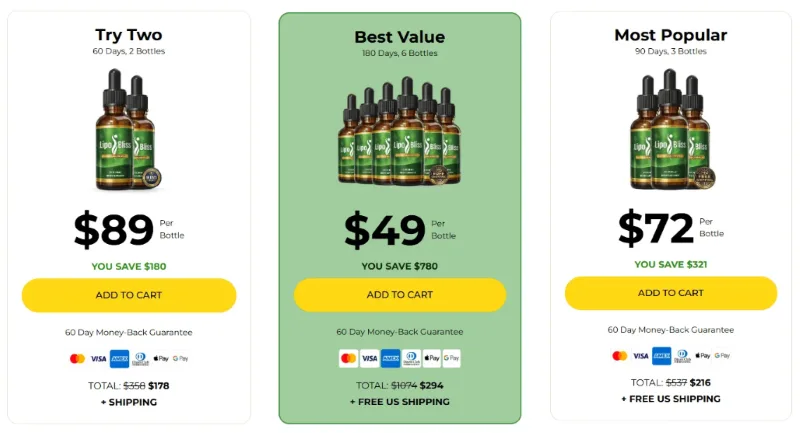
The product website currently advertises a promotional price of $49 per bottle, compared with a stated regular price of $199.
Because online supplement pricing can change, buyers should verify the current price, package quantity, shipping charges, subscription terms, refund policy, and any upsells on the checkout page before completing an order.
The advertised discount should also be viewed carefully.
A high “regular price” followed by a large discount does not necessarily tell you whether the product represents good value.
A better way to judge value is to calculate:
Cost per serving × number of months you plan to use it
Then compare that cost with the evidence supporting the ingredients.
🛍️ Check Lipo Bliss Price, Packages & Ordering Details
Lipo Bliss vs. Prescription GLP-1 Medications
This is one of the most important comparisons.
| Feature | Lipo Bliss | Prescription GLP-1 Medication |
| Category | Dietary supplement | Prescription medicine |
| Primary approach | Nutritional/botanical support | Pharmacological GLP-1 receptor activity |
| FDA approval | Dietary supplements are not FDA-approved for effectiveness | Specific medications may be FDA-approved for specific indications |
| Prescription required | Generally no | Yes |
| Clinical evidence | Limited for many multi-ingredient supplements | Extensive clinical trial evidence for approved medications |
| Monitoring | Consumer should discuss use with healthcare provider | Medical supervision is typically involved |
| Expected results | Individual and uncertain | Depends on medication, indication, dose, and patient |
| Intended role | Lifestyle support | Medical treatment when clinically appropriate |
The NIH notes that proven weight-management strategies include a healthy eating pattern, calorie reduction, and physical activity, while evidence for many weight-loss supplements is limited.
A 2023 review published in Gastroenterology Clinics of North America likewise concluded that many marketed weight-loss products and ingredients lack evidence demonstrating meaningful clinical effectiveness.
LipoBliss Experience: What Users May Notice Over Time
Important: For someone in the U.S. looking to support their weight-management goals, LipoBliss may become one part of a broader routine that includes healthier eating, regular activity, hydration, and consistent sleep. The experience can differ from person to person, but these are some of the changes users may pay attention to along the way.
Imagine a 42-year-old woman from Texas who works remotely and spends most of her day sitting.
She wants to lose weight but struggles with evening snacking and inconsistent exercise.
Instead of expecting a supplement to do everything, she creates a 12-week plan.
Her routine includes:
- a moderate calorie deficit,
- protein at each major meal,
- more vegetables and fiber,
- water instead of sugary drinks,
- 30-minute walks five days per week,
- consistent sleep,
- weekly weight measurements,
- and careful monitoring of how she feels while using the product.
During the first few weeks, she notices that her routine is easier to follow because she is paying closer attention to portions and meal timing.
By week eight, her weight has changed modestly.
At this point, it would be scientifically incorrect to say that the supplement alone caused the change.
Her results could reflect her reduced calorie intake, increased walking, improved food choices, normal fluctuations, or some combination of factors.
That is the mindset consumers should bring to supplement reviews.
A good result is useful, but understanding what caused it is even more useful.
Where to Buy Lipo Bliss Safely
If you decide to purchase it, the safest approach is to start with the manufacturer’s current sales channel rather than random marketplace listings.
The product website currently identifies itself as the primary source and describes the product as manufactured in the United States and produced under GMP-related standards.
For anyone searching where to buy Lipo Bliss, verify:
- the exact product name,
- the current Supplement Facts label,
- serving size,
- expiration date,
- return/refund terms,
- shipping costs,
- and whether recurring billing is involved.
Also be cautious with websites selling unusually cheap bottles.
Visit the Official Lipo Bliss Website & Learn More
- Supports healthy weight management
- Natural formula approach
- Complements a balanced diet
- Supports weight-management goals
Possible Side Effects and Safety Considerations
“Natural” does not automatically mean “risk-free.”
The NCCIH warns that many weight-loss supplements have not been adequately tested for safety and that some products can contain potentially harmful or undeclared substances.
Potential concerns depend on the exact ingredients, amounts, individual health status, and other medications or supplements being used.
For that reason, don’t simply assume that a supplement is safe because it is labeled natural.
If you experience concerning symptoms after taking a supplement, stop using it and seek appropriate medical advice.
What the Science Says About Weight-Loss Supplements
The broader scientific picture is more complicated than many advertisements suggest.
The NIH Office of Dietary Supplements explains that manufacturers commonly market weight-loss supplements around mechanisms such as appetite reduction, increased metabolism, or reduced absorption of nutrients. However, there is limited evidence that most weight-loss supplements produce meaningful long-term weight loss.
NCCIH similarly advises consumers to be skeptical of exaggerated claims and notes that many supplements marketed for weight loss have not been adequately demonstrated to be safe or effective.
This doesn’t mean every ingredient is useless.
It means that the evidence needs to be evaluated at three different levels:
Ingredient evidence → dose evidence → finished-product evidence
An ingredient can have a small study behind it, but that does not automatically prove that a particular commercial formula produces the same outcome.
That’s the key distinction I would keep in mind when reading any Lipo Bliss review.
How to Get Better Results From a Weight-Management Routine
Whether someone chooses a supplement or not, the foundation remains lifestyle.
A practical approach includes:
Build meals around protein and fiber
Protein can help make meals more satisfying, while fiber-rich foods can support fullness and digestive health.
Keep calories realistic
Weight loss generally requires sustained energy intake below energy expenditure.
The FTC emphasizes that substantial weight loss cannot realistically be promised without appropriate changes in diet and activity.
Move consistently
You don’t necessarily need extreme workouts.
Walking, resistance training, cycling, swimming, and other enjoyable activities can all contribute to a more active lifestyle.
Protect sleep
Poor sleep can make appetite management and healthy food choices harder.
Track trends instead of individual days
Body weight naturally fluctuates.
A weekly average is usually more informative than becoming frustrated by one day’s number.
Be patient
Sustainable weight management is generally a long-term process.
Lipo Bliss Review: My Overall Assessment
After looking at the available product information alongside broader scientific guidance, I would describe Lipo Bliss as a weight-management supplement that may be interesting for consumers who prefer a natural, multi-ingredient approach—but not as a replacement for clinically proven obesity medications or lifestyle changes.
The formula has several ingredients commonly used in the supplement industry, and the product is presented around appetite, energy, metabolism, and general weight-management support.
The biggest limitation is evidence.
There does not appear to be strong independent clinical evidence demonstrating that the finished product itself produces a particular amount of weight loss.
That doesn’t automatically make it ineffective.
It simply means consumers should keep expectations realistic.
I would also avoid interpreting the word “GLP” as meaning that the product works like prescription GLP-1 drugs.
That distinction matters.
If someone wants to try Lipo Bliss, the most sensible approach is to treat it as an optional part of a broader health plan—not the foundation of that plan.
Frequently Asked Questions
1. What is Lipo Bliss?
Lipo Bliss is a dietary supplement marketed for healthy weight-management support. The product website describes a formula containing ingredients including chromium, maca root, African mango seed extract, and grape seed extract.
2. Is Lipo Bliss a GLP-1 medication?
No. A dietary supplement marketed around GLP-related weight-management support should not be confused with prescription GLP-1 receptor agonist medications.
3. How long does it take to see results?
There is no scientifically established timeline for specific results from this product. Individual outcomes depend on diet, physical activity, starting weight, health status, consistency, and other factors.
4. Is it safe for everyone?
No supplement can be assumed to be appropriate for everyone. People taking medications or managing conditions such as diabetes, cardiovascular disease, liver disease, or other chronic conditions should consult a healthcare professional first.
5. Does Lipo Bliss replace diet and exercise?
No. A supplement should not be considered a replacement for a balanced diet, appropriate calorie intake, physical activity, or medical treatment.
Final Verdict
Is Lipo Bliss worth considering?
For someone looking for a convenient dietary supplement to complement healthy eating and regular physical activity, it may be worth researching.
But I would not buy it based solely on claims of rapid fat loss, dramatic before-and-after results, or comparisons with prescription GLP-1 medications.
The strongest reasons to be cautious are the limited evidence for many weight-loss supplements, the lack of strong independent clinical evidence for the finished formula, and the fact that dietary supplements do not go through the same pre-market approval process as prescription drugs.
The bottom line is simple:
Use the supplement, if appropriate, as a supporting tool—not as a shortcut.
Your diet, physical activity, sleep, calorie intake, medical history, and consistency will generally matter far more than any single bottle.
Scientific Resources & References
For readers who want to investigate the science rather than rely only on product advertising, these are useful starting points:
- NIH Office of Dietary Supplements: The NIH overview explains what is known—and not known—about dietary supplements marketed for weight loss. ODs
- NCCIH: Provides consumer guidance about weight-loss supplements, including safety concerns and exaggerated claims.
- PubMed: A searchable database of biomedical and clinical research, including reviews of dietary supplements for weight management.
- FDA: Explains how dietary supplements are regulated and why they are not FDA-approved for effectiveness before marketing.
- FTC: Provides guidance on misleading weight-loss advertising and unrealistic claims.
Disclaimer: This article is for educational and informational purposes only. It is not medical advice and does not guarantee weight loss or other results. Dietary supplements are not intended to diagnose, treat, cure, or prevent disease. Always review the current product label and consult a qualified healthcare professional before starting a new supplement, particularly if you take medication or have an existing medical condition.
Author


Your Health Rights is a U.S.-based health and wellness platform dedicated to empowering readers with clear, research-backed content across Men’s Health, Women’s Health, Weight Loss, Health Supplements, and Immunity & General Wellness.


