


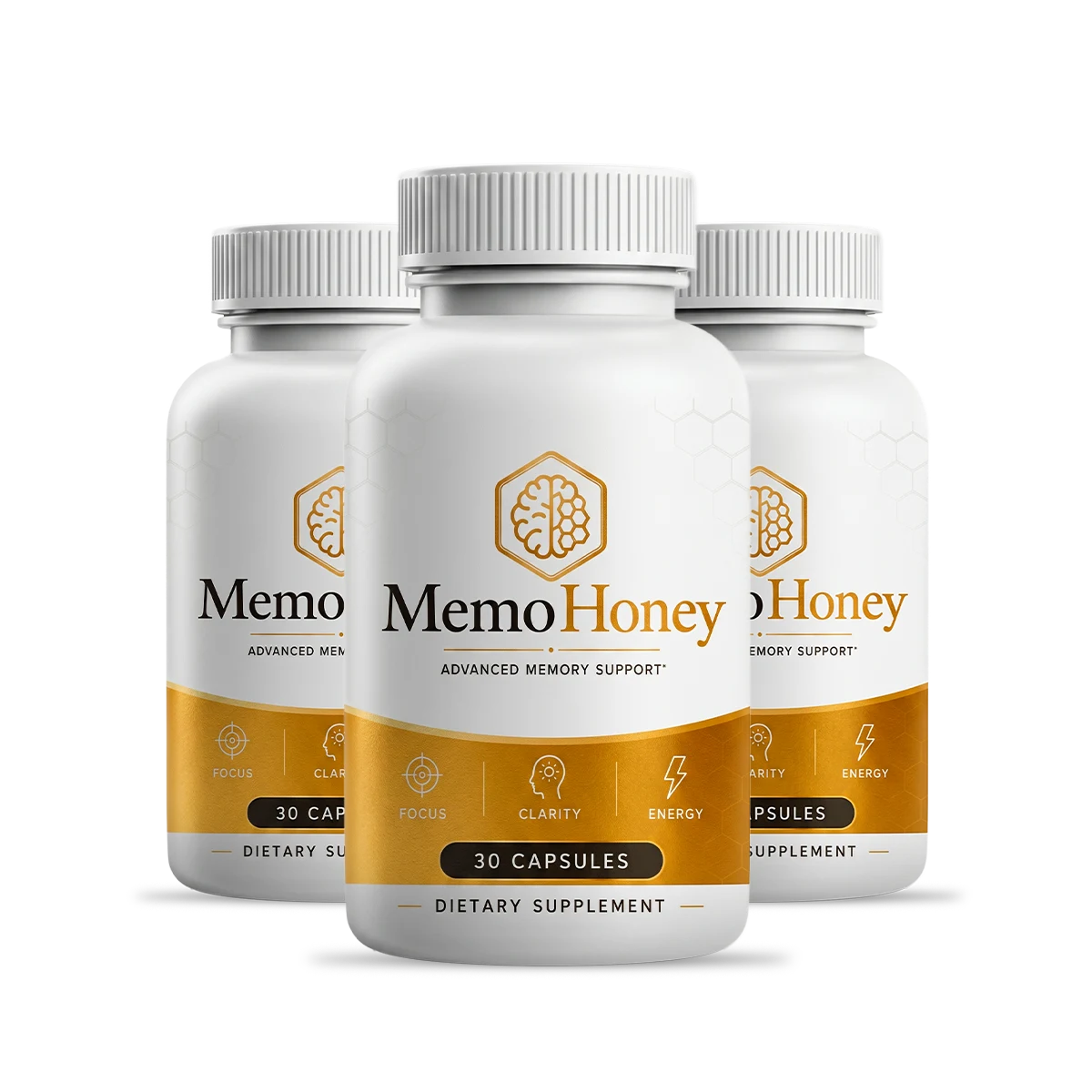
If you have been searching for a memory support supplement that may fit into a daily wellness routine, you have probably come across MemoHoney. The product is marketed around memory, focus, mental clarity, and healthy cerebral blood flow, but the more important question is whether the formula itself has enough scientific support to justify those claims.
In this MemoHoney Review, we look beyond the sales language and examine the ingredients, intended benefits, possible side effects, pricing, safety considerations, scientific evidence, and what a realistic U.S. consumer should expect.
The first thing to understand is that MemoHoney is a dietary supplement, not a treatment for Alzheimer’s disease, dementia, or another diagnosed cognitive disorder. The company’s current website describes its formula as containing L-Arginine, L-Arginine AKG, L-Citrulline HCL, L-Citrulline Malate, niacin, and beta-alanine. Another current product page lists calcium as well, so consumers should check the Supplement Facts panel on the bottle they actually receive.
Scientific organizations also make an important distinction: although many products are marketed for memory and brain health, there is not strong evidence that dietary supplements can prevent dementia or Alzheimer’s disease.
So, is MemoHoney worth trying? The answer depends on what you expect from it. Someone looking for general nutritional or circulation-related support may view the formulation differently from someone expecting a dramatic improvement in memory.
What Is MemoHoney?
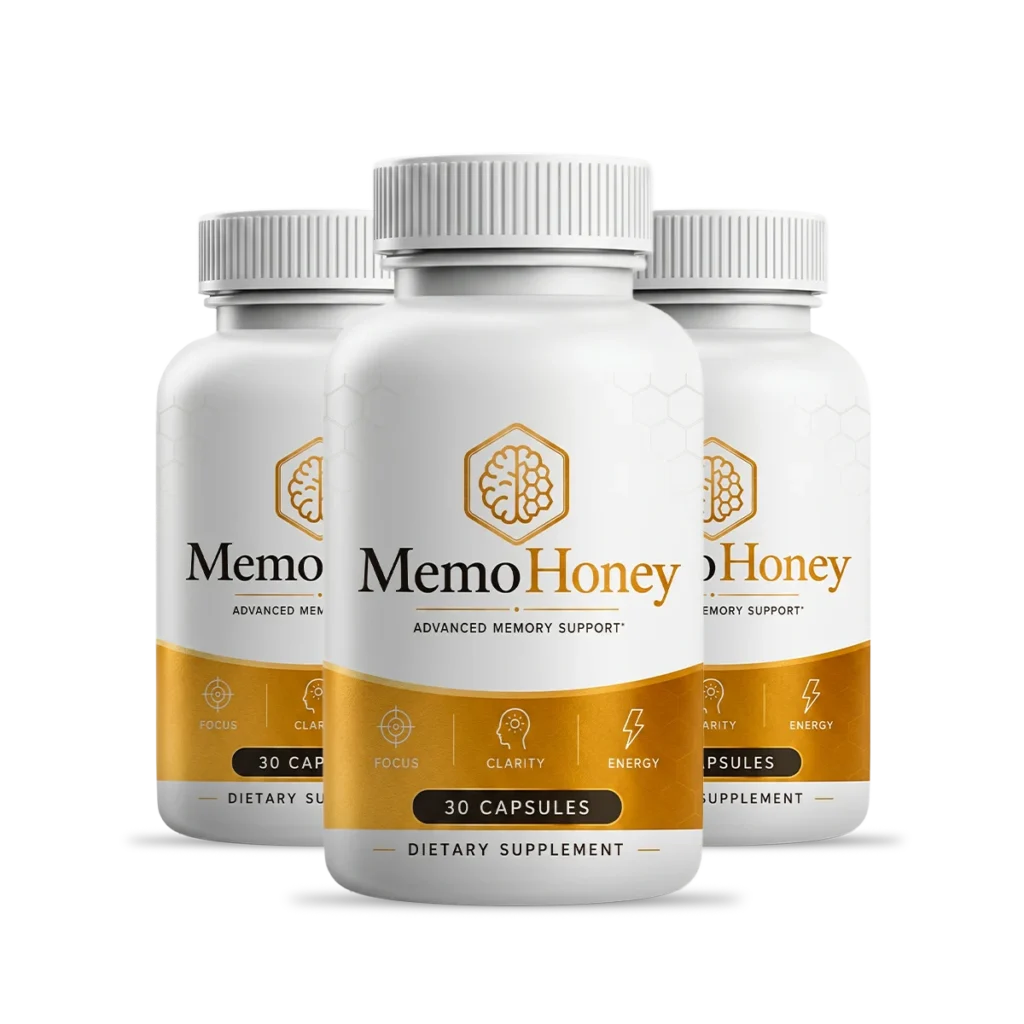
MemoHoney is marketed as a daily cognitive wellness supplement designed to support memory, focus, mental clarity, and healthy circulation. According to the manufacturer’s current information, the formula focuses heavily on amino acids involved in the nitric-oxide pathway rather than relying on caffeine or conventional stimulants.
The company describes MemoHoney as a vegetable-capsule supplement and says it is intended to support healthy cerebral blood flow and normal cognitive wellness. The manufacturer’s website also states that it is not intended to diagnose, treat, cure, or prevent dementia or Alzheimer’s disease.
This distinction matters.
A supplement can be marketed for “memory support” without having clinical evidence that the finished product improves memory in humans. The scientific evidence needs to be evaluated at several levels:
- Is there research on the individual ingredient?
- Was that research conducted in humans?
- Was the ingredient used at a comparable dose?
- Was the specific combination tested?
- Has the finished product itself been tested in a well-designed clinical trial?
For MemoHoney, publicly available product information provides considerable detail about the ingredients, but that is not the same thing as having a large randomized clinical trial proving that the finished product improves memory.

MemoHoney Ingredients: What’s Inside?
The current manufacturer’s pages identify the main MemoHoney supplement ingredients as:
- L-Arginine
- L-Arginine AKG
- L-Citrulline HCL
- L-Citrulline Malate
- Niacin (Vitamin B3)
- Beta-Alanine
One current product page also lists calcium, while other pages describe six primary ingredients. Because online product pages can change, the Supplement Facts panel on the actual bottle should be treated as the definitive source for what you are purchasing.
L-Arginine
L-Arginine is an amino acid involved in the body’s nitric-oxide pathway. Nitric oxide helps regulate blood-vessel dilation, which is why arginine is commonly studied in cardiovascular and circulation contexts.
The rationale behind MemoHoney is that healthy circulation is relevant to overall brain function. However, supporting nitric oxide does not automatically demonstrate improved memory. That distinction is important when evaluating a brain health supplement.
L-Arginine AKG
L-Arginine AKG combines arginine with alpha-ketoglutarate. The manufacturer presents it as another component of its circulation-support strategy.
The theoretical mechanism may sound interesting, but consumers should avoid assuming that a biochemical pathway automatically translates into noticeable improvements in recall, concentration, or learning.
L-Citrulline
Citrulline is another amino acid associated with nitric-oxide production. The body can convert citrulline into arginine, which is then involved in nitric-oxide synthesis.
The formula contains both L-Citrulline HCL and L-Citrulline Malate according to the manufacturer’s ingredient information.
Again, this provides a biological rationale for the formulation, but it should not be confused with direct clinical proof that MemoHoney improves memory.
Niacin
Niacin, or vitamin B3, is a genuine essential nutrient. According to the NIH Office of Dietary Supplements, niacin participates in energy metabolism and is important for normal cell function.
However, more is not necessarily better. The NIH notes that supplemental nicotinic acid at sufficiently high amounts can cause flushing, itching, burning, headache, rash, or dizziness. The adult upper limit for supplemental niacin is 35 mg per day.
That does not mean the amount in MemoHoney is automatically unsafe; it means consumers should consider their total intake from other supplements and medications.
Beta-Alanine
Beta-alanine is best known for its relationship with carnosine and exercise physiology, but researchers have also investigated possible connections with cognitive function.
A randomized controlled study in older adults found that beta-alanine supplementation did not significantly improve overall MoCA scores across the entire study population, although a subgroup with lower baseline cognitive scores showed improvements.
That is interesting but insufficient to conclude that beta-alanine in MemoHoney will improve memory in healthy adults.
How Does MemoHoney Work?
The proposed mechanism behind MemoHoney is primarily based on circulation and nitric-oxide support.
Arginine and citrulline are involved in pathways that influence nitric oxide, which participates in blood-vessel relaxation. The manufacturer’s explanation is that supporting healthy circulation may help support blood flow reaching the brain.
There is a reasonable physiological idea here, but it is important not to jump from mechanism to outcome.
For example:
Ingredient → biological pathway → possible physiological effect → possible cognitive benefit
The first two steps may be biologically plausible without proving the final step.
A product can contain ingredients with legitimate biological functions while still lacking direct evidence that the finished formula produces meaningful improvements in memory.
MemoHoney Memory Support: What Can You Realistically Expect?
People often search for MemoHoney memory support because they want help with everyday issues such as:
- Forgetting names or appointments
- Losing concentration during work
- Mental fatigue
- Difficulty maintaining focus
- Feeling mentally distracted
- Wanting general brain health support
These concerns can have many causes, including inadequate sleep, stress, dehydration, poor diet, medication effects, depression, thyroid problems, and other medical conditions.
The NCCIH specifically warns that memory problems should not automatically be treated with supplements because potentially treatable medical or medication-related causes can contribute to memory impairment.
Therefore, MemoHoney should be viewed as an optional supplement rather than a replacement for medical evaluation.
What Does Science Say About Memory Supplements?
This is where the MemoHoney Review becomes particularly important.
The broader scientific evidence surrounding memory supplements is mixed.
The National Center for Complementary and Integrative Health says that many dietary supplements are promoted for cognitive function, but direct evidence that supplements can prevent Alzheimer’s disease or other forms of dementia remains lacking.
The National Institute on Aging similarly states that no vitamin or supplement is currently recommended for preventing Alzheimer’s disease or cognitive decline. Some research has produced interesting findings, but evidence remains incomplete.
A review of over-the-counter memory supplements also found that many products contain ingredients with varying levels of evidence and that dietary supplements in the United States are not required to undergo the same premarket approval process as prescription medicines.
This does not mean all supplements are ineffective. It means consumers need to distinguish between:
ingredient evidence, marketing claims, and finished-product evidence.
For MemoHoney, the current publicly available information gives us enough to discuss the ingredients and their mechanisms, but not enough to claim that the finished product has been proven to prevent cognitive decline or treat a memory disorder.
MemoHoney Benefits: What Are the Potential Advantages?
Based on its formulation and manufacturer’s positioning, potential advantages of MemoHoney include the following.
1. Stimulant-Free Formula
The manufacturer says MemoHoney does not contain caffeine.
That may appeal to people who prefer avoiding caffeine-based products or who do not want a supplement that produces a temporary stimulant effect.
2. Focus on Circulation Support
Arginine and citrulline are included to support the nitric-oxide pathway. This gives the product a different approach from formulas built primarily around herbal ingredients.
3. Includes Vitamin B3
Niacin is an essential nutrient involved in cellular energy metabolism.
4. Simple Daily Routine
The manufacturer describes a once-daily capsule routine, which may be easier for some users to follow consistently.
5. Transparent Main Ingredient List
The company’s current pages publicly identify the principal ingredients instead of simply describing the product as a generic “brain blend.”
MemoHoney Price: How Much Does It Cost?
The MemoHoney price varies according to the package selected and promotional pricing.
Current sales pages show approximately:
| Package | Listed Price | Approx. Cost/Bottle |
| 2 bottles | $158 | $79 |
| 3 bottles | $207 | $69 |
| 6 bottles | $294 | $49 |
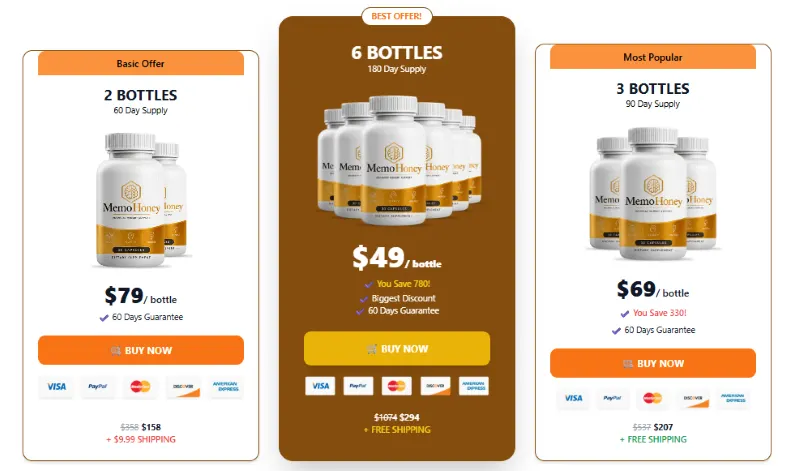
The official sales pages also advertise a 60-day money-back guarantee, although shipping terms and promotional details can vary.
Because online supplement prices can change, readers should confirm the final price, shipping charges, refund terms, and package quantity at checkout rather than relying permanently on a third-party article.
MemoHoney Side Effects and Safety
One of the most important parts of any MemoHoney Review is safety.
The manufacturer says people taking blood-pressure medication, nitrates, blood thinners, or those with cardiovascular conditions should consult a healthcare professional before using the product.
That warning deserves attention because several ingredients are associated with blood-vessel or circulation pathways.
Potential concerns can include:
- Headache
- Dizziness
- Gastrointestinal discomfort
- Changes in blood pressure
- Niacin-related flushing, depending on the form and dose
- Possible interactions with medications
The NIH explains that niacin supplements can interact with medications and that higher amounts of supplemental niacin can cause flushing, itching, headaches, dizziness, and other adverse effects.
Mayo Clinic also notes potential interactions involving niacin and blood-pressure medicines, anticoagulant or antiplatelet medicines, diabetes medicines, and certain other drugs.
Who Should Talk to a Doctor First?
Before using MemoHoney, medical advice is especially important if you:
- Take blood-pressure medication
- Take nitrates for chest pain
- Take blood thinners or antiplatelet drugs
- Have cardiovascular disease
- Have diabetes
- Have liver disease
- Have kidney disease
- Are pregnant or breastfeeding
- Take several medications or supplements
- Have unexplained or rapidly worsening memory problems
A supplement should not delay evaluation of significant cognitive changes.
Where Can You Buy MemoHoney?
The MemoHoney official website is the most appropriate place to check the manufacturer’s current formula, directions, pricing, and refund terms.
Several websites use similar names, so consumers should carefully verify the domain before entering payment information. The manufacturer’s pages currently identify the product as being sold through its official online channels.
Order MemoHoney Directly from the Official Website
- Promotes Better Focus
- Supports Mental Clarity
- Supports Memory & Recall
- Easy Daily Brain Support
MemoHoney vs. a Typical Brain Health Supplement
A useful comparison is not necessarily between two specific brands. It can instead compare the formulation approach.
| Feature | MemoHoney | Typical Brain Health Supplement |
| Main approach | Amino acids + niacin | Often herbs, vitamins, or nootropics |
| Caffeine | Manufacturer says no | Varies |
| Nitric-oxide pathway | Central to formula | Usually not central |
| Herbal ingredients | Not the main focus | Often included |
| Memory claims | General support | Usually general support |
| Clinical evidence | Ingredient-level evidence varies | Depends heavily on product |
| Medical treatment | No | No |
This comparison highlights why reading the Supplement Facts panel matters more than simply looking at a product’s marketing category.
USA Case Study: How a Consumer Might Evaluate MemoHoney
A hypothetical U.S. user scenario
Consider Daniel, a fictional 52-year-old office worker in the United States.
Daniel spends most of his working day on a computer. Over several months, he notices that he occasionally forgets names, loses concentration during long meetings, and feels mentally tired in the afternoon.
Instead of immediately assuming he needs a memory supplement, Daniel first reviews his lifestyle.
He realizes that he sleeps around six hours on many nights, drinks little water during the workday, rarely exercises, and often eats highly processed meals during busy workweeks.
Daniel’s doctor finds no obvious medical explanation for his concerns and discusses his interest in dietary supplements.
Daniel then researches MemoHoney.
He discovers that its formula is based primarily on arginine, citrulline, niacin, and beta-alanine rather than caffeine. He also learns that the product is not an FDA-approved treatment for memory disorders.
Instead of expecting a dramatic memory transformation, Daniel decides that if he uses the product, he will evaluate it alongside healthier habits and track practical outcomes such as concentration, sleep, and ability to complete work tasks.
This is a hypothetical case study, not evidence that MemoHoney produces the same outcome in real users.
The lesson is more important than the fictional person: a supplement should be considered as one part of a broader approach to brain health, not as a shortcut around sleep, nutrition, exercise, medical care, or cognitive engagement.
What Could Make MemoHoney Appealing?
The strongest practical argument for MemoHoney is its relatively straightforward formulation strategy.
Instead of trying to include dozens of trendy ingredients, the product centers on a smaller number of amino acids and niacin. The manufacturer also says it is stimulant-free.
For consumers interested specifically in circulation-oriented brain health support, that may be attractive.
However, the limitations are equally important.
There is currently no strong evidence that taking MemoHoney itself prevents dementia, treats Alzheimer’s disease, or guarantees better memory. NCCIH emphasizes that the evidence for dietary supplements and cognitive decline is generally limited and inconsistent.
MemoHoney Pros and Cons
Pros
- Stimulant-free according to manufacturer
- Contains identifiable amino acids and vitamin B3
- Simple daily capsule routine
- Focuses on circulation-related pathways
- Manufacturer provides a money-back guarantee
- May appeal to people avoiding caffeine
Cons
- Finished-product clinical evidence appears limited
- Not a treatment for memory disorders
- Results may vary between individuals
- Potential medication interactions need consideration
- Promotional pricing can change
- Should not replace healthy lifestyle habits
Is MemoHoney a Scam or Legit?
Calling MemoHoney a scam would require evidence of fraudulent activity, and the available product information alone does not establish that.
At the same time, calling MemoHoney a scientifically proven memory treatment would also go beyond the available evidence.
A more accurate way to describe the situation is this:
MemoHoney is a dietary supplement marketed for memory, focus, mental clarity, and brain health support, but consumers should distinguish the product’s marketing claims from clinical evidence for the finished formula.
The manufacturer provides an ingredient list and product information, and current sales pages advertise a money-back guarantee.
The scientific literature, however, does not establish that this particular combination is a proven treatment for cognitive decline.
That makes careful expectations important.
How to Get Better Brain Health Support Naturally
Regardless of whether you decide to try MemoHoney, several lifestyle factors have a much broader role in overall brain health.
The National Institute on Aging discusses healthy eating patterns, physical activity, social engagement, and other lifestyle factors as areas relevant to cognitive health.
A practical brain-health routine can include:
- Getting consistent, adequate sleep
- Eating a nutrient-dense diet
- Staying physically active
- Managing stress
- Drinking enough fluids
- Maintaining social connections
- Keeping blood pressure and other cardiovascular risk factors under control
- Learning new skills and challenging the brain
- Discussing persistent memory changes with a healthcare professional
These habits are not as marketable as a bottle of capsules, but they are an important foundation.
Scientific & Reference Resources
For readers who want to investigate the science rather than rely only on product marketing, these are useful sources:
- National Center for Complementary and Integrative Health (NCCIH) — dietary supplements and cognitive function.
- National Institute on Aging (NIA) — diet, cognitive health, and Alzheimer’s disease research.
- NIH Office of Dietary Supplements (ODS) — niacin and other dietary supplement fact sheets.
- PubMed — peer-reviewed biomedical research, including studies examining beta-alanine and cognition.
- MemoHoney manufacturer’s website — current product information, ingredients, directions, pricing, and guarantee terms.
Frequently Asked Questions
What is MemoHoney?
MemoHoney is a dietary supplement marketed for memory, focus, mental clarity, and healthy cerebral blood-flow support. The manufacturer’s current information identifies arginine, citrulline, niacin, and beta-alanine among its primary ingredients.
Does MemoHoney really improve memory?
There is not enough clinical evidence to say that MemoHoney itself reliably improves memory. Some of its individual ingredients have biological functions relevant to circulation or metabolism, but that does not establish that the finished product improves memory in humans.
Is MemoHoney FDA approved?
No dietary supplement should be described as an FDA-approved treatment simply because it is manufactured in an FDA-registered facility. MemoHoney is marketed as a dietary supplement, not an FDA-approved medicine.
How long does MemoHoney take to work?
The manufacturer suggests consistent use, but there is no strong independent clinical evidence establishing a specific timeframe in which MemoHoney should improve memory. Consumers should be cautious about claims promising immediate cognitive changes.
Is MemoHoney safe for older adults?
Age alone does not determine whether a supplement is appropriate. Older adults may take multiple medications, making interaction checks particularly important. Anyone with persistent or worsening memory problems should discuss the symptoms with a healthcare professional rather than relying only on a supplement.
MemoHoney Review: Final Thoughts
After looking at the formula, marketing claims, pricing, safety considerations, and scientific background, MemoHoney appears to be a circulation-oriented dietary supplement marketed for memory and cognitive wellness rather than a conventional stimulant-based nootropic.
Its formulation has a logical biochemical rationale: arginine and citrulline are connected to nitric-oxide pathways, while niacin is an essential nutrient involved in cellular metabolism. However, a plausible mechanism is not the same as proof of improved memory.
The broader scientific evidence also tells us to be cautious. NCCIH and the National Institute on Aging both emphasize that no dietary supplement has been established as a reliable way to prevent Alzheimer’s disease or cognitive decline.
Therefore, whether MemoHoney is worth trying comes down to individual circumstances.
For someone seeking a stimulant-free supplement as an addition to an overall wellness routine, the formulation may be worth researching further. For someone experiencing sudden, progressive, or significant memory loss, relying on MemoHoney would not be an appropriate substitute for medical evaluation.
In short, MemoHoney can be considered a dietary option for general memory and brain health support, but the current evidence does not justify treating it as a proven therapy for cognitive disorders.
Disclaimer: This article is for educational and informational purposes only. It is not intended to diagnose, treat, cure, or prevent any disease. Individual results may vary. Always review supplement ingredients with a qualified healthcare professional, particularly if you take medication or have an existing medical condition.
For more helpful health guides, wellness tips, and natural health insights, read more articles on: Your Health Rights
Author


Your Health Rights is a U.S.-based health and wellness platform dedicated to empowering readers with clear, research-backed content across Men’s Health, Women’s Health, Weight Loss, Health Supplements, and Immunity & General Wellness.