




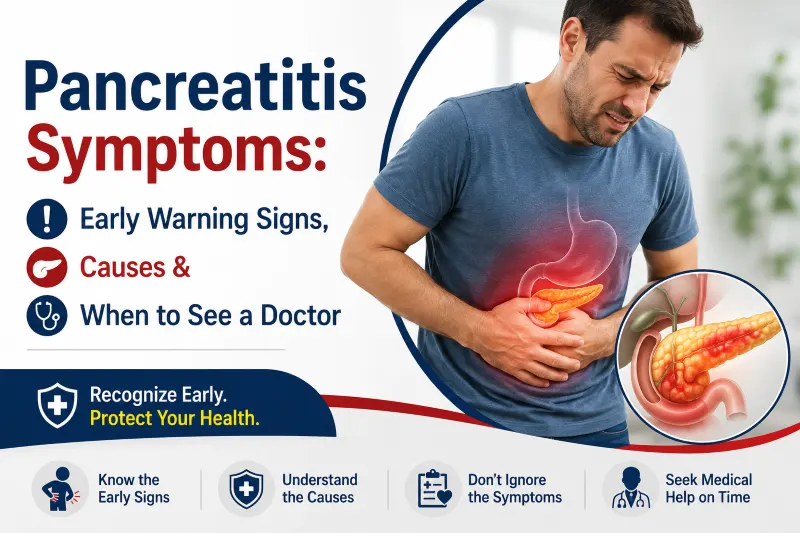
Medical Disclaimer: This article is for informational and educational purposes only. It is not a substitute for professional medical advice, diagnosis, or treatment. If you believe you or someone you know may be experiencing pancreatitis symptoms, please seek immediate medical attention. Always consult a qualified healthcare provider about any medical condition.
Here is something most people don’t know until it happens to them: pancreatitis pain is unlike almost anything else the human body produces.
It isn’t the crampy, shifting discomfort of a stomach ache. It isn’t the tight, familiar grip of gas. People who’ve had it describe it as a deep, relentless, burning pain that bores straight through the abdomen to the back — the kind of pain that makes movement impossible and normal breathing feel difficult. It comes on fast, doesn’t respond to the usual remedies, and often lands people in the emergency room within hours of the first symptom.
And yet, despite being responsible for nearly 300,000 hospital admissions in the United States each year — and more than one million inpatient days — pancreatitis remains one of the most commonly misunderstood conditions in the general public. Most people couldn’t describe a single symptom if asked. Many confuse it with heartburn, food poisoning, or a severe stomach bug before the real diagnosis comes.
That’s a problem. Because early recognition of pancreatitis symptoms is one of the most important factors in determining how well a patient recovers. This article is designed to give you the clear, thorough picture that most health resources don’t provide — not just a list of symptoms, but the full context around what pancreatitis actually is, what causes it, what it feels like from the inside, and exactly when the situation requires a trip to the emergency room rather than a wait-and-see approach at home.
First: What Is the Pancreas and What Does It Do?
Before diving into symptoms, it helps to understand what the pancreas actually does — because the nature of the organ explains why inflammation becomes so dangerous so quickly.
The pancreas is a long, flat gland tucked behind the stomach in the upper left abdomen. It has two essential jobs:
Exocrine function: Producing powerful digestive enzymes — amylase, lipase, and protease — that flow into the small intestine to help break down carbohydrates, fats, and proteins from the food you eat.
Endocrine function: Producing hormones, most critically insulin and glucagon, which regulate blood sugar.
Under normal circumstances, the digestive enzymes produced by the pancreas remain inactive until they reach the small intestine. Pancreatitis occurs when these enzymes become activated while still inside the pancreas itself — and begin digesting the organ’s own tissue. The result is a painful, dangerous inflammatory cascade that can range from mild and self-resolving to severe and life-threatening within days.
The Two Types of Pancreatitis: Acute vs. Chronic
Understanding which type of pancreatitis someone may be experiencing changes everything about the symptoms, timeline, and urgency involved.
Acute Pancreatitis
Acute pancreatitis comes on suddenly, often without warning, and typically lasts a few days. It is one of the most common diseases of the gastrointestinal tract leading to hospital admission in the United States, and while most patients experience symptoms lasting a few days, almost one-fifth will go on to experience complications, including pancreatic necrosis and/or organ failure, at times requiring prolonged hospitalization, intensive care, and radiologic, surgical, and/or endoscopic intervention.
In mild cases, the pancreas heals on its own with supportive care. In severe cases, the situation escalates rapidly and becomes a genuine medical emergency.
Chronic Pancreatitis
Chronic pancreatitis develops more slowly, over months or years, typically from repeated episodes of acute inflammation or sustained damage to the pancreas. Rather than sudden attacks, it produces persistent or recurring symptoms. Over time, it can permanently damage the pancreas’s ability to produce enzymes and hormones — leading to malnutrition, diabetes, and long-term digestive problems.
The distinction matters for symptoms because acute and chronic pancreatitis don’t always feel the same, and the warning signs can be easy to mistake for something else, particularly in chronic cases.
Early Warning Signs of Pancreatitis
1. Upper Abdominal Pain — The Cardinal Symptom
If there is one symptom that defines pancreatitis across virtually all cases, it is upper abdominal pain. But calling it simply “stomach pain” undersells what this feels like.
The pain of pancreatitis is typically:
- Located in the upper abdomen, often centered just below the sternum or slightly to the left
- Radiates to the back in a significant percentage of patients — described as a boring, drilling sensation that moves from the front of the abdomen through to the middle back
- Constant rather than crampy — it doesn’t come and go in waves the way typical digestive pain does
- Worsens after eating, particularly fatty or heavy meals
- Worsens when lying flat — many patients find the pain slightly eases when they lean forward or curl into a fetal position
- Severe in acute cases — often rated 8–10/10 in intensity, described by patients as among the worst pain they’ve ever experienced
In chronic pancreatitis, the pain pattern shifts somewhat. While it can be constant and disabling, some individuals with chronic pancreatitis may have no pain at all, making the condition even harder to detect in its earlier stages.
2. Nausea and Vomiting
Severe abdominal pain is frequently accompanied by feelings of nausea and the inability to keep food down.This is one of the most consistent early signs alongside the pain itself. The vomiting often doesn’t relieve the pain — which is a distinguishing feature. With food poisoning or a stomach virus, vomiting frequently brings some relief. With pancreatitis, patients often describe vomiting repeatedly while the abdominal pain continues unchanged or worsens.
3. Fever and Elevated Heart Rate
As the inflammation worsens, the body may respond with a fever and an increased heart rate. A fever in the context of pancreatitis is a warning sign that demands attention. It can indicate that the inflammatory process is escalating, or — more seriously — that infection or necrosis (death of pancreatic tissue) is developing. Fever accompanied by rapid pulse significantly changes the clinical picture and typically requires urgent evaluation.
4. Tender, Swollen Abdomen
The upper abdomen often becomes visibly distended and extremely tender to touch. In acute pancreatitis, even light pressure on the upper abdomen can produce severe pain — this tenderness on examination is one of the clinical signs doctors use to confirm their suspicion of pancreatitis.
5. Oily, Foul-Smelling Stools (Steatorrhea)
This symptom is more characteristic of chronic pancreatitis than acute. When the pancreas can no longer produce sufficient digestive enzymes, dietary fat passes through the digestive system undigested, producing stools that are:
- Pale or grayish in color
- Oily in appearance — may float or leave a greasy residue in the toilet bowl
- Unusually foul-smelling
- Difficult to flush
This is called steatorrhea, and its presence signals that pancreatic enzyme insufficiency has developed — meaning the gland’s function is significantly compromised.
6. Unintentional Weight Loss
When the pancreas can’t produce adequate digestive enzymes, the body can’t properly absorb nutrients even from adequate food intake. This leads to gradual, unexplained weight loss despite normal or even increased eating — a hallmark of chronic pancreatitis that frequently goes unrecognized for months before diagnosis.
7. Jaundice (Yellowing of Skin or Eyes)
Jaundice in the context of pancreatitis occurs when inflammation or a gallstone blocks the bile duct — which runs close to the head of the pancreas. Obstruction of bile flow causes bilirubin to back up into the bloodstream, producing characteristic yellowing of the skin and whites of the eyes, along with dark urine and pale stools.
Jaundice alongside pancreatitis symptoms is a red flag that requires urgent evaluation, as it suggests biliary obstruction that may need endoscopic or surgical intervention.
Less Common But Important Warning Signs
Beyond the core symptoms, several other signs can appear — particularly as pancreatitis progresses or in severe cases:
- Hiccups — Persistent, unexplained hiccups can result from diaphragm irritation near inflamed pancreatic tissue
- Indigestion that doesn’t resolve — Chronic bloating, early fullness, and gas that doesn’t improve with typical interventions
- Back pain — Without obvious abdominal pain, isolated back pain sometimes leads to delayed pancreatitis diagnosis
- New-onset diabetes or blood sugar instability — In chronic pancreatitis, damage to insulin-producing cells can trigger diabetes as the disease progresses
- Cullen’s sign and Grey Turner’s sign — In severe acute pancreatitis, bruising may appear around the navel (Cullen’s sign) or on the flanks (Grey Turner’s sign), indicating internal bleeding from pancreatic hemorrhage. These are serious signs requiring immediate emergency care
What Causes Pancreatitis?
The Two Most Common Causes
Gallstones account for roughly 40% of all acute pancreatitis cases. When a gallstone blocks the common bile duct or pancreatic duct, digestive enzymes back up into the pancreas and trigger inflammation. Gallstone-related pancreatitis typically presents with sudden, knife-like pain that tends to come on sharply rather than building gradually.
Alcohol is responsible for approximately 30% of acute cases and is the leading cause of chronic pancreatitis. Both binge drinking and long-term heavy alcohol use can trigger pancreatitis through direct toxic effects on pancreatic cells. Alcohol-related pancreatitis tends to present with more gradual onset compared to the sudden severity of gallstone cases.
Less Common but Significant Causes
- Hypertriglyceridemia — Very high blood triglyceride levels (typically above 1,000 mg/dL) can trigger pancreatitis through mechanisms that are still being actively researched
- Certain medications — Including some antibiotics, diuretics, and immunosuppressants have been associated with drug-induced pancreatitis
- ERCP procedure complications — Endoscopic retrograde cholangiopancreatography, a procedure used to examine bile and pancreatic ducts, carries a small but real risk of triggering acute pancreatitis
- Abdominal trauma — A direct blow to the abdomen can injure the pancreas and trigger inflammation
- Autoimmune conditions — Autoimmune pancreatitis is a distinct form where the immune system attacks the pancreatic tissue
- Genetic factors — Mutations in genes including PRSS1, SPINK1, and CFTR are associated with hereditary pancreatitis, often presenting in younger patients
- Pancreatic cancer — In some cases, pancreatitis is the first clinical sign of underlying pancreatic cancer, particularly in older adults with no other obvious risk factors
- Idiopathic — In roughly 15–25% of cases, no clear cause is identified despite thorough investigation
Acute vs. Chronic Pancreatitis: Comparing the Symptom Patterns
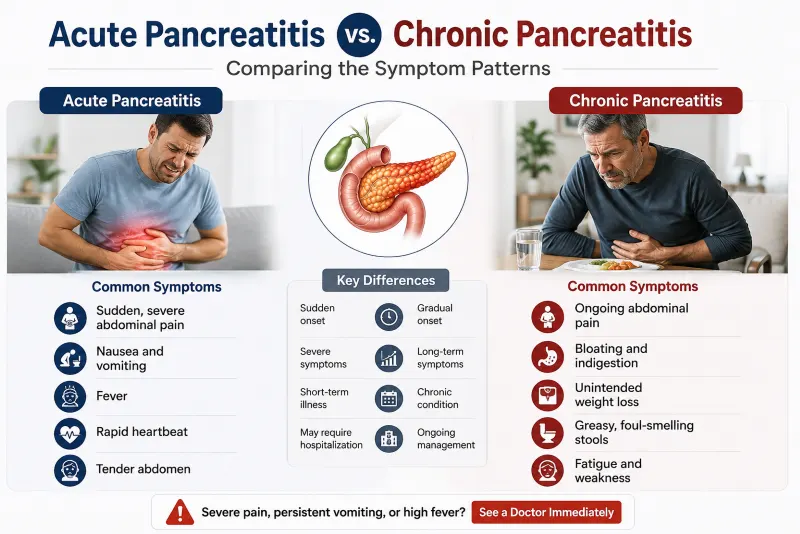
| Feature | Acute Pancreatitis | Chronic Pancreatitis |
| Onset | Sudden, within hours | Gradual, over months/years |
| Pain intensity | Severe, constant | Variable — can be mild or severe |
| Pain duration | Days | Persistent or recurring |
| Nausea/vomiting | Very common | Common during flare-ups |
| Fever | Common | Less common unless infected |
| Steatorrhea | Rare | Common (later stages) |
| Weight loss | Possible | Common |
| Diabetes risk | Low (unless severe) | High (long-term damage) |
| Recovery | Usually full recovery | Progressive, often irreversible |
Acute Pancreatitis Severity: Mild, Moderate, or Severe?
Acute pancreatitis is heterogeneous, progressing differently among patients and is often unpredictable. Clinicians classify severity using the Modified Atlanta Classification:
Mild acute pancreatitis involves local inflammation without organ failure or systemic complications. The vast majority of patients fall into this category, recover within 3–7 days with supportive care, and return to normal function.
Moderately severe acute pancreatitis involves transient organ dysfunction (resolving within 48 hours) or local complications such as fluid collections around the pancreas, but no persistent organ failure.
Severe acute pancreatitis is defined by persistent organ failure — kidney, lung, or cardiovascular failure lasting more than 48 hours. Roughly one in five patients develop complications such as necrosis or organ failure that prolong hospitalization and increase mortality. This is the form that can be life-threatening and requires intensive care management.
When to See a Doctor — And When to Go Straight to the ER
This is the section I want you to take most seriously.
Go to the Emergency Room Immediately If You Have:
- Severe upper abdominal pain that is not relieved by any over-the-counter remedies and is worsening
- Upper abdominal pain radiating to the back, particularly if accompanied by nausea and vomiting
- Fever above 38.5°C (101.3°F) with severe abdominal pain
- Rapid heart rate with abdominal pain and sweating
- Yellowing of the skin or eyes (jaundice) with abdominal pain
- Severe vomiting that prevents you from keeping any fluids down
- Bruising around the navel or on the flanks (Cullen’s or Grey Turner’s sign)
- Confusion, disorientation, or severe weakness alongside abdominal pain — these suggest systemic involvement
Early management is essential to identify and treat patients with acute pancreatitis to prevent complications. Delays in seeking care are associated with worse outcomes in moderate and severe cases. This is not a condition to manage at home while waiting to see if it improves.
Schedule a Doctor’s Appointment If You Have:
- Recurring episodes of upper abdominal discomfort that come and go without clear cause
- Unexplained weight loss combined with chronic digestive complaints
- Oily, foul-smelling stools persisting for more than a few weeks
- A history of gallstones or heavy alcohol use combined with any digestive symptoms
- Blood sugar that’s become difficult to control without a clear reason
- Chronic fatigue with ongoing abdominal complaints
How Is Pancreatitis Diagnosed?
If you arrive at a hospital or doctor’s office with suspected pancreatitis, the diagnostic process typically involves:
Blood tests: Elevated serum amylase and lipase are the primary diagnostic markers. Lipase is considered more specific — levels three or more times the upper limit of normal strongly suggest pancreatitis. Examination findings that confirm acute pancreatitis include a significant increase in serum amylase and lipase alongside appropriate abdominal pain symptoms.</cite>
Imaging: Abdominal ultrasound is typically the first imaging study performed — it’s highly effective for detecting gallstones as a cause. CT scanning with contrast is used when the diagnosis is uncertain, when severity needs to be assessed, or when complications are suspected. The 2024 American College of Gastroenterology guidelines emphasize more judicious use of imaging — meaning CT scanning isn’t automatically performed on every patient, but is reserved for cases where it will meaningfully change management decisions.
Additional tests: Liver function tests, triglyceride levels, calcium levels, and in some cases genetic testing or specialized imaging like MRCP (magnetic resonance cholangiopancreatography) may be used depending on the suspected underlying cause.
What Happens During Treatment?
Understanding what pancreatitis treatment looks like helps manage expectations and reinforces why early hospitalization matters in moderate to severe cases.
Fluid resuscitation is the cornerstone of acute pancreatitis treatment. The 2024 ACG guidelines recommend using Lactated Ringer’s solution as the preferred fluid, starting at 1.5 mL/kg/hr, or a 10 mL/kg bolus if the patient shows signs of hypovolemia, with frequent reassessment and adjustment.
Early nutrition was historically withheld in pancreatitis out of concern that eating would “stimulate” further pancreatic activity. The current evidence-based position has shifted substantially. The updated guidelines recommend starting oral feeds within 24 to 48 hours as tolerated, beginning with low-fat solid foods rather than working up from liquids — and keeping patients nil per os until symptoms improve is no longer the standard of care.
Pain control is an essential component of care, particularly in the acute setting where pain can be severe and debilitating.
Treating the underlying cause is critical for preventing recurrence. In gallstone-related pancreatitis, patients will typically require surgery to prevent recurrent disease and may need early endoscopic retrograde cholangiopancreatography if the bile duct remains obstructed. In alcohol-related cases, addressing alcohol use is the single most important intervention for preventing future episodes.
Can Pancreatitis Be Prevented?
For the two most common causes, prevention is genuinely achievable:
Gallstone prevention: Maintaining a healthy weight through gradual rather than rapid weight loss, eating a balanced diet relatively low in refined carbohydrates and high in fiber, and staying adequately hydrated all reduce gallstone risk. Rapid weight loss paradoxically increases gallstone formation.
Alcohol-related pancreatitis prevention: Reducing or eliminating alcohol consumption is the most direct intervention. There is no established “safe” level of alcohol consumption for someone who has already had one episode of alcohol-related pancreatitis — even modest intake following a first episode significantly increases the risk of recurrence and progression to chronic disease.
Managing triglycerides: For hypertriglyceridemia-induced pancreatitis, dietary modification (reducing refined carbohydrates, sugars, and alcohol), medication, and regular monitoring of triglyceride levels are central to prevention.
A Final Word
Pancreatitis is serious in a way that isn’t always apparent from the outside. The symptoms — particularly in the early stages of chronic pancreatitis — can be vague enough to dismiss or misattribute to less serious conditions. And the acute form, when it strikes, can escalate from uncomfortable to life-threatening in a matter of hours.
The most important thing this article can leave you with is this: if you or someone you’re with is experiencing severe upper abdominal pain that radiates to the back, accompanied by nausea, vomiting, or fever — do not wait. This is not the situation for home remedies or a next-day appointment. It’s an emergency room visit.
Caught early and managed appropriately, most pancreatitis cases resolve fully. Recognized late or managed inadequately, even mild cases can develop into severe, complicated disease with lasting consequences. Your pancreas is a small gland doing enormously important work. Pay attention to what it’s telling you.
Disclaimer: This article is for educational purposes only. It is not medical advice. Please consult a qualified healthcare professional for diagnosis and treatment of any medical condition, including pancreatitis.
For More Info Visit us Now – Your Health Rights
Author


Mary Brown is a certified wellness coach and writer who focuses on nutrition, weight loss, and living a healthy life. Her main focus is creating honest product reviews and guides that assist readers in achieving fitness.