


Quick Answer
Gelatin is a protein-rich substance made from collagen found in animal tissues. It is commonly used in foods, desserts, supplements, and cooking. It provides protein and may support skin, joint, and digestive health while serving as a versatile ingredient in many recipes.
Introduction
Gelatin is a common ingredient found in many foods, supplements, and health products. It has been used for decades in cooking, baking, and food preparation because of its unique ability to thicken and gel liquids. Beyond its culinary uses, It has gained attention for its potential health benefits and nutritional value.
At Your Health Rights, we believe that understanding everyday ingredients can help people make informed choices about their health and wellness. Whether you’re curious about gelatin’s nutritional profile, potential benefits, or possible side effects, this guide covers everything you need to know.
What Is Gelatin?
Gelatin is a protein derived from collagen, a natural protein found in animal bones, skin, and connective tissues.
When collagen is processed through heating and extraction methods, it becomes this protein source. This ingredient is widely used in food production because it creates a gel-like texture when mixed with liquids.
It is commonly found in:
- Gummies
- Marshmallows
- Jelly desserts
- Yogurt products
- Certain candies
- Capsules for supplements
- Some processed foods
Its ability to improve texture and consistency makes it a popular ingredient in both home kitchens and commercial food production.
How Does Gelatin Work in the Body?
Gelatin is broken down into amino acids during digestion. These amino acids are then used by the body to support various functions, including the maintenance of proteins found in skin, joints, bones, and connective tissues. While it is not a treatment for any health condition, it can contribute to overall nutrition as part of a balanced diet.
Gelatin Nutrition Facts
What Nutrients Does Gelatin Contain?
This protein-rich ingredient is primarily composed of protein and contains amino acids. It is commonly used in foods and nutritional products.
Key nutrients in it include:
- Protein
- Glycine
- Proline
- Hydroxyproline
- Small amounts of minerals
Because it is mostly protein, it contains very little fat and virtually no carbohydrates.
Nutrition Facts in Gelatin (Per 100 g)
| Nutrient | Approximate Amount |
| Calories | 330–360 kcal |
| Protein | 85–90 g |
| Fat | 0–1 g |
| Carbohydrates | 0–1 g |
| Fiber | 0 g |
| Calcium | 15–25 mg |
| Sodium | 150–250 mg |
| Glycine | ~20–22 g |
| Proline | ~10–13 g |
| Glutamic Acid | ~9–11 g |
| Alanine | ~8–10 g |
Note: Nutritional values may vary depending on the source and manufacturing process of the It product.
How Is Gelatin Made?
This protein source is produced by extracting collagen from animal tissues such as skin, bones, and connective tissues.
The collagen undergoes processing and purification before being dried into powder, sheets, or granules.
Common sources include:
- Beef
- Pork
- Fish
Different types of gela tin may vary slightly depending on their source and manufacturing process.
Types of Gelatin
There are two main types of commonly available:
1. Powdered Gelatin
Powdered gelatiin is the most widely used form of gelatin. It dissolves easily in warm water and is commonly used in desserts, homemade recipes, and dietary supplements. Because it is easy to measure and use, it is a popular choice for home cooking.
2. Sheet Gelatin (Leaf)
Sheet gelatin, also known as leaf gelatin, is often preferred by professional chefs because it provides consistent results in recipes. Before use, the sheets are typically soaked in water to soften them and activate their gelling properties.
Hydrolyzed Gelatin
Hydrolyzed gelatin, sometimes called collagen hydrolysate, dissolves easily in hot or cold liquids and does not form a gel. It is commonly used in dietary supplements and protein products because it is easy to mix into drinks and recipes.
Potential Benefits of Gelatin
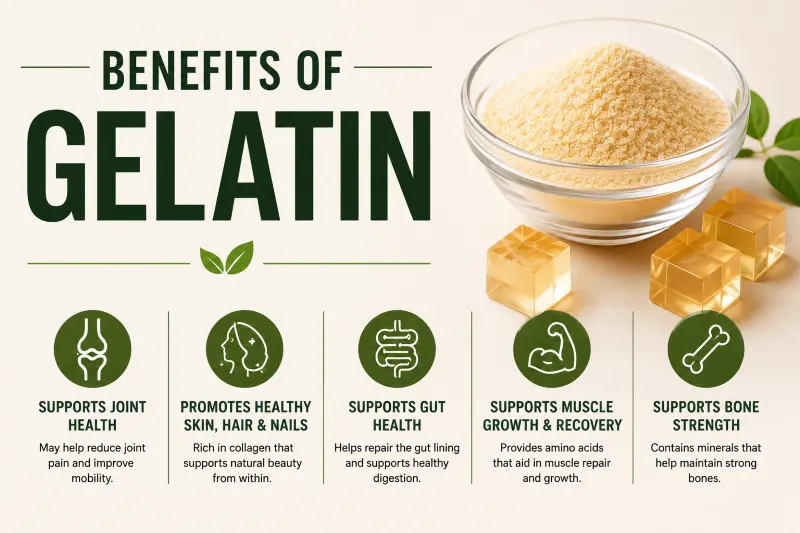
1. May Support Joint Health
How Does Gelatin Affect Joints?
It contains amino acids that are naturally present in collagen.
Collagen plays an important role in maintaining the structure of connective tissues, cartilage, and joints. Some people include it in their diet as part of their overall wellness routine to support joint health.
2. May Support Skin Health
Is Gelatin Good for Skin?
This protein-rich ingredient contains building blocks that are associated with collagen production.
Healthy collagen levels contribute to skin structure and elasticity. While its not a magic solution, it may provide nutrients that support healthy skin as part of a balanced diet.
3. Provides Protein
Why Is Protein Important?
Protein supports many important functions in the body, including:
- Muscle maintenance
- Tissue repair
- Growth and development
- Overall wellness
Adding protein-rich foods to your diet may help support healthy eating habits.
4. May Support Digestive Health
Can Gelatin Help Digestion?
Some individuals include this protein source in their diet because of its simple protein content and versatility in food preparation.
A balanced diet rich in fiber, hydration, and nutrient-dense foods remains important for digestive wellness.
5. May Promote Feelings of Fullness
Can Gelatin Help With Appetite Control?
Protein-rich foods may help people feel fuller for longer periods.
Because it contains protein, it may be a useful ingredient in certain snacks and recipes designed to support healthy eating habits.
Common Uses of It
It has many practical uses in food and nutrition.
Popular uses include:
Desserts
Used in:
- Jellies
- Puddings
- Gummies
- Marshmallows
Cooking
Used as a thickening and stabilizing ingredient.
Supplements
Many capsules contain Collagen Protein shells.
Homemade Recipes
Used in:
- Protein snacks
- Healthy desserts
- Homemade gummies
Gelatin vs Collagen
What Is the Difference?
Many people confuse gelatin and collagen because they are closely related.
| Gelatin | Collagen |
| Derived from collagen | Original protein source |
| Forms a gel when mixed with liquids | Usually dissolves without gelling |
| Commonly used in cooking | Often sold as supplements |
| Provides protein | Provides protein |
Both come from similar sources but serve different purposes.
Foods That Contain Gelatin
Its may be found in:
- Gelatin desserts
- Gummies
- Marshmallows
- Certain yogurts
- Soft candies
- Some ice cream products
- Capsule supplements
Checking ingredient labels can help identify products that contain Collagen Protein.
Who Should Avoid It?
While many people consume gelatin without problems, it may not be suitable for everyone.
Some individuals may avoid it because of:
- Dietary preferences
- Religious restrictions
- Vegetarian lifestyles
- Vegan lifestyles
Plant-based alternatives such as agar-agar and pectin are often used instead of it.
Possible Side Effects
Does Gelatin Have Side Effects?
It is generally considered safe for most people when consumed in normal food amounts.
However, some individuals may experience:
- Digestive discomfort
- Bloating
- Mild stomach upset
- Food sensitivities
People with allergies or specific dietary concerns should carefully review ingredient labels.
Is Gelatin Good for Weight Management?
Can Gelatin Support Weight Loss Goals?
It is high in protein and low in calories when used in simple recipes. Protein may help promote feelings of fullness, which can support healthy eating habits.
However, This protein-rich ingredient alone is not a weight loss solution. Sustainable weight management typically involves balanced nutrition, regular physical activity, quality sleep, and healthy lifestyle habits.
Can Gelatin Be Part of a Healthy Diet?
It can be included as part of a healthy and balanced diet. Because it provides protein and can be used in a variety of recipes, many people enjoy it in snacks, desserts, and homemade foods. However, overall dietary quality remains more important than any single ingredient. A balanced eating plan that includes nutrient-rich foods is still the foundation of good health.
Best Ways to Include Gelatin in Your Diet
Simple ways to use Collagen Protein include:
- Homemade fruit gummies
- Protein-rich snacks
- Smoothie recipes
- Healthy desserts
- Soups and broths
- Low-sugar gelatin treats
Choosing nutrient-rich recipes may help maximize the benefits of this protein source.
Does Age Affect Collagen and Gelatin Needs?
As people age, natural collagen production gradually decreases.
For this reason, many individuals become interested in foods and ingredients that contain collagen-related proteins, including gela tin. Maintaining a balanced diet and healthy lifestyle remains important for overall wellness at every age.
Key Takeaways
- It is derived from collagen.
- It is primarily a source of protein.
- This protein-rich ingredient is widely used in foods, desserts, and supplements.
- It may support skin, joints, and overall wellness.
- Gelatin and collagen are related but not identical.
- Some people may prefer plant-based alternatives.
- Collagen Protein is generally safe for most individuals.
People Also Ask
What Is Gelatin Made From?
It is made from collagen found in animal bones, skin, and connective tissues. It is processed into a protein-rich ingredient commonly used in foods and supplements.
Is Gelatin Healthy to Eat?
It can be part of a balanced diet because it provides protein and amino acids. It is commonly used in a variety of foods and recipes.
What Are the Benefits of Gela tin?
It provides protein and contains amino acids that may support skin, joint, and overall wellness as part of a healthy lifestyle.
Is It the Same as Collagen?
No. It is derived from collagen through processing. Both contain similar proteins, but they are used differently in foods and supplements.
Which Foods Contain Gelatin?
It is commonly found in gummies, marshmallows, It desserts, certain yogurts, candies, and supplement capsules.
Can Gelatin Support Joint Health?
It contains amino acids that are naturally associated with collagen, an important component of connective tissues and joints.
Is Gelatin Good for Skin Health?
It contains protein and amino acids that may support healthy skin as part of a balanced diet and healthy lifestyle.
Final Thoughts
Gelatin is a versatile ingredient that has been used for generations in foods, cooking, and nutrition products. As a protein derived from collagen, it provides amino acids that contribute to its popularity among individuals interested in overall wellness.
Whether used in homemade recipes, desserts, or supplements, It remains a widely used ingredient with many practical applications. While it may offer certain nutritional benefits, it is best viewed as part of a balanced diet rather than a standalone solution for health goals.
Disclaimer
This article is for informational and educational purposes only and is not intended as medical advice. Always consult a qualified healthcare professional before making significant changes to your diet, supplement routine, or health plan.
Author


Mary Brown is a certified wellness coach and writer who focuses on nutrition, weight loss, and living a healthy life. Her main focus is creating honest product reviews and guides that assist readers in achieving fitness.