





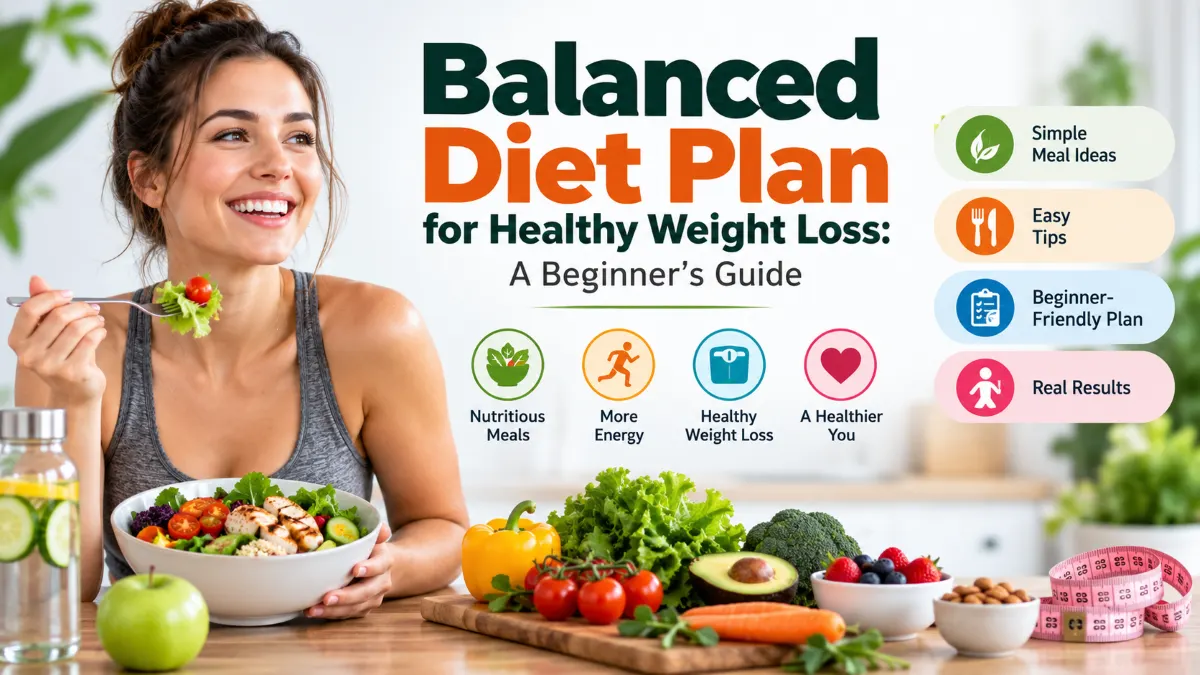
Losing weight does not have to mean surviving on salads, skipping meals, or following an extremely restrictive eating routine. For most beginners, a better approach is to build a realistic Diet Plan around nutritious foods, reasonable portions, regular movement, and habits that can actually be maintained.
A well-designed Diet Plan can help you understand what to eat, how much to eat, and how to make healthier choices without completely giving up the foods you enjoy. The goal is not simply to lose weight quickly but to create a sustainable eating pattern that supports energy, nutrition, and long-term weight management.
According to the U.S. Centers for Disease Control and Prevention (CDC), healthy eating patterns emphasize nutrient-dense foods such as vegetables, fruits, protein foods, whole grains, dairy or fortified alternatives, and healthy fats while limiting added sugars, sodium, saturated fat, and highly processed foods.
This beginner-friendly guide explains how to create a Balanced Diet Plan, what foods to include, what foods to limit, how portion control works, and how a simple weekly routine can look.
Important: This article provides general nutrition information, not individualized medical advice. People who are pregnant, breastfeeding, under 18, managing diabetes, kidney disease, eating disorders, or taking medications affected by diet should speak with a qualified healthcare professional before making major dietary changes.
Editorial Policy
At Your Health Rights, we are committed to publishing accurate, balanced, and research-based health content. Every article is written to educate readers and encourage informed decisions rather than promote unrealistic expectations.
What Is a Diet Plan for Healthy Weight Loss?
A Diet Plan for healthy weight loss is a structured approach to eating that provides enough nutrients while helping you manage your overall calorie intake.
Weight loss generally occurs when the body uses more energy than it receives from food and beverages over time. However, that does not mean eating as little as possible. A sustainable Diet Plan should provide adequate protein, fiber, vitamins, minerals, healthy fats, and carbohydrates.
The National Institute of Diabetes and Digestive and Kidney Diseases (NIDDK) explains that successful weight management involves choosing a healthy eating pattern that can be maintained over time, along with physical activity when appropriate.
A practical Diet Plan should therefore focus on:
- Nutrient-dense foods
- Reasonable portions
- Adequate protein
- Plenty of vegetables and whole fruits
- High-fiber foods
- Whole grains
- Healthy fats
- Hydration
- Limited added sugars
- Limited highly processed foods
- Regular physical activity
- Long-term consistency
The best Diet Plan is not necessarily the one that promises the fastest results. It is the one you can follow consistently without feeling deprived all the time.
Why a Balanced Diet Plan Can Support Healthy Weight Loss
Many people begin a weight-loss journey by eliminating entire food groups. For example, they may stop eating carbohydrates or severely restrict dietary fat.
That approach is not necessary for everyone.
The CDC notes that consuming a variety of healthy foods is generally preferable to eliminating an entire food group, such as carbohydrates.
A balanced Diet Plan can make weight management easier because different foods perform different roles.
Protein
Protein helps provide amino acids needed by the body and can make meals more satisfying. Good options include:
- Eggs
- Chicken
- Turkey
- Fish
- Seafood
- Greek yogurt
- Cottage cheese
- Beans
- Lentils
- Tofu
- Tempeh
- Nuts and seeds
Fiber
Fiber-rich foods can help you feel full while adding nutritional value to meals. Good sources include vegetables, fruits, beans, lentils, whole grains, nuts, and seeds.
The CDC highlights fiber as an important part of a healthy eating pattern and notes that fiber can help with fullness and digestive health.
Healthy fats
Healthy fats can be included in moderate amounts through foods such as:
- Avocado
- Olive oil
- Almonds
- Walnuts
- Chia seeds
- Flaxseeds
- Fatty fish
Carbohydrates
Carbohydrates are not automatically “bad.” Instead of relying mainly on refined carbohydrates, a healthy Diet Plan can emphasize nutrient-rich options such as:
- Oatmeal
- Brown rice
- Quinoa
- Whole-grain bread
- Sweet potatoes
- Beans
- Lentils
- Whole fruits
The Basic Formula for a Balanced Diet Plan
One of the easiest ways for beginners to organize meals is to use a plate-based approach.
For a typical meal, think about dividing your plate into several sections:
About half: vegetables and/or fruit
About one-quarter: protein
About one-quarter: whole grains or other nutrient-rich carbohydrates
Small amount: healthy fat
This is a practical framework rather than a strict mathematical rule.
The USDA MyPlate approach encourages Americans to include fruits, vegetables, grains, protein foods, and dairy or fortified soy alternatives while paying attention to added sugars, saturated fat, and sodium.
For example, a simple lunch could include:
- Grilled chicken
- Brown rice
- Roasted broccoli and peppers
- A small amount of avocado
- Water or unsweetened tea
This type of meal can be much more satisfying than a meal based primarily on refined carbohydrates or sugary drinks.
Healthy Foods for Weight Loss
When deciding what to eat for healthy weight loss, start by adding nutritious foods rather than thinking only about what you need to remove.
Here are some useful categories to include in your Diet Plan.
1. Vegetables
Vegetables are generally nutrient-dense and can add volume, fiber, vitamins, and minerals to meals.
Try:
- Spinach
- Broccoli
- Cauliflower
- Carrots
- Bell peppers
- Tomatoes
- Green beans
- Zucchini
- Cabbage
- Brussels sprouts
- Cucumbers
Fresh, frozen, and some canned options can all work. The CDC specifically notes that frozen and canned vegetables can be convenient choices when they do not contain excessive added sodium.
2. Whole Fruits
Fruit can absolutely fit into a weight-loss eating pattern.
Good choices include:
- Apples
- Berries
- Oranges
- Bananas
- Peaches
- Pears
- Kiwi
- Melons
Whole fruit is generally preferable to fruit juice because whole fruit contains fiber and tends to be more filling.
3. Lean Protein
Include a source of protein at most meals.
Examples include:
- Chicken breast
- Turkey
- Salmon
- Tuna
- Shrimp
- Eggs
- Greek yogurt
- Beans
- Lentils
- Tofu
4. Whole Grains
Whole grains can provide fiber and other nutrients.
Try:
- Oats
- Brown rice
- Quinoa
- Barley
- Whole-wheat bread
- Whole-grain pasta
5. Healthy Fats
Healthy fats can be nutritious but are calorie-dense, so portion awareness is still useful.
Examples include:
- Olive oil
- Avocado
- Nuts
- Seeds
- Natural nut butter
- Fatty fish
Simple Diet Plan for Weight Loss: A Beginner’s Example
A beginner does not necessarily need a complicated menu with dozens of ingredients.
Here is an example of a simple Diet Plan that can be adjusted according to individual calorie needs and preferences.
| Meal | Example |
| Breakfast | Oatmeal with berries, Greek yogurt and a few walnuts |
| Mid-morning snack | Apple with a small portion of peanut butter |
| Lunch | Grilled chicken, brown rice and mixed vegetables |
| Afternoon snack | Plain Greek yogurt with berries |
| Dinner | Salmon, roasted vegetables and a small baked sweet potato |
| Drinks | Water, sparkling water, unsweetened tea or coffee |
This is only an example, not a prescription.
People with different body sizes, activity levels, medical conditions, food preferences, and calorie requirements may need substantially different portions.
7-Day Balanced Diet Plan
A simple weekly Diet Plan can reduce decision fatigue and make grocery shopping easier.
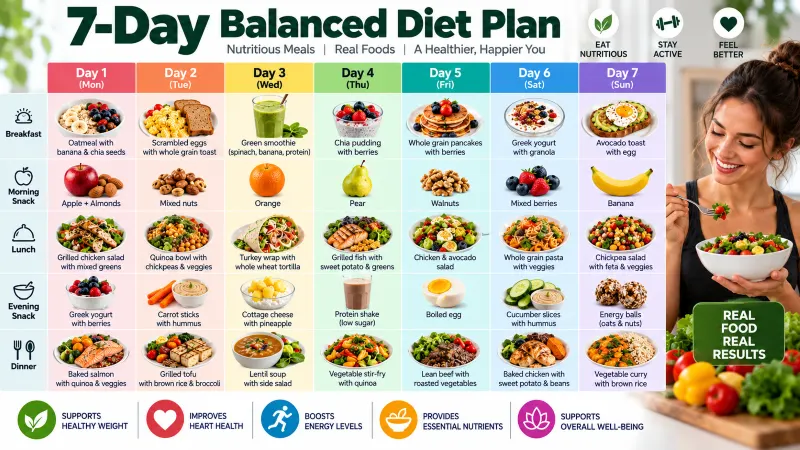
Day 1
Breakfast: Oatmeal, blueberries and Greek yogurt
Lunch: Chicken salad with mixed vegetables
Dinner: Salmon, brown rice and broccoli
Snack: Apple and almonds
Day 2
Breakfast: Eggs, whole-grain toast and berries
Lunch: Turkey and vegetable whole-grain wrap
Dinner: Lean beef, roasted vegetables and quinoa
Snack: Greek yogurt
Day 3
Breakfast: Greek yogurt, strawberries and chia seeds
Lunch: Lentil soup with a side salad
Dinner: Chicken, sweet potato and green beans
Snack: Pear and walnuts
Day 4
Breakfast: Vegetable omelet with whole-grain toast
Lunch: Tuna salad bowl with vegetables and beans
Dinner: Shrimp, brown rice and stir-fried vegetables
Snack: Carrots with hummus
Day 5
Breakfast: Oatmeal with banana and cinnamon
Lunch: Grilled chicken quinoa bowl
Dinner: Turkey chili with beans and vegetables
Snack: Plain yogurt and berries
Day 6
Breakfast: Eggs, avocado and whole-grain toast
Lunch: Bean and vegetable bowl
Dinner: Baked fish, potatoes and asparagus
Snack: Apple with peanut butter
Day 7
Breakfast: Greek yogurt, fruit and nuts
Lunch: Turkey sandwich on whole-grain bread with a vegetable side
Dinner: Chicken or tofu stir-fry with vegetables and brown rice
Snack: Berries or a small handful of nuts
The goal is variety rather than perfection.
Diet Plan for Weight Loss: Portion Control Matters
Even healthy foods can contribute significant calories when eaten in very large portions.
For example, nuts, nut butter, avocado, olive oil, cheese, and whole grains can be nutritious but calorie-dense.
A useful beginner strategy is to pay attention to portion sizes without becoming obsessed with measuring every bite.
Try these habits:
- Use smaller bowls or plates when helpful.
- Serve food onto a plate rather than eating directly from a package.
- Eat slowly.
- Pause before taking seconds.
- Keep high-calorie snacks less visible.
- Drink water regularly.
- Include protein and fiber in meals.
- Read Nutrition Facts labels.
NIDDK also recommends keeping healthier snacks available and avoiding eating directly from large packages because it can make portion control more difficult.
Healthy Weight Loss Diet vs. Crash Diet
Not every popular weight-loss method is equally practical.
| Feature | Healthy Diet Plan | Crash Diet |
| Main goal | Sustainable weight management | Rapid short-term loss |
| Food variety | Usually broad | Often highly restricted |
| Nutritional balance | Important | May be inadequate |
| Long-term approach | Yes | Often difficult |
| Portion awareness | Yes | Sometimes extreme restriction |
| Lifestyle habits | Encouraged | May be overlooked |
| Sustainability | Generally higher | Often lower |
| Professional guidance | Useful when needed | Particularly important for extreme plans |
A sustainable Diet Plan should focus on habits rather than promising dramatic results within days.
NIDDK recommends looking for weight-management programs that promote realistic goals, healthy eating, physical activity, ongoing support, and strategies for maintaining weight loss.
Case Study: A Beginner’s Weight-Loss Approach
Consider “Sarah,” a fictional 38-year-old office worker living in Texas.
Sarah had previously tried several restrictive diets. She would follow a strict routine for two weeks, become extremely hungry, return to her normal eating habits, and feel frustrated.
Instead of choosing another extreme program, Sarah decided to build a balanced Diet Plan around foods she already enjoyed.
Her starting strategy included:
- Oatmeal and fruit for breakfast
- Chicken, beans or fish as regular protein sources
- More vegetables at lunch and dinner
- Water instead of regular soda most days
- Smaller portions of calorie-dense foods
- Planned snacks
- Two to three home-cooked dinners each week
- Regular walking
Rather than aiming for dramatic weekly changes, Sarah focused on consistency.
Over time, she learned that healthy weight management was not about having a “perfect” meal every day. A restaurant meal or birthday dinner could fit into her overall eating pattern.
The lesson from this hypothetical case is important: a useful Diet Plan needs to fit real life.
For a busy American adult, an effective approach may need to accommodate work schedules, restaurant meals, family dinners, holidays, travel, and a realistic grocery budget.
Common Mistakes Beginners Make
Even a good Diet Plan can become difficult when common mistakes get in the way.
Mistake 1: Eating too little
Extreme restriction can make hunger and cravings harder to manage.
Mistake 2: Eliminating carbohydrates
Carbohydrates can be part of a balanced eating pattern. Focus on quality and portions.
Mistake 3: Drinking calories without realizing it
Soda, sweetened coffee drinks, energy drinks, and some juices can add significant calories.
Mistake 4: Assuming “healthy” means unlimited
Avocado, nuts, olive oil, granola, and nut butter can be nutritious but calorie-dense.
Mistake 5: Expecting overnight results
Healthy weight loss generally takes time.
NIDDK notes that successful programs typically encourage gradual, realistic weight loss rather than extreme promises.
How Fast Should You Lose Weight?
There is no single ideal rate for everyone.
NIDDK materials commonly describe gradual weight loss as approximately ½ to 2 pounds per week, although individual results vary.
NIDDK also identifies an initial goal of approximately 5% to 10% of starting body weight over six months as a realistic target for many people with overweight or obesity.
The important point is that your progress does not have to be perfectly linear.
Body weight can fluctuate because of:
- Water retention
- Sodium intake
- Hormonal changes
- Digestive contents
- Physical activity
- Sleep
- Stress
Instead of judging your entire Diet Plan based on one day’s scale reading, look at trends over several weeks.
Diet Plan and Exercise: Why They Work Better Together
Food choices are important, but physical activity also contributes to healthy weight management.
NIDDK notes that physical activity can help people use calories, support weight loss, and help maintain weight loss.
A beginner does not necessarily need an intense gym program.
Start with activities such as:
- Brisk walking
- Cycling
- Swimming
- Dancing
- Strength training
- Hiking
- Recreational sports
The CDC also emphasizes that healthy weight management involves nutrition, physical activity, adequate sleep, and other lifestyle factors.
Frequently Asked Questions
1. What is the best Diet Plan for healthy weight loss?
There is no single Diet Plan that works perfectly for everyone. A good plan usually emphasizes vegetables, fruits, whole grains, protein foods, healthy fats, and appropriate portions while limiting excess added sugars, sodium, saturated fat, and highly processed foods.
2. Can I lose weight without completely giving up carbohydrates?
Yes. Carbohydrates can be part of a healthy eating pattern. Choosing foods such as oats, beans, lentils, fruit, potatoes, brown rice, quinoa, and whole-grain bread can provide useful nutrients and fiber.
3. What foods are best for a beginner weight-loss diet?
Beginners can focus on vegetables, whole fruits, lean proteins, beans, lentils, whole grains, low-fat or unsweetened dairy or fortified alternatives, and moderate portions of healthy fats.
4. Can I eat snacks while following a Diet Plan?
Yes. Snacks can be included when they help manage hunger and fit your overall calorie and nutrition needs. Examples include fruit, Greek yogurt, vegetables with hummus, or a small serving of nuts.
5 . How long should I follow a Diet Plan?
A healthy eating pattern should ideally become a long-term lifestyle rather than a temporary diet. You can adjust meals and portions as your needs, preferences, activity level, or goals change.
6 . Is a homemade Diet Plan better than eating out?
Home cooking can make it easier to control ingredients, portions, sodium, added sugar, and cooking fats. However, healthy choices can still be made when eating at restaurants by choosing grilled foods, vegetables, lean proteins, and reasonable portions.
Final Takeaway
A successful Diet Plan for healthy weight loss should be realistic, nutritious, flexible, and sustainable.
Instead of searching for a magical food or extreme diet, build meals around vegetables, fruits, whole grains, protein-rich foods, healthy fats, and appropriate portions. Drink more water, limit sugary drinks, pay attention to highly processed foods, and include regular physical activity.
Most importantly, do not judge your progress by one meal or one day.
A sustainable Diet Plan is about what you do consistently over weeks and months.
For beginners, the simplest approach is often the most useful:
Eat more nutrient-dense foods.
Choose reasonable portions.
Prioritize protein and fiber.
Drink mostly water or unsweetened beverages.
Stay physically active.
Allow flexibility.
Focus on long-term habits instead of quick fixes.
That approach can turn a complicated weight-loss goal into manageable daily decisions.
Scientific Sources
For readers who want to verify the nutrition and weight-management information discussed in this article, the following organizations provide reliable resources:
- CDC — Healthy Eating for a Healthy Weight — Information on nutrient-dense foods, healthy eating patterns, and weight management.
- NIDDK — Eating & Physical Activity to Lose or Maintain Weight — Government guidance on eating patterns, physical activity, and weight management.
- NIDDK — Choosing a Safe & Successful Weight-Loss Program — Guidance on realistic goals and sustainable weight-loss programs.
- USDA MyPlate — Healthy Eating for Adults — Practical guidance for building meals from the major food groups.
- Nutrition.gov — U.S. government nutrition information and educational resources.
- CDC — Healthy Eating Tips — Guidance on protein, fiber, whole foods, added sugars, sodium, and healthy eating.
Medical disclaimer: This article is for educational purposes only and should not replace personalized advice from a registered dietitian, physician, or other qualified healthcare professional. Individual calorie and nutrient needs can differ considerably.
Author


Mary Brown is a certified wellness coach and writer who focuses on nutrition, weight loss, and living a healthy life. Her main focus is creating honest product reviews and guides that assist readers in achieving fitness.
