




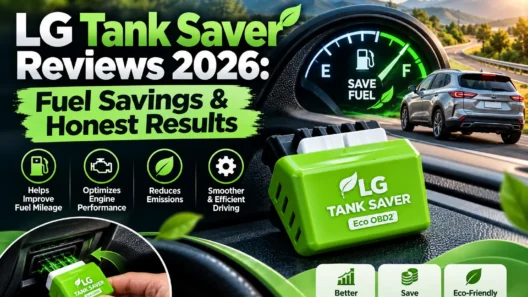

Introduction to the LG Tank Saver
If you have watched the numbers climb at the pump again, you have probably wondered whether a small gadget could take some of the sting out of every fill-up. Rising fuel prices have pushed many U.S. drivers to look for simple ways to cut fuel consumption without changing their vehicle or paying a mechanic. That is exactly why the LG Tank Saver, also called LifeGauge Tank Saver, keeps showing up in search results, social ads, and driver forums this year. It is a compact fuel saver that plugs into your car’s OBD-II port and claims to improve efficiency by optimizing engine fuel maps, with promises of up to 15% lower fuel use and a discount on its sales page that looks tempting.
But a bold claim deserves a careful look. In this review, we walk through what the LG Tank Saver is, how the technology is supposed to work, what real drivers in the USA report, what independent sources say about this whole category of fuel savers, and whether the LG Tank Saver deserves a spot in your car.
What Is the LG Tank Saver?
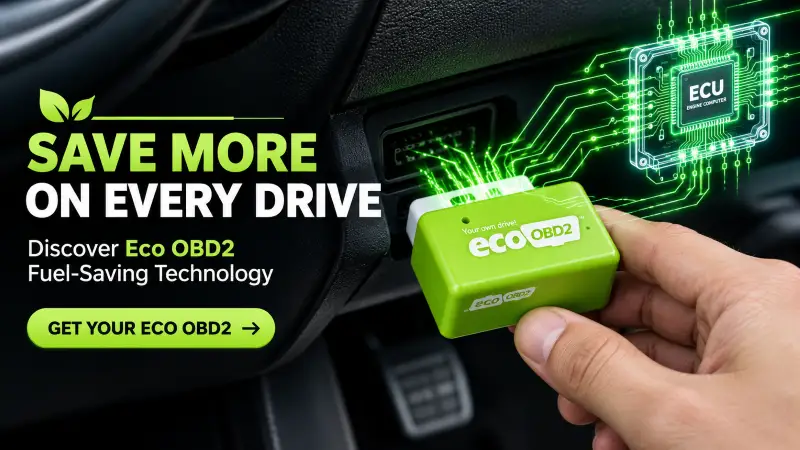
The LG Tank Saver, also sold under the name LifeGauge Tank Saver, is a small box that plugs into the OBD-II diagnostic port of your vehicle. According to the official website, it works as a chip tuning box: it reads your engine’s fuel maps and adjusts them so the engine burns fuel more efficiently. There are no wires to connect, no app to download, and no Bluetooth pairing. You plug it in, drive as usual, and let it calibrate.
The manufacturer lists several headline features for the LG Tank Saver:
- Up to 15% reduction in fuel consumption
- Around 10% average horsepower increase reported in testing
- Compatibility with gas and diesel vehicles that have a standard OBD-II port
- About 200 km of driving to complete calibration
- A 30-day money-back guarantee
In plain language, the LG Tank Saver belongs to a growing family of tank fuel saver gadgets that sell the idea of “free” mileage through software rather than mechanical parts. Because the LG Tank Saver has no moving parts, it appeals to drivers who want an eco-friendly upgrade without a trip to the shop.

The Technology Behind the Gadget: How the LG Tank Saver Works
To judge any gadget fairly, it helps to understand the system it touches. Modern cars are run by an Engine Control Unit (ECU), a small computer that reads sensors and decides how much fuel to inject and when to ignite it. In a typical gasoline engine, the ECU aims for a chemically balanced air-fuel mix of roughly 14.7 parts air to 1 part fuel, then fine-tunes that mix constantly using feedback from oxygen sensors. Engineers call these small corrections “fuel trims.”
The OBD-II port, standard on gasoline cars sold in the USA since 1996 (diesels followed a little later), was created for diagnostics. Mechanics plug in a scan tool, read trouble codes, and view live data. One of the pins on that port also carries battery voltage, which is how small devices can power themselves without a separate cable or battery of their own.
Here is where the LG Tank Saver fits in. The brand says the LG Tank Saver communicates with the ECU through this standard port, studies your fuel maps during the calibration window, and nudges injection data toward efficiency. Chip tuning of this kind is real in the professional world. Tuners rewrite or adjust ECU calibrations to change fuel delivery, ignition timing, and boost. The difference is that professional tuning is done with dedicated software, testing on a dynamometer, and knowledge of the exact engine.
See If LG Tank Saver Works for You
How Does the LG Tank Saver Improve Fuel Economy?

Every modern car has a computer called the Engine Control Unit (ECU) that decides how much fuel goes into the engine at any moment. The LG Tank Saver plugs into your OBD-II port, the same diagnostic port your mechanic uses, and talks to that computer. According to the maker, this is how it helps reduce fuel consumption:
- It studies your engine. During your normal driving, the LG Tank Saver reads your car’s fuel maps, which control fuel delivery at different speeds and loads.
- It adjusts fuel-injection data. The goal is to trim fuel that the engine doesn’t really need, so more of every gallon turns into motion instead of waste.
- It fine-tunes combustion. A better-balanced air-fuel mix means a cleaner burn and less wasted gas out of the tailpipe. This is also where the eco benefit comes from, since less fuel burned means fewer emissions.
- It calibrates over about 200 km (roughly 125 miles). The brand says that is how long the LG Tank Saver needs to adapt to your engine before savings start showing at the pump.
- It may smooth out throttle response. Better power delivery can mean you press the pedal less, which supports everyday fuel efficiency.
- It runs on its own. There is no app, Bluetooth, or setting to change. You plug it in and drive.
What to Keep in Mind
These explanations come from the manufacturer, and we couldn’t find independent lab testing that confirms them. Your car’s factory computer is already tuned to balance mileage, power, and emissions, so how much room the LG Tank Saver has to improve things depends on your engine, its age, and how you drive. Reviews on the official site mostly point to savings of around 8–10%, with the full 15% looking like a best case. Hybrids tend to see very little change.
The LG Tank Saver works best as a small extra, not a replacement for good habits. Smooth acceleration, steady highway speeds, proper tire pressure, and less idling still do most of the heavy lifting. Track your MPG before and after, and you will know within the 30-day guarantee whether the LG Tank Saver is worth keeping.
How to Use LG Tank Saver: A Simple 4-Step Guide
If you decide to try it, here is how to use LG Tank Saver based on the instructions on the official site:
- Find the OBD-II port. It is usually under the dashboard near the steering column. Your owner’s manual will show the exact spot.
- Plug it in. With the car off, line up the connector and push the LG Tank Saver firmly into the port. No tools are required.
- Drive normally. Do not change your routine. The device studies your engine during everyday driving.
- Track your mileage. After about 200 km (roughly 125 miles), calibration should be complete. Compare your miles per gallon with your pre-install numbers.
A few practical tips make your test more reliable:
- Record your average MPG for two or three tanks before installing the LG Tank Saver.
- Fill up at the same station and use the same fuel grade throughout.
- Reset your trip computer, or calculate MPG by hand using miles driven divided by gallons added.
- Keep tire pressure, load, and driving style as consistent as you can, since these change results more than people expect.
Without a before-and-after record, it is easy to credit a gadget for changes that actually came from the weather, a highway trip, or a lighter right foot.
What the Maker Claims vs. What Independent Sources Say
The LG Tank Saver product page shares some eye-catching figures from what it calls a road-test program and a 500-vehicle field test. It reports 78% of testers noticing lower consumption in the first tank, 74% saying the device paid for itself within two months, and an average fuel saving of 15%. These numbers come from the company’s own testing, and we could not find a published independent study confirming them.
That does not make the LG Tank Saver numbers false, but it does mean you should read them as marketing claims. Here is what neutral sources say about the wider category:
- The U.S. Environmental Protection Agency (EPA) and the Department of Energy, through the FuelEconomy.gov website, have reviewed aftermarket fuel-saving products over the years and report that very few deliver meaningful gains. Some can even raise emissions or damage engines.
- The Federal Trade Commission (FTC) has warned consumers to be skeptical of gas saver claims and has taken action against sellers whose products did not perform as advertised.
- FuelEconomy.gov stresses that driving behavior and vehicle maintenance are the proven ways to reduce fuel consumption. Aggressive driving, such as hard acceleration and braking, can lower mileage by roughly 15% to 30% at highway speeds and 10% to 40% in stop-and-go traffic.
Put simply, the science favors habits first and gadgets second. That is not a reason to dismiss the LG Tank Saver outright. It is a reason to test the LG Tank Saver carefully and keep the receipt.
Case Study: What USA Drivers Report
To see how the LG Tank Saver performs outside a lab, we looked at the verified-buyer reviews published on the official site. These are not independent audits, but they show the range of experiences drivers describe across the USA.
Reported results by driver and vehicle
| Driver (location) | Vehicle | Reported result |
| Sandra M. (San Diego, CA) | VW Golf | Stretched a full tank “noticeably further” on a road trip |
| Robert J. (Atlanta, GA) | Not stated | Easy plug-in, no app needed, worked as advertised |
| Thomas R. (Columbus, OH) | Ford Focus | Roughly 9–10% savings, below the 15% claim but satisfied |
| David K. (Austin, TX) | Older diesel wagon | About 8% savings, “modest” results |
| Priya N. (Seattle, WA) | Hybrid | Barely noticed a change |
| Marco P. (Phoenix, AZ) | Toyota Aygo | Felt a power boost, estimated about 10% |
What we learned from the case study:
- The most believable reviews report real but moderate savings, around 8% to 10%, rather than the full 15%.
- The hybrid owner saw almost no benefit. That makes sense, because a hybrid’s electric motor already handles much of the efficiency work.
- Older diesel engines may deliver more modest gains.
- The site shows a 4.7 average from 2,830 reviews, but we cannot verify those numbers independently. One reviewer listed in Arizona mentions a Toyota Aygo, a model sold mainly outside the USA, so it is wise to read testimonials with a grain of salt.
An illustrative savings calculation (not a real driver)
Suppose an American driver covers 12,000 miles a year in a car that averages 25 MPG, with gas at $3.30 per gallon. That is 480 gallons and about $1,584 in annual fuel costs. Here is what different results would mean:
| Result with the LG Tank Saver | Gallons saved per year | Money saved per year |
| 15% (best-case claim) | 72 | about $238 |
| 8–10% (typical review) | 38–48 | about 127–158 |
| 3% (cautious estimate) | 14 | about $48 |
| 0% (no change) | 0 | $0 |
Even a modest 8% to 10% gain from the LG Tank Saver can add up over a few years, which is why the 30-day guarantee matters. If your own tracking shows nothing, you can send it back.
LG Tank Saver Pros and Cons
| Pros | Cons |
| Plug-and-play: no tools, wiring, or mechanic needed | Fuel savings claims come from company testing, not independent labs |
| No app, Bluetooth, or software updates to manage | Results vary widely by engine, age, and driving style |
| Works with many gas and diesel vehicles that have an OBD-II port | Little benefit reported on hybrids |
| Low upfront cost compared with professional chip tuning | Real-world savings are often closer to 8–10% than 15% |
| 30-day money-back guarantee reduces the risk | Aftermarket ECU changes may raise warranty or emissions questions |
| Small, portable, and easy to remove | Requires about 200 km of driving before results show |
| Can be moved to another compatible vehicle | Marketing uses urgency tactics such as “70% off, ends soon” |
Comparison: LG Tank Saver vs. Other Fuel Saver Options
How does the LG Tank Saver compare with other ways to cut fuel costs? Here is a side-by-side look.
| Option | Typical effort | Cost level | Evidence of results | Notes |
| LG Tank Saver (OBD-II plug-in) | Very low | Low | Mixed, mostly company and user reports | Best treated as a trial with the guarantee |
| Other OBD-II chip tuning boxes | Very low | Low to moderate | Mixed to weak | Many make similar claims with little independent proof |
| Magnetic or vapor gas saver gadgets | Low | Low | Generally unsupported by testing | EPA and FTC have flagged this category |
| Professional ECU remap | Moderate | Moderate to high | Strong when done well | Tuned to your exact engine, but may affect warranty |
| Better driving habits | Free | Free | Strong, backed by DOE data | Smooth acceleration and steady speeds help every car |
| Tire pressure and maintenance | Low | Low | Strong, backed by DOE data | Under-inflated tires cut mileage by about 0.2% per 1 psi drop |
The takeaway is clear. The LG Tank Saver sits in the middle: cheaper and simpler than professional tuning, but with weaker evidence than basic maintenance and smoother driving. For the best results, combine them.
Free Ways to Reduce Fuel Consumption Right Now
Whether or not you buy a gadget, these habits are proven to improve fuel efficiency:
- Drive smoothly. Accelerate gently, anticipate stops, and avoid hard braking.
- Watch your speed. Fuel economy usually drops quickly above about 50 mph.
- Check your tires monthly. Proper inflation saves fuel and improves safety.
- Remove extra weight. An extra 100 pounds in the car can cost roughly 1% in mileage.
- Skip long idling. Turning the engine off during long waits saves fuel.
- Keep up with maintenance. Clean air filters, fresh oil, and working sensors keep the engine efficient.
- Plan trips. Combining errands avoids cold starts, which burn more fuel.
These steps cost little and work with any car. Used alongside a fuel saver like the LG Tank Saver, these habits make your results easier to trust and easier to measure.
Battery, Safety, and Warranty: What to Know Before You Plug In
Battery. Because the OBD-II port can supply battery power, any plug-in gadget, including the LG Tank Saver, draws a small amount of current. The official site does not publish power draw figures, so if you park your car for weeks at a time, consider unplugging the LG Tank Saver or ask the seller about standby consumption. A weak battery and a constant plug-in device are not a good mix.
Warranty. The site states that the device communicates only through the standard OBD-II interface and does not alter your wiring. Still, an aftermarket device that changes engine data can raise questions with a manufacturer or dealer. If your car is under warranty, check your warranty terms or ask your dealer before installing.
Emissions. Changing the fuel or timing calibration can affect emissions. In the USA, EPA rules treat modifications that defeat emission controls as tampering, and some states, such as California, have strict smog-check requirements. If you live in a state with emissions inspections, keep the device’s compatibility with your test in mind and remove it if you have any doubt.
Eco impact. Less fuel burned with the LG Tank Saver or any efficiency upgrade means fewer CO2 emissions, which is the eco-friendly promise behind this kind of gadget. That benefit only exists if the device actually reduces consumption without raising other pollutants.
Who Should Consider the LG Tank Saver?
The LG Tank Saver may suit you if:
- You drive a gasoline or older diesel vehicle with a standard OBD-II port.
- You do a lot of daily or highway miles, where small percentages add up.
- You like simple gadgets and are comfortable testing the LG Tank Saver within a refund window.
- You are already practicing good driving habits and want to try one more small step.
You may want to skip it if:
- You drive a hybrid or electric vehicle.
- Your car is new and under a strict warranty, which makes the LG Tank Saver harder to justify.
- You expect a dramatic drop in fuel costs overnight.
- You live where emissions testing rules are strict and unclear.
How Much Does the LG Tank Saver Cost?
Let’s talk numbers. The LG Tank Saver comes in four bundles, and the more you buy, the less you pay per unit. These are the prices I saw at checkout, so double-check them before you order, since deals like this can change.
| Package | Price per unit | Total |
|---|---|---|
| 1 Pack | $39.99 | $39.99 |
| 2 Pack | $34.99 | $69.98 |
| 3 Pack | $27.65 | $82.95 |
| 4 Pack | $24.85 | $99.40 |
Shipping was listed at $9.95, and every order comes with a 30-day money-back guarantee. The “was” prices on the page look inflated, so I’d focus on what you actually pay rather than the “you save” numbers.
Which pack makes sense? Each LG Tank Saver plugs into one car. If you’ve got a single vehicle, start with the 1 Pack and see what it does for your mileage. If your household has two or more cars, or you want one for a family member, the 3- or 4 Pack brings the cost per device down quite a bit.
Does it pay for itself? One pack plus shipping runs about $50. If you drive around 12,000 miles a year at 25 MPG with gas near $3.30, an 8–10% saving would cover the cost in roughly 4 to 5 months. If you only see 3%, it could take close to a year. That’s why tracking your MPG before and after matters.
Read the fine print. The checkout page has a “Vitality Club” free-trial option. Make sure you understand the terms before turning it on, because trial offers can turn into paid memberships. The guarantee box also mentions a different brand name, so keep your order confirmation and read the refund terms.
Frequently Asked Questions About the LG Tank Saver
What is the LG Tank Saver?
The LG Tank Saver is a plug-in OBD-II device that claims to adjust engine fuel data to reduce fuel consumption and improve performance. It is marketed as a plug-and-play gadget for gas and diesel vehicles.
Does the LG Tank Saver really work?
Results vary. Some drivers report savings of around 8% to 10%, while others notice very little. There is no widely available independent lab study confirming the 15% claim, so test it yourself during the guarantee period.
How much fuel can the LG Tank Saver save?
The maker says up to 15%. In user reviews, more realistic figures sit between 8% and 10%, and hybrids reported almost no change. Your savings with the LG Tank Saver depend on your engine, driving style, and conditions.
How do I use the LG Tank Saver?
Locate your OBD-II port under the dashboard, plug the LG Tank Saver in, and drive normally. After about 200 km (125 miles), calibration should be complete. Track your MPG before and after.
Does the LG Tank Saver drain the car battery?
The device is powered through the OBD-II port, so it draws a small amount of current. The brand does not list the exact draw. If your car sits unused for long periods, unplug it to be safe.
Is the LG Tank Saver safe for my car and warranty?
The company says it only communicates through the standard OBD-II interface and involves no rewiring. Aftermarket devices can still raise warranty or emissions questions, so check your warranty and local rules.
Will it work on a hybrid or electric car?
Hybrid owners report little benefit from the LG Tank Saver, and electric vehicles do not use fuel at all. It is better suited to conventional gasoline and diesel engines.
Is there an app or Bluetooth setup?
No. The LG Tank Saver product page says there is no app, Bluetooth, or software update involved. It operates on its own once plugged in.
What if the LG Tank Saver does not work for me?
There is a 30-day money-back guarantee. Keep your records and request a refund if you do not see a difference.
What is a better way to save gas besides the LG Tank Saver or any other gadget?
Smooth driving, correct tire pressure, less weight, and regular maintenance. These are backed by Department of Energy data and work on every car.
Final Verdict: Should You Buy the LG Tank Saver?
The LG Tank Saver is an easy, low-cost gadget that may offer a small boost in fuel efficiency for the right vehicle. Reviews suggest real-world savings of around 8% to 10% for some gasoline drivers, while the 15% figure looks like a best-case scenario and independent proof is limited. Hybrid owners and anyone expecting a miracle will likely be disappointed.
If you are curious, the risk is small thanks to the money-back guarantee. Record your numbers, test the LG Tank Saver for a full tank or two, and keep good driving habits in place. If you see a clear gain, you have found a cheap way to reduce fuel costs. If not, return it and put your effort into the habits that are proven to work. Either way, an informed decision beats a rushed one.
Disclaimer
This article is for general informational purposes only and does not constitute professional automotive, mechanical, legal, or financial advice. The LG Tank Saver is an aftermarket OBD-II accessory, and the fuel savings, horsepower, and calibration figures mentioned here come from the manufacturer’s internal testing and customer-reported experiences. Actual results depend on vehicle make, model, age, engine type, driving habits, road conditions, and maintenance.
Customer testimonials reflect individual experiences and do not guarantee identical results. Before installing any aftermarket device, please check your vehicle’s warranty terms and your state or local emissions regulations, and consult a qualified mechanic if you are unsure. Product details, pricing, and offers may change, so confirm the latest information on the official website before you buy. All brand names and trademarks belong to their respective owners.
Authors


Your Health Rights is a U.S.-based health and wellness platform dedicated to empowering readers with clear, research-backed content across Men’s Health, Women’s Health, Weight Loss, Health Supplements, and Immunity & General Wellness.


