




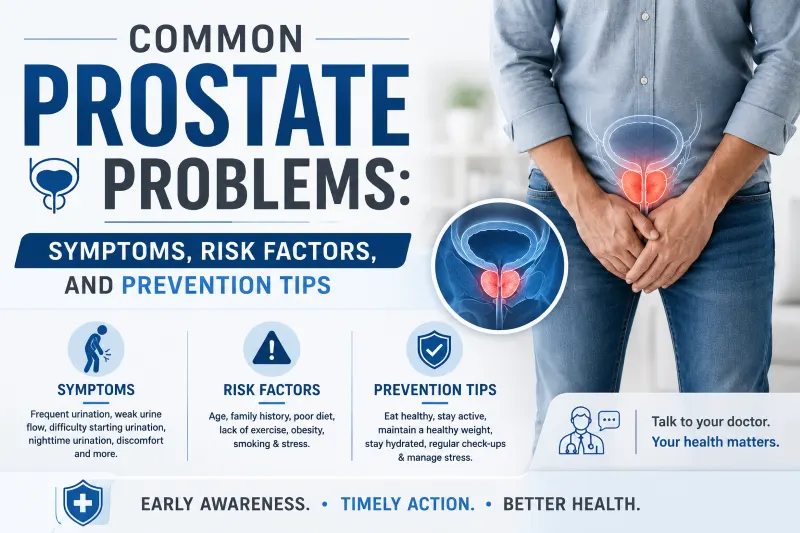
Prostate problems are common among men, especially as they age. The most common prostate conditions include benign prostatic hyperplasia (BPH), prostatitis, and prostate cancer. Symptoms may include frequent urination, difficulty starting urination, weak urine flow, and discomfort during urination. Understanding the signs, risk factors, and prevention strategies can help support long-term prostate health and overall well-being.
Introduction
The prostate is a small gland that plays a vital role in the male reproductive system. Although it is roughly the size of a walnut during early adulthood, it can change over time, particularly as men get older. These changes may sometimes lead to prostate-related health concerns that affect daily life, urinary function, and overall comfort.
Many men are unaware of the importance of prostate health until symptoms begin to appear. Because some prostate conditions develop gradually, recognizing early warning signs can be helpful. The good news is that many prostate problems can be managed more effectively when detected early.
At Your Health Rights, we believe that understanding common prostate conditions can help men make informed decisions about their health. This guide covers common prostate problems, symptoms, risk factors, prevention strategies, healthy lifestyle habits, and practical tips for maintaining prostate wellness.
What Is the Prostate?
The prostate is a gland located below the bladder and in front of the rectum. It surrounds part of the urethra, the tube that carries urine from the bladder out of the body.
One of the prostate’s primary functions is producing a fluid that helps nourish and transport sperm. This fluid becomes part of semen during ejaculation.
Although the prostate is relatively small, its location means that any enlargement or inflammation can affect urinary function and cause noticeable symptoms.
Why Is Prostate Health Important?
The prostate plays an important role in both reproductive and urinary health. When the prostate functions normally, most men rarely think about it. However, changes in the gland can affect daily activities and quality of life.
Maintaining prostate health may help support:
- Healthy urinary function
- Reproductive wellness
- Better sleep quality
- Greater daily comfort
- Healthy aging
- Overall well-being
Since prostate issues become more common with age, awareness and preventive care are especially important.
Common Prostate Problems
Several conditions can affect the prostate. Understanding these conditions can help individuals recognize symptoms and seek appropriate medical advice when necessary.
1. Benign Prostatic Hyperplasia (BPH)
BPH, also known as an enlarged prostate, is one of the most common prostate conditions among older men.
BPH is not cancerous, but it can cause uncomfortable urinary symptoms because the enlarged prostate may press against the urethra.
Common symptoms of BPH include:
- Frequent urination
- Difficulty starting urination
- Weak urine stream
- Interrupted urine flow
- Waking up frequently at night to urinate
- Feeling that the bladder is not completely empty
While BPH is common, symptoms should still be discussed with a healthcare professional.
2. Prostatitis
Prostatitis refers to inflammation of the prostate gland.
This condition can affect men of various ages and may cause discomfort and urinary symptoms.
Symptoms may include:
- Pelvic pain
- Pain during urination
- Frequent urination
- Urinary urgency
- Lower back discomfort
The causes of prostatitis can vary, and medical evaluation is often necessary to determine the underlying cause.
3. Prostate Cancer
Prostate cancer is one of the most commonly diagnosed cancers in men.
In many cases, early-stage prostate cancer may not cause noticeable symptoms. This is why routine screenings and medical evaluations can be important, especially for men at higher risk.
As the condition progresses, symptoms may include urinary difficulties, changes in urine flow, or other health concerns.
Early Signs of Prostate Problems
Many prostate conditions begin with mild symptoms that may gradually worsen over time.
Common early signs include:
Frequent Urination
One of the earliest signs of prostate issues is needing to urinate more often than usual.
Waking Up at Night to Urinate
Frequent nighttime urination can interfere with sleep and reduce overall quality of life.
Difficulty Starting Urination
Some men experience hesitation before urine begins to flow.
Weak Urine Stream
An enlarged prostate can affect the strength and consistency of urine flow.
Sudden Urgency
A strong and immediate need to urinate may occur more frequently.
Feeling That the Bladder Is Not Empty
Some individuals feel the need to urinate again shortly after finishing.
What Causes Prostate Problems?
There is no single cause of prostate issues. Different conditions have different contributing factors.
Common factors include:
Aging
Age is one of the strongest risk factors for prostate-related conditions.
Hormonal Changes
Natural changes in hormone levels may affect prostate growth and function.
Family History
Men with relatives who have experienced prostate conditions may have a higher risk.
Chronic Inflammation
Inflammation may contribute to certain prostate-related concerns.
Lifestyle Factors
Physical inactivity, obesity, poor dietary habits, and smoking may influence overall prostate health.
Risk Factors for Prostate Conditions
Several factors may increase the likelihood of developing prostate-related concerns.
These include:
- Age over 50
- Family history of prostate disease
- Obesity
- Lack of physical activity
- Poor dietary habits
- Smoking
- Certain chronic health conditions
Understanding risk factors may help individuals take proactive steps toward healthier living.
Best Foods for Prostate Health
Nutrition plays an important role in overall health and wellness.
Tomatoes
Tomatoes contain lycopene, a natural antioxidant that has been widely studied in relation to men’s health.
Fatty Fish
Fish such as salmon, sardines, and mackerel provide healthy fats that support overall wellness.
Berries
Berries contain antioxidants that help support a healthy diet.
Leafy Green Vegetables
Spinach, kale, and other leafy greens provide vitamins and minerals important for overall health.
Nuts and Seeds
These foods contain healthy fats and nutrients that contribute to a balanced diet.
Whole Grains
Whole grains provide fiber and nutrients that support digestive and overall health.
Legumes
Beans, lentils, and chickpeas provide plant-based protein and fiber.
Foods That May Be Helpful to Limit
While moderation is important, some foods may be beneficial to consume less frequently.
Examples include:
- Highly processed foods
- Excess sugary drinks
- Processed meats
- Excessive alcohol
- High-sodium foods
A balanced diet focused on whole foods may support overall wellness.
Lifestyle Habits That Support Prostate Health
Healthy daily habits can contribute to overall prostate wellness.
Stay Physically Active
Regular exercise helps support healthy aging and weight management.
Activities such as:
- Walking
- Swimming
- Cycling
- Strength training
may support overall wellness.
Maintain a Healthy Weight
Excess body weight may increase the risk of certain health concerns.
Maintaining a healthy weight can support overall well-being and quality of life.
Get Enough Sleep
Most adults benefit from seven to nine hours of quality sleep per night.
Healthy sleep habits support many important body functions.
Manage Stress
Chronic stress can affect overall health and wellness.
Helpful stress-management techniques include:
- Meditation
- Deep breathing
- Yoga
- Spending time outdoors
- Regular exercise
Stay Hydrated
Proper hydration supports urinary health and many important bodily functions.
Can Exercise Help Prostate Health?
Exercise offers numerous benefits beyond weight management.
Regular physical activity may support:
- Better circulation
- Healthy body weight
- Improved energy levels
- Healthy aging
- Overall wellness
Even moderate daily activity can have positive effects on general health.
Prostate Health After Age 50
Many men begin experiencing changes in prostate health after age 50.
This does not necessarily mean that a serious condition is present. However, symptoms should never be ignored.
Common age-related changes may include:
- More frequent urination
- Reduced urine flow
- Increased nighttime bathroom visits
Regular health checkups become increasingly important during this stage of life.
How Is Prostate Health Evaluated?
Healthcare professionals may use several methods to evaluate prostate health.
These may include:
Medical History Review
Symptoms and health history are reviewed.
Physical Examination
Healthcare providers may perform examinations to assess prostate size and condition.
Blood Tests
Certain blood tests may be used as part of prostate evaluation.
Urine Testing
Urine tests can help identify infections or other concerns.
Imaging Studies
Additional testing may be recommended when necessary.
Can Prostate Problems Be Prevented?
There is no guaranteed way to prevent every prostate condition.
However, healthy lifestyle habits may support overall prostate wellness.
Helpful strategies include:
- Maintaining a healthy weight
- Exercising regularly
- Eating a nutritious diet
- Avoiding smoking
- Limiting excessive alcohol intake
- Attending routine medical checkups
Prevention focuses on supporting overall health and identifying concerns early.
Case Study: Why Early Detection Matters
Michael’s Story
Michael, a 57-year-old accountant, began waking up three or four times each night to use the bathroom. Initially, he assumed this was simply a normal part of getting older.
Over the following months, he noticed weaker urine flow and increasing difficulty emptying his bladder completely. Eventually, he scheduled a medical appointment.
Following evaluation, healthcare professionals identified an enlarged prostate. Because Michael sought medical advice before symptoms became severe, he was able to discuss management options and make lifestyle changes that improved his quality of life.
Lesson Learned
Ignoring symptoms may allow problems to worsen over time. Seeking medical advice when symptoms first appear can help individuals better understand their health and available options.
Key Takeaways
- The prostate plays an important role in male reproductive and urinary health.
- Common prostate problems include BPH, prostatitis, and prostate cancer.
- Frequent urination, weak urine flow, and urinary urgency are common symptoms.
- Age is one of the biggest risk factors for prostate issues.
- Healthy eating, exercise, weight management, and regular checkups support prostate wellness.
- Persistent urinary symptoms should always be discussed with a healthcare professional.
People Also Ask
1. What Are the First Signs of Prostate Problems?
Common early signs include frequent urination, difficulty starting urination, weak urine flow, and waking at night to urinate.
2. What Foods Support Prostate Health?
Tomatoes, fatty fish, leafy green vegetables, berries, nuts, seeds, legumes, and whole grains can be part of a healthy diet that supports overall wellness.
3. Can Exercise Improve Prostate Health?
Regular exercise supports healthy aging, weight management, circulation, and overall health.
4. Is Frequent Urination Always a Sign of a Prostate Problem?
Not always. Frequent urination can have multiple causes, which is why persistent symptoms should be medically evaluated.
5. What Age Do Prostate Problems Usually Start?
Prostate-related concerns become more common after age 50, although some men may experience symptoms earlier.
6. Can Weight Affect Prostate Health?
Maintaining a healthy weight may support overall health and reduce certain health risks.
7. Does Drinking Water Help Prostate Health?
Proper hydration supports normal urinary function and overall wellness.
8. Should Men Get Regular Prostate Checkups?
Routine medical checkups can help monitor prostate health and identify concerns early.
Scientific References
- National Cancer Institute (NCI) – Prostate Cancer
- Mayo Clinic – Benign Prostatic Hyperplasia (BPH)
- Cleveland Clinic – Enlarged Prostate (BPH)
- American Cancer Society – Prostate Cancer
- National Institute on Aging (NIA) – Prostate Problems
Final Thoughts
Prostate health is an important part of men’s overall wellness and healthy aging. While prostate-related conditions become more common as men grow older, understanding the symptoms, risk factors, and prevention strategies can help individuals make informed decisions about their health. Maintaining healthy lifestyle habits, staying physically active, eating a balanced diet, and seeking medical advice when symptoms appear are all important steps toward supporting long-term prostate wellness.
Hormonal changes can also affect overall men’s health as they age. Learn more about low testosterone symptoms and how they may affect energy, mood, and muscle strength.
Disclaimer
This article is for informational and educational purposes only and is not intended as medical advice. Always consult a qualified healthcare professional regarding symptoms, diagnosis, screening, or treatment decisions related to prostate health.
Author


Richard Miller is a lifestyle and health writer. His main focus is on improving daily healthy habits, energy levels, and overall wellness. He provides practical and evidence-based blogs and guides to ensure his readers receive value.